

3D Embossed Beige Damask Woven Web Label
Custom Beige Damask Woven Labels with Raised Logo Details
Give your garments a refined finishing detail with beige damask woven labels featuring dimensional logos and lettering. The neutral background complements a wide range of fabric colors, while the woven design adds texture and a recognizable brand signature.
Suitable for knitwear, casualwear, shirts, dresses, denim, and textile accessories, these labels can be customized in dimensions, yarn colors, artwork, folds, and supply format. Use them for neck branding, waistbands, side seams, or selected external placements to create a coordinated identity across your collection.
Damask Weaving for Detailed Branding
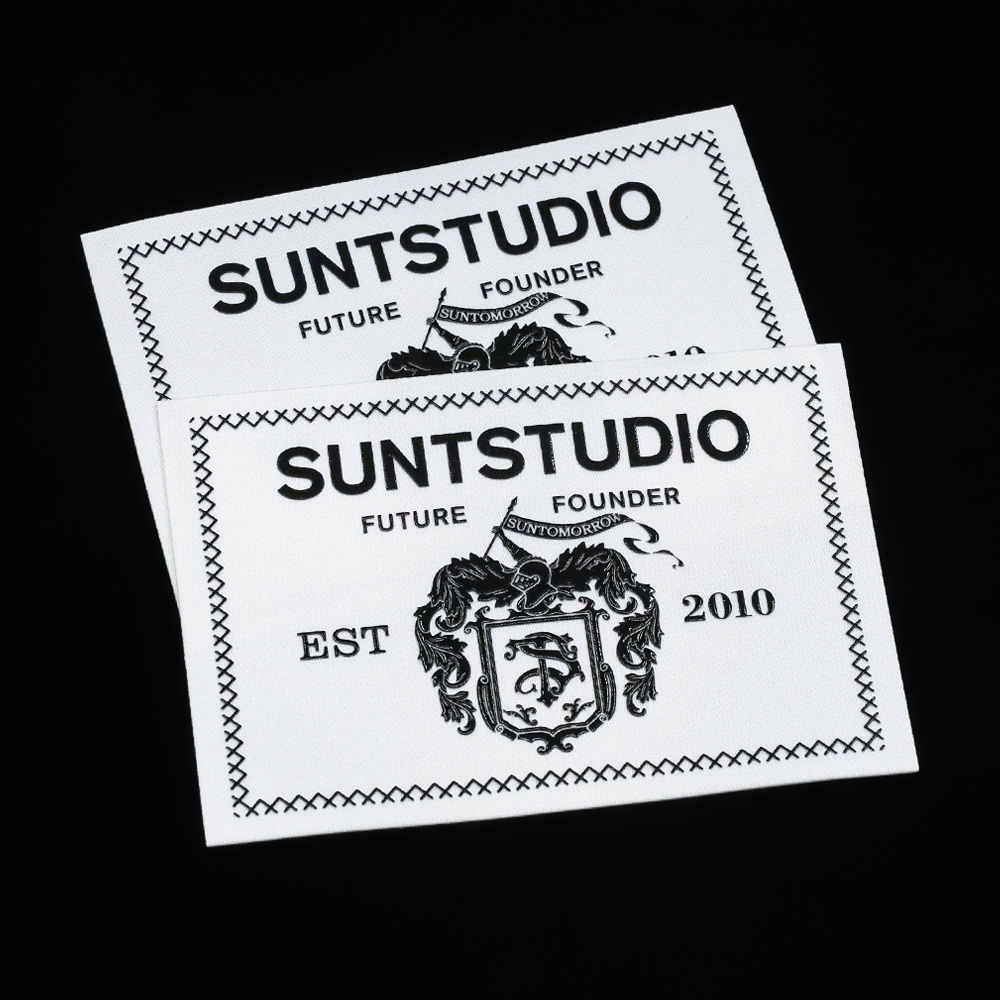
Damask woven labels form the background and artwork through interlaced yarns rather than surface printing. Suitable fine-yarn constructions can reproduce defined lettering, borders, and logo details within a compact label format.
The achievable detail depends on yarn thickness, weave structure, label dimensions, and artwork complexity. Small lettering, narrow lines, and closely spaced elements should be reviewed at actual size before production.
Damask describes the woven construction rather than the fiber composition. The yarn material should be specified separately according to the approved product.
Raised Logos and Textured Details
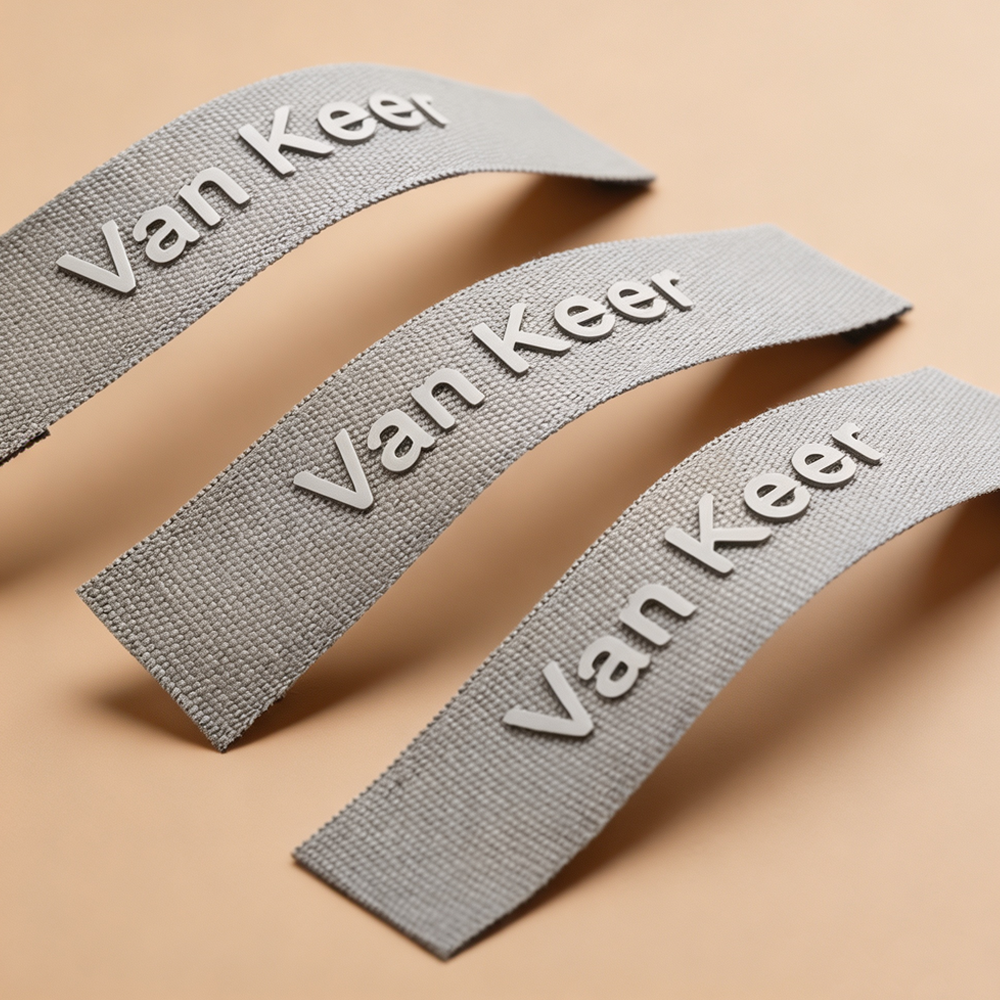
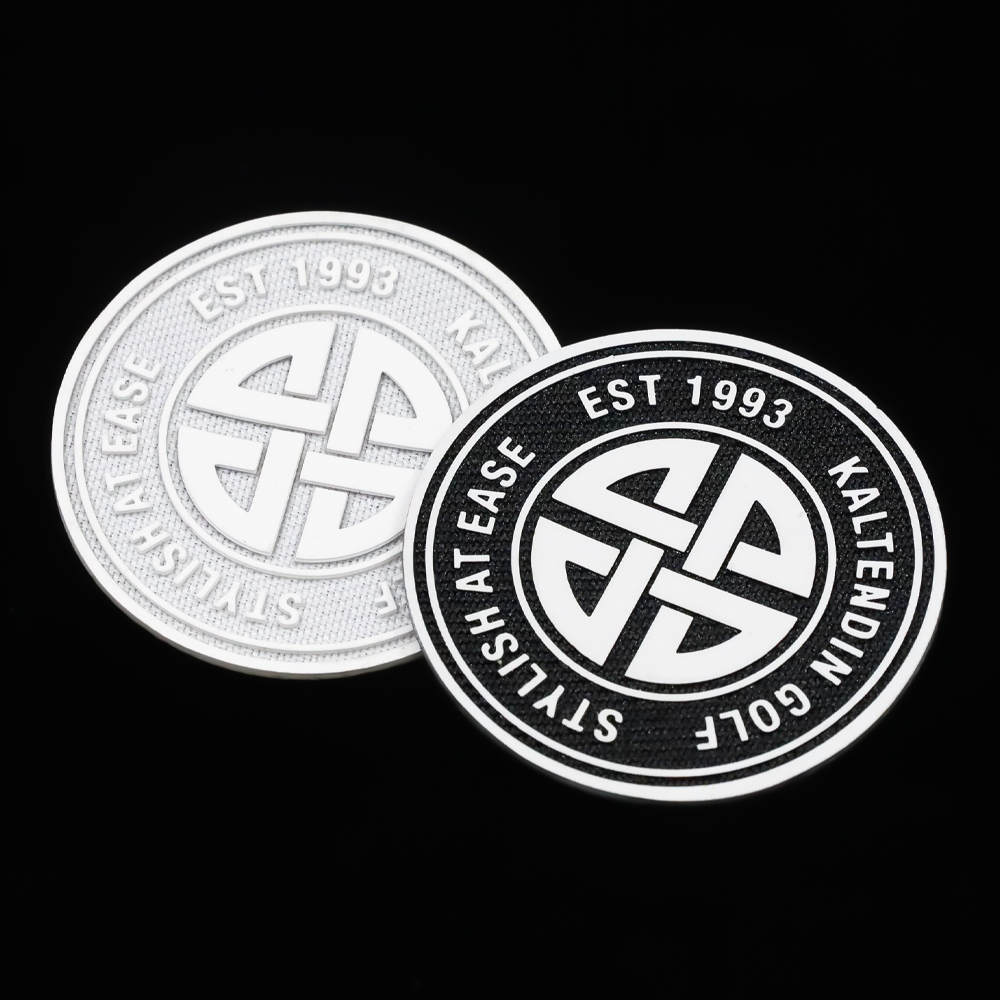
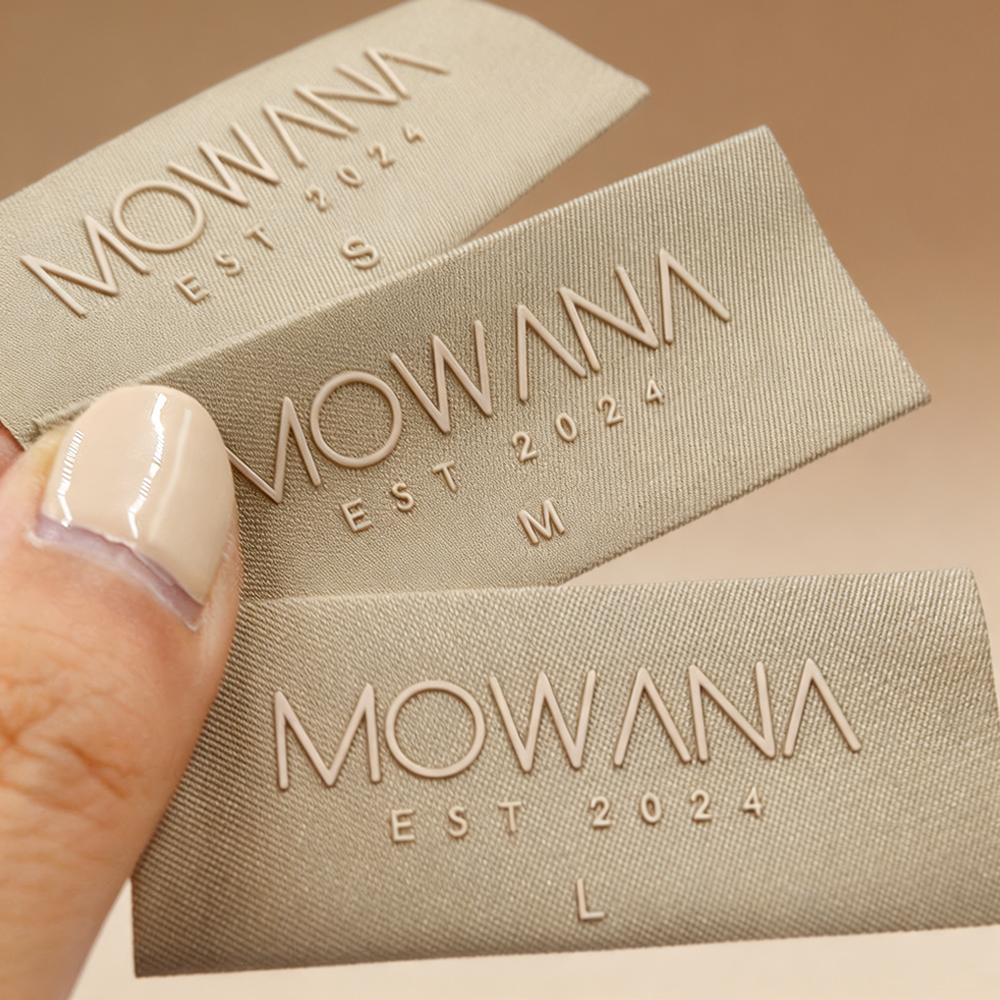
Selected weave structures and yarn combinations can give logos or lettering a more pronounced surface texture. This creates a subtle dimensional effect while retaining the character of a textile label.
The degree of relief depends on the design and construction. Raised woven details generally have a different profile from molded silicone lettering or foam-based embroidery.
If a pronounced embossed effect is required, provide a reference sample so the achievable height, edge definition, and any additional finishing process can be assessed. The approved specification should distinguish raised weaving from a separate embossing treatment.
Beige Backgrounds and Coordinated Yarn Colors
A beige background offers a soft visual foundation for understated branding. Depending on available yarns, shades can be selected from light cream-beige to warmer sand or taupe tones.
Design options can include:
Beige backgrounds with contrasting dark lettering.
Tonal logos for a subtle, textured appearance.
Light-colored details on a deeper beige base.
Contrasting borders or selected accent colors.
Coordinated versions for different garment collections.
Low-contrast combinations can produce an elegant effect, but very small text may become difficult to read. Review both the overall appearance and the clarity of essential information.
Yarn sheen, weave direction, and lighting affect perceived color. A physical yarn reference or woven sample is recommended when matching the label to fabric, lining, buttons, or packaging.
Custom Logos, Sizes, and Layouts
Personalize the label with your brand name, monogram, collection title, size marking, or a short message. The design can be arranged horizontally or vertically to suit the garment placement.
Customization can include:
Label width and finished length.
Logo proportions and lettering placement.
Border width and background texture.
Raised areas and contrasting woven details.
Fold positions and sewing allowances.
Coordinated main labels and smaller side-seam labels.
Provide vector artwork where available, with text converted to outlines. Clearly identify which elements should have a raised effect and which should remain visually flat.
Folding and Edge Finishing
Choose a construction that supports neat sewing and comfortable placement:
Straight-cut labels: Supplied flat with agreed stitching allowances.
End-fold labels: Folded ends provide a defined area for attachment.
Center-fold labels: Suitable for seam insertion with artwork arranged across the visible panels.
Mitre-fold labels: Angled folded ends can suit selected neck-label applications.
Continuous woven tape: Available where compatible with the design and production workflow.
Dimensions should distinguish the total cut size from the finished visible area. Important lettering must remain clear of folds and stitching.
Edge-finishing methods depend on yarn composition and construction. Heat or ultrasonic cutting may suit certain synthetic materials, while other yarn systems require different finishing arrangements. Review the completed edges for stiffness, fraying, and comfort.
Garment Placement and Feel
Label thickness, weave density, folds, and stitching all affect how the finished label feels. A dimensional woven design may be more substantial than a flat construction, particularly where several layers overlap.
For necklines and other areas in contact with skin, assess a sewn sample on the intended garment. Lightweight or stretch fabrics may benefit from smaller dimensions, a more flexible weave, or a different placement.
External branding positions should also be reviewed for catching, abrasion, and how the label moves with the fabric.
Care Performance and Sample Review
Before bulk production, confirm the yarn specification, beige shade, artwork, weave effect, dimensions, folds, and packing arrangement against a physical sample.
Relevant checks can include:
Logo definition and text readability.
Consistency of raised woven details.
Color appearance and contrast.
Dimensional accuracy and fold alignment.
Edge condition and sewing performance.
Shrinkage, distortion, and colorfastness after the intended care process.
Comfort and appearance after attachment.
If labels will undergo garment dyeing, bleaching, or other finishing treatments, provide these details during development. Such processes may change the beige background, yarn color, or dimensional appearance.
Request a Custom Quotation
Send your artwork, label dimensions, preferred beige reference, logo colors, desired raised effect, fold style, and quantity. Include the garment fabric, application position, and care requirements so suitable weaving and finishing options can be reviewed.

Beige damask woven labels can be supplied as cut pieces, folded labels, or continuous woven tape, according to the approved construction. Packing helps protect the light-colored surface, folded edges, and raised details during handling.
Options can include:
Counted inner packs: Labels grouped in agreed quantities for garment assembly.
Separate version packing: Different beige shades, logos, dimensions, and folds packed separately.
Protective wrapping: Helps reduce dust exposure and contact with materials that could mark the labels.
Fold protection: Labels arranged to preserve the approved fold direction.
Roll identification: Continuous tape marked with item references, quantities or lengths, and repeat details.
Carton labeling: Product references, quantities, and agreed batch information.
Avoid excessive compression where it could alter the raised appearance or prepared folds. For continuous tape, confirm repeat spacing and whether order quantities are measured by label count or tape length.
Final carton dimensions, packing quantities, net weight, and gross weight are confirmed after approval. Store labels in clean, dry conditions away from moisture, direct sunlight, contamination, and heavy pressure.