
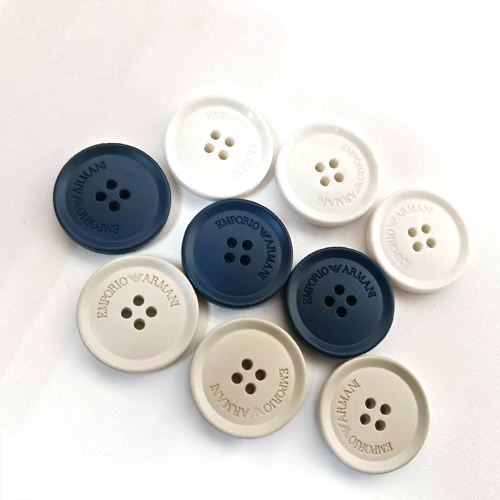

Custom logo 4 Holes Eco Friendly Materials for Fashion Designer Luxury Shirt Coat Resin Buttons
Custom Logo 4-Hole Resin Buttons for Shirts & Coats
Complete your collection with custom four-hole resin buttons designed to coordinate with your fabrics, silhouettes, and brand identity. Suitable for shirts, blouses, coats, jackets, and tailored garments, these buttons combine versatile decorative finishes with a familiar sew-through construction.
Customize the diameter, thickness, profile, color, surface pattern, and logo treatment. From understated shirt buttons to larger statement buttons for outerwear, each specification can be developed around your garment design and production requirements.
Resin Materials and Decorative Effects
Resin buttons offer a broad range of appearances, including solid colors, translucent effects, marbled patterns, and finishes inspired by natural materials. Polyester resin is commonly used for garment buttons, although the actual formulation should be confirmed for the selected product.
Depending on the material and process, options can include:
Uniform solid colors for coordinated collections.
Pearl-effect surfaces with a soft visual sheen.
Horn-look or tortoiseshell-inspired patterns.
Marbled and mottled designs.
Matte, polished, or textured finishes.
Coordinated front, back, and edge colors.
Natural-look patterns describe the appearance rather than the material composition. Patterned buttons may also vary individually; approve representative samples when assessing the acceptable range of variation.
Four-Hole Construction for Sewn Attachment
The four-hole layout allows different stitching patterns, such as parallel or cross stitches, to complement the garment design. Hole dimensions and spacing should accommodate the selected thread, needle, and sewing equipment.
Smooth hole edges help reduce thread abrasion, while sufficient material around the holes supports the button structure. The recessed area around the holes, where present, should be reviewed together with the button profile and stitching arrangement.
For coats and thicker garments, the sewing method may need to create a thread shank between the button and fabric. This provides room for the overlapping fabric when the garment is fastened.
Sizes and Profiles for Shirts and Coats
Shirt buttons and coat buttons require different proportions. Smaller, lighter profiles can suit shirt plackets and cuffs, while larger buttons may complement heavier fabrics and outerwear.
Customization can include:
Diameter specified in millimeters or button ligne.
Overall thickness and edge profile.
Flat, domed, concave, or other suitable faces.
Hole diameter and center spacing.
Surface texture and pattern.
Matching smaller buttons for cuffs, pockets, or spare-button sets.
Check the button against the actual buttonhole and fabric layers. A button should pass through the opening comfortably while providing the intended fastening feel without excessive strain.
Personalized Logo Details
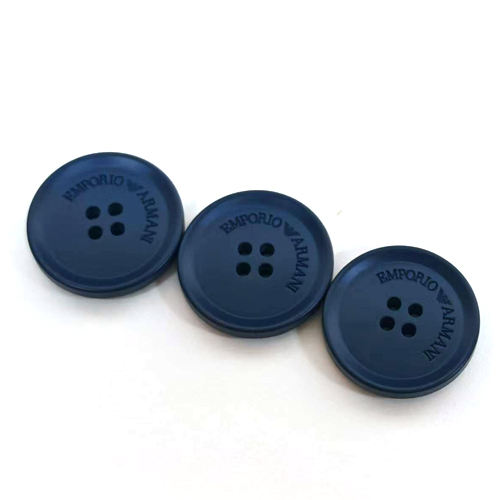
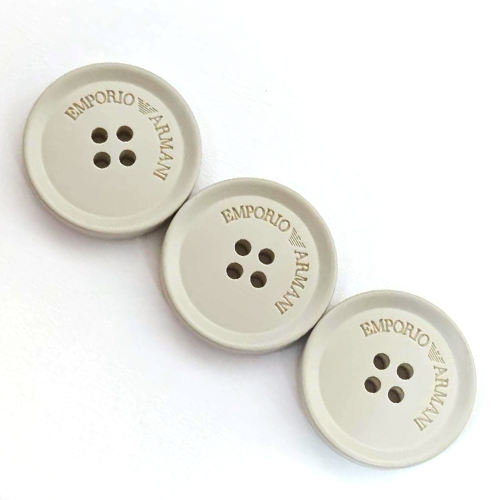
Add your brand name, initials, symbol, or short lettering to the button face or rim, depending on the available space and production method.
Logo treatments can include engraving, compatible printing, or molded details where available. Recessed engraving and raised molded artwork produce different effects and should be identified clearly during approval.
Four sewing holes reduce the available design area, so lettering should be positioned away from holes, stitching, and narrow edges. Simple graphics and clearly spaced text generally reproduce more effectively on smaller shirt buttons.
Color Coordination for Designer Collections
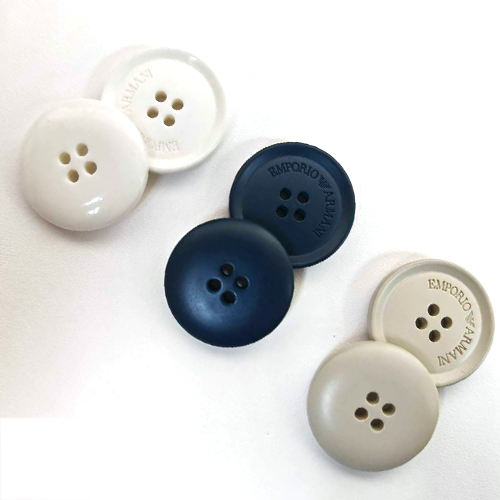
Coordinate button colors with your fabric, lining, embroidery, and other trims. A matching color can create a discreet finish, while a contrasting shade or pattern can make the button a deliberate design feature.
Physical references are recommended for approval. Resin transparency, polish, pattern, and lighting all influence perceived color, so a digital reference alone may not fully represent the finished result.
For matching buttons in multiple diameters, review the complete set. Pattern scale and logo proportions may need adjustment to maintain a consistent appearance across sizes.
Material Options with Documented Content
If your collection requires recycled or bio-based content, provide the target material specification at the quotation stage so available resin options and supporting documentation can be reviewed.
Any claim should identify the relevant content and percentage. Recycled content, bio-based content, biodegradability, and recyclability are different properties; one does not establish the others.
Standard resin buttons should not be described as eco-friendly solely because they resemble wood, horn, or another natural material.
Garment Care and Quality Evaluation
Button performance depends on the resin formulation, dimensions, surface treatment, logo process, and intended use. Samples should be assessed on the actual garment before bulk production.
Relevant checks can include:
Diameter, thickness, and hole-spacing consistency.
Smooth surfaces and edges.
Logo clarity and color appearance.
Sewing-machine compatibility.
Thread wear around the holes.
Fastening performance with the finished buttonhole.
Cracking, chipping, distortion, or surface changes after the agreed care process.
Shirts and coats may have different washing, ironing, and professional-cleaning requirements. Confirm these conditions during development, particularly where the buttons will be exposed to pressing equipment or garment-finishing treatments.
Sample Approval and Repeat Orders
Before production, approve the material, dimensions, pattern range, colors, logo, hole configuration, and packing arrangement. For coordinated collections, specify the quantity of each size and color separately.
Retain the approved sample and item reference for reorders. Changes to the resin, finish, diameter, or artwork should be reviewed because they may affect appearance and garment compatibility.
Request a Custom Quotation
Send your button design or reference sample, required diameters, thickness, colors, logo artwork, and quantity per version. Include the garment type, fabric thickness, care requirements, and any documented material-content targets so suitable options can be reviewed.
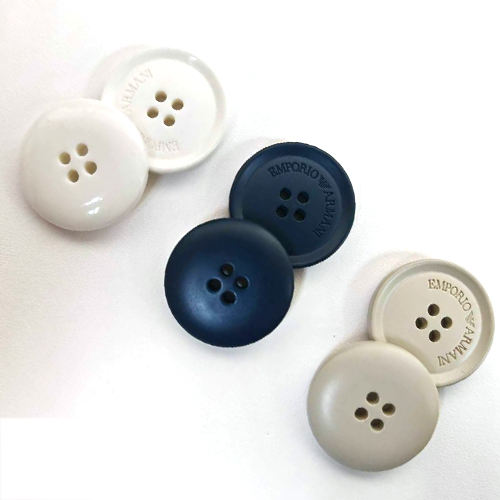
Custom four-hole resin buttons are packed according to their size, color, surface finish, and order quantity. Packing helps reduce surface rubbing, edge damage, and mixing between specifications.
Options can include:
Counted inner packs: Agreed quantities for sewing-line use and inventory control.
Separate size packing: Shirt, cuff, pocket, and coat-button sizes identified individually.
Separate color and design packing: Different patterns, logos, and finishes kept in distinct packs.
Surface protection: Suitable bags, dividers, or protective wrapping where needed.
Coordinated garment sets: Main buttons and smaller matching buttons grouped as agreed.
Carton identification: Item references, quantities, size breakdowns, and agreed batch details.
Spare-button quantities and individual spare-button packaging should be specified separately if required.
Final packing quantities, carton dimensions, net weight, and gross weight are confirmed after approval. Store buttons in clean, dry conditions away from excessive heat, direct sunlight, chemicals, and heavy pressure.