

snap button
Custom Snap Buttons for Clothing and Accessories
Combine convenient fastening with a coordinated garment finish using custom snap buttons. Also known as press studs or snap fasteners, snap buttons close through a matching socket-and-stud mechanism, allowing garments and accessories to be opened and fastened with a simple press.
We offer snap button options for jackets, shirts, denim garments, childrenswear, workwear, bags, and other textile accessories. Materials, sizes, fastening mechanisms, surface finishes, and logo details can be selected to suit your product design and application requirements.
Styles for Different Garment Constructions
Different fabrics and applications require different snap constructions. Options can include:
Ring-spring snap buttons: Commonly used where a firmer fastening action is required, such as outerwear and selected denim applications.
S-spring snap buttons: Suitable for a range of apparel and accessory applications, with the fastening feel depending on the selected specification.
Prong snap buttons: Attached using prongs that engage with matching components; often used on lightweight garments and knitwear when properly matched to the fabric.
Sew-on snap buttons: Secured with stitching rather than setting equipment, offering a discreet fastening option for suitable garment designs.
Plastic snap buttons: A lightweight alternative available in different colors and constructions.
The appropriate style depends on fabric thickness, reinforcement, opening-force requirements, and intended use. Appearance alone should not determine the choice of fastening system.
Materials and Component Compatibility
Depending on the construction, material options can include brass, stainless steel, other steel grades, and engineering plastics. Material selection should consider the garment’s care instructions, expected exposure conditions, and desired surface finish.
Many mechanically attached snap buttons use four components: a cap, socket, stud, and post. Other constructions use different combinations. Components should be supplied as a compatible system; parts with similar diameters are not necessarily interchangeable.
Custom Sizes, Logos, and Finishes
Create a coordinated look across your collection with customization options such as:
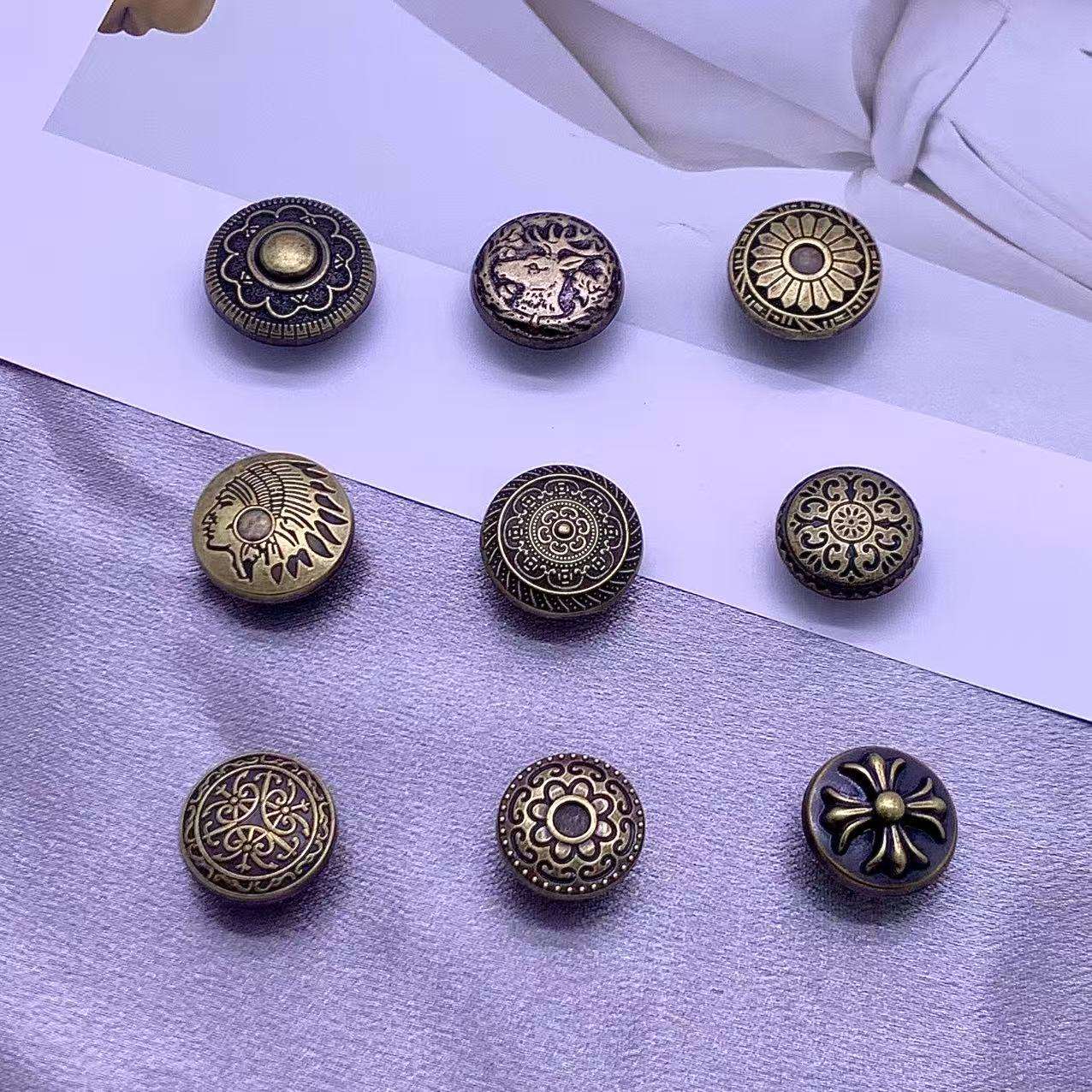
Cap diameter, profile, and decorative shape.
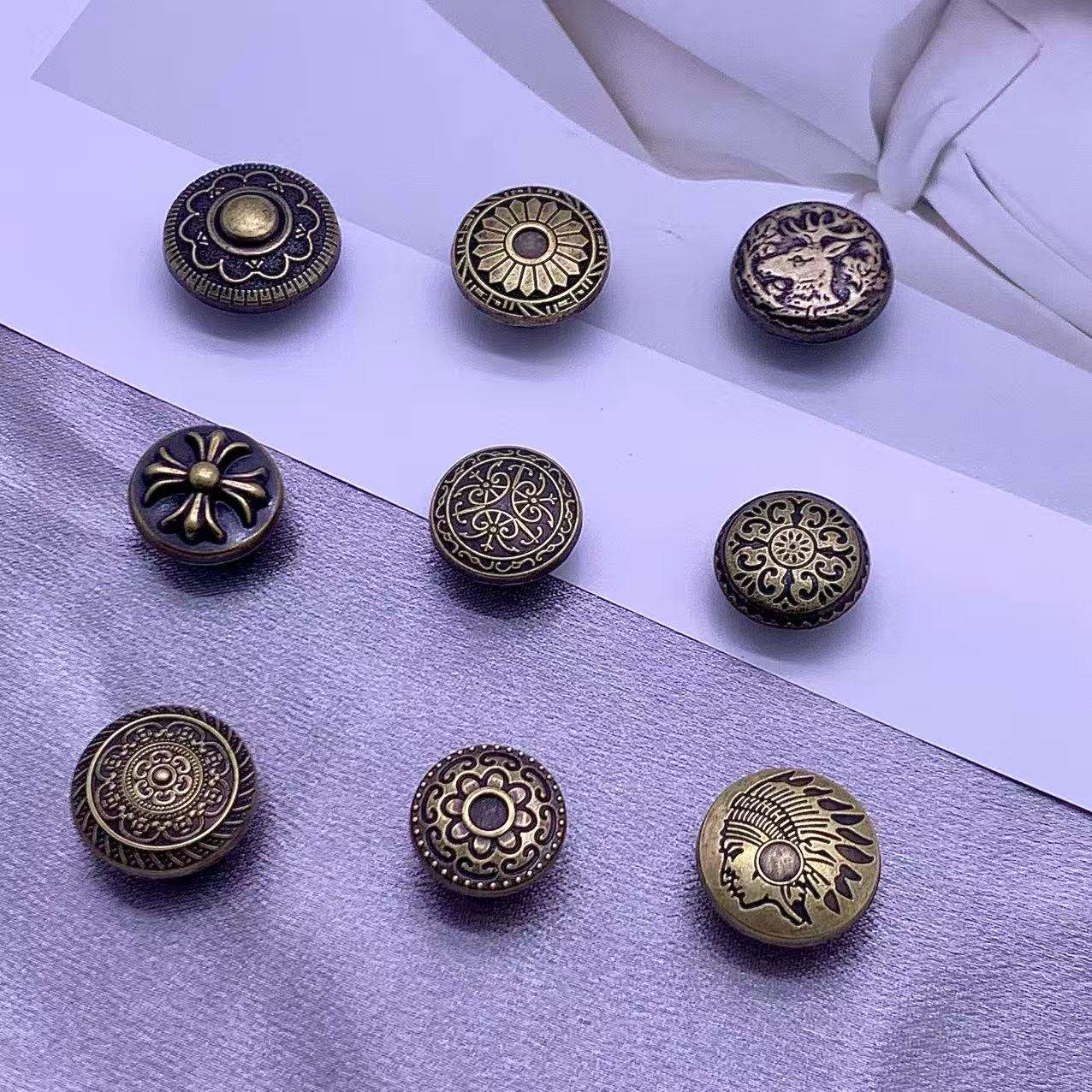
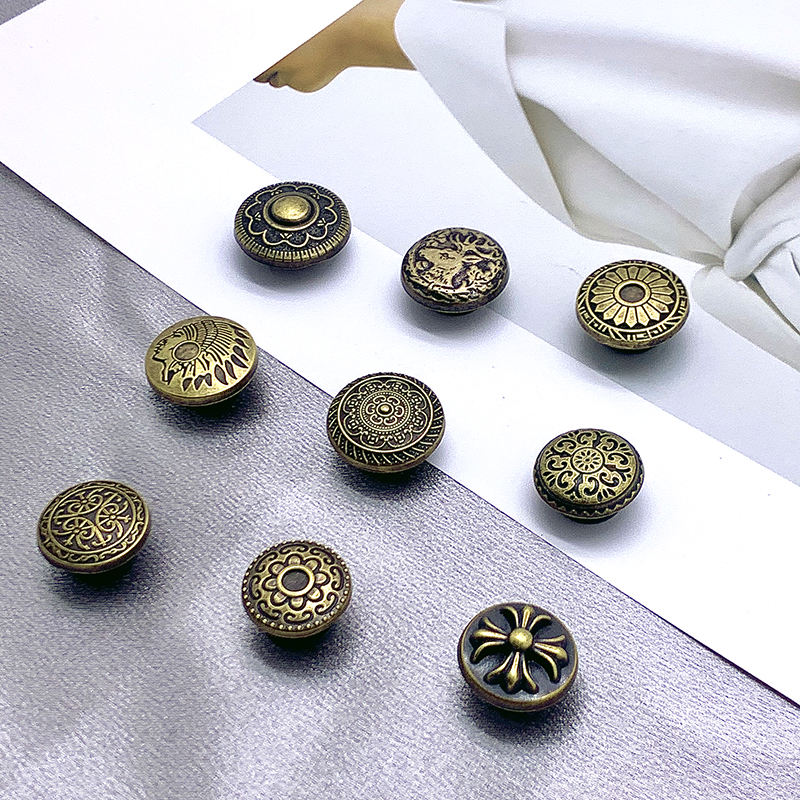
Smooth, textured, open-ring, or covered faces, where available.
Embossed, debossed, engraved, or printed branding, depending on the design.
Metal-tone finishes, including silver-tone, brass-tone, copper-tone, gunmetal, and antique effects.
Painted or other colored surfaces, subject to material and process compatibility.
Surface appearance can be coordinated with zippers, rivets, buckles, and other garment hardware. Physical samples are recommended when close color matching is important, as different base materials and finishing processes can produce visible variations.
Fastening Performance and Installation
A reliable snap fastening depends on the complete assembly: the snap components, fabric layers, reinforcement, setting tools, and machine adjustment. Post or prong length should be selected for the actual material thickness.
Test installation on the intended fabric before bulk production. The assembled snap should engage smoothly, remain securely attached, and open without damaging the surrounding material. Stretch fabrics and lightweight materials may require reinforcement to distribute the opening force.
For mechanically attached snaps, use dies designed for the selected construction. Incorrect tools or excessive setting pressure can deform components and affect fastening performance.
Sampling and Quality Requirements
Before confirming an order, review the dimensions, material, finish, logo, component configuration, and opening feel against an approved sample.
Depending on the application, evaluation may include:
Opening and closing force.
Attachment strength on the actual garment.
Performance after repeated fastening cycles.
Appearance and function after the intended washing process.
Corrosion resistance or restricted-substance testing where required.
Specific test methods, acceptance criteria, and documentation requirements should be agreed before production. For children’s garments, secure attachment and applicable small-parts requirements deserve particular attention.
Request a Custom Quote
Share your preferred snap style, cap size, fabric type and thickness, finish reference, logo artwork, and order quantity. Include any garment washing requirements or testing specifications so suitable options can be reviewed. For replacement components, a physical sample is helpful for checking construction and tooling compatibility.
Snap buttons are packed according to their construction, component count, finish, and order quantity. Components can be separated by type and supplied in corresponding quantities to support identification, stock control, and production-line handling.
Packaging arrangements can include:
Quantity-based inner packing: Bags or boxes containing agreed quantities.
Component labeling: Clear identification of caps, sockets, studs, posts, or other supplied parts.
Separate specification packing: Different sizes, colors, finishes, and designs packed separately.
Protective packing: Suitable inner protection to help reduce scratching, rubbing, and deformation.
Outer carton identification: Product references, component descriptions, quantities, and agreed batch information.
The quotation and packing list should clearly state whether quantities refer to individual components or complete sets, and specify the parts included in each set.
Final packing quantities, carton dimensions, net weight, and gross weight are confirmed after the product specifications and packing arrangement are approved. Customized labels or production-specific packing can be discussed before order confirmation.