
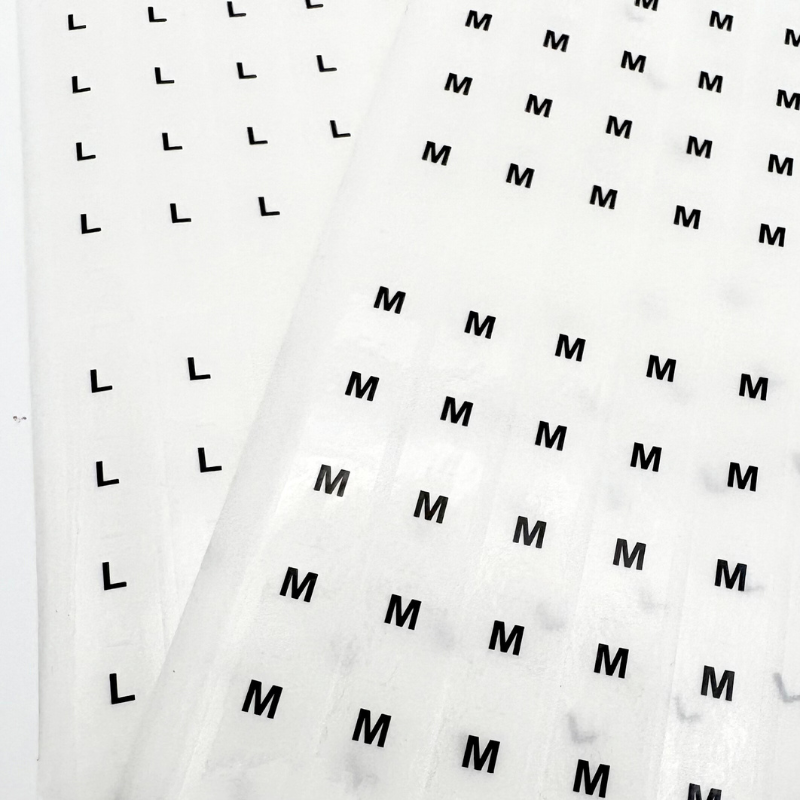

Size Labels Stickers
Custom Clothing Size Stickers for Clear, Organized Retail Displays
Make garment sizes easy to identify with custom clothing size stickers. Designed for apparel brands, garment manufacturers, retailers, and distributors, these labels help customers find the right size and support efficient sorting, packing, and stock handling.
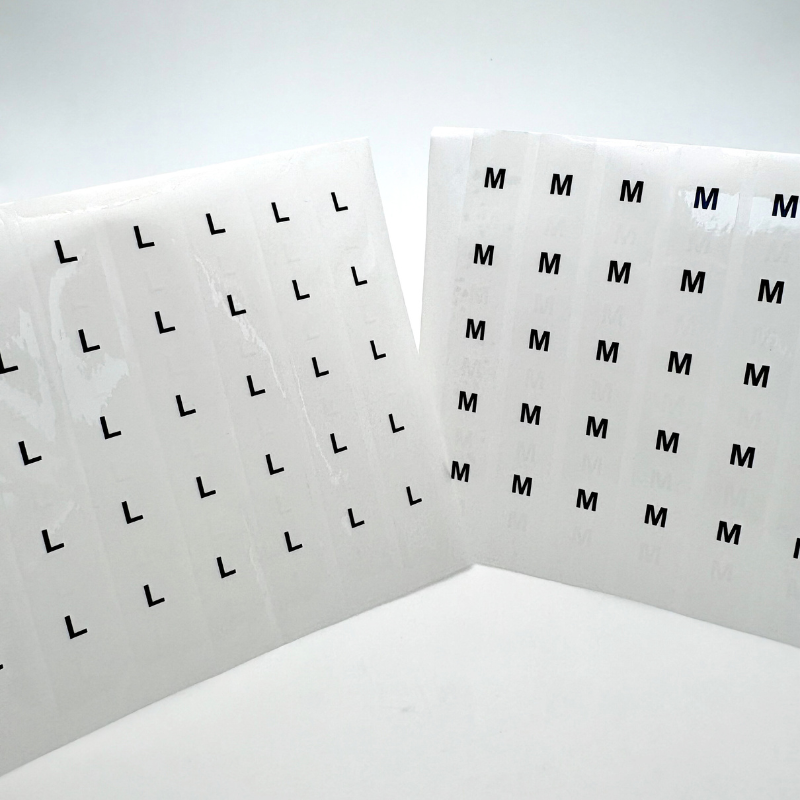
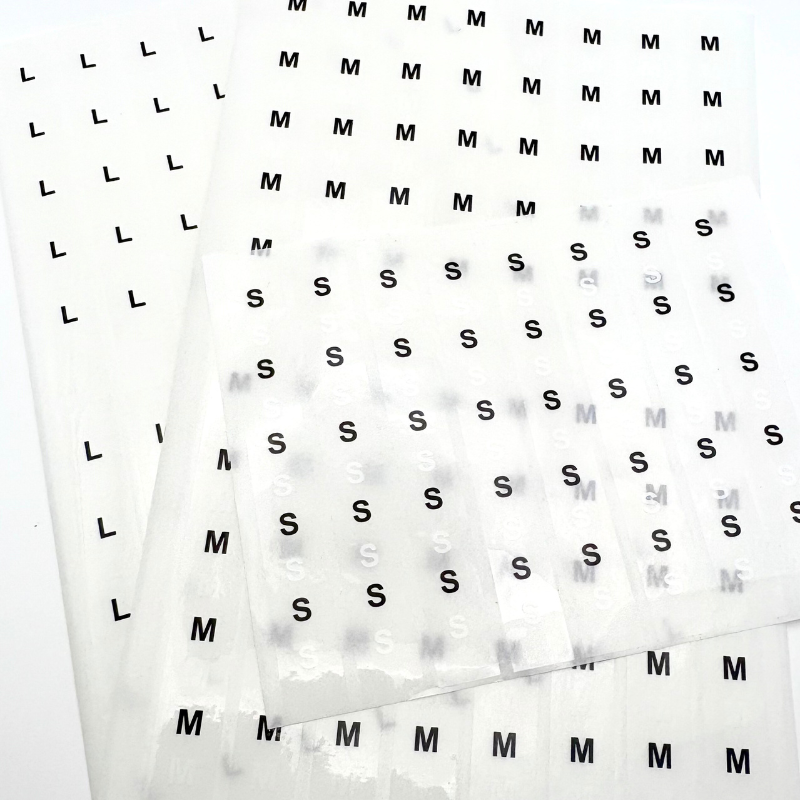
From compact round labels to long size strips for folded garments, our clothing size stickers can be customized in dimensions, materials, printing, and supply format. Clear lettering and consistent layouts help create an organized presentation across your collection.
Styles for Different Garments and Displays
Choose a format suited to your product and the way it will be displayed:
Round size stickers: A compact option for individual size identification.
Rectangular or square labels: Provide space for size information alongside a logo or product reference.
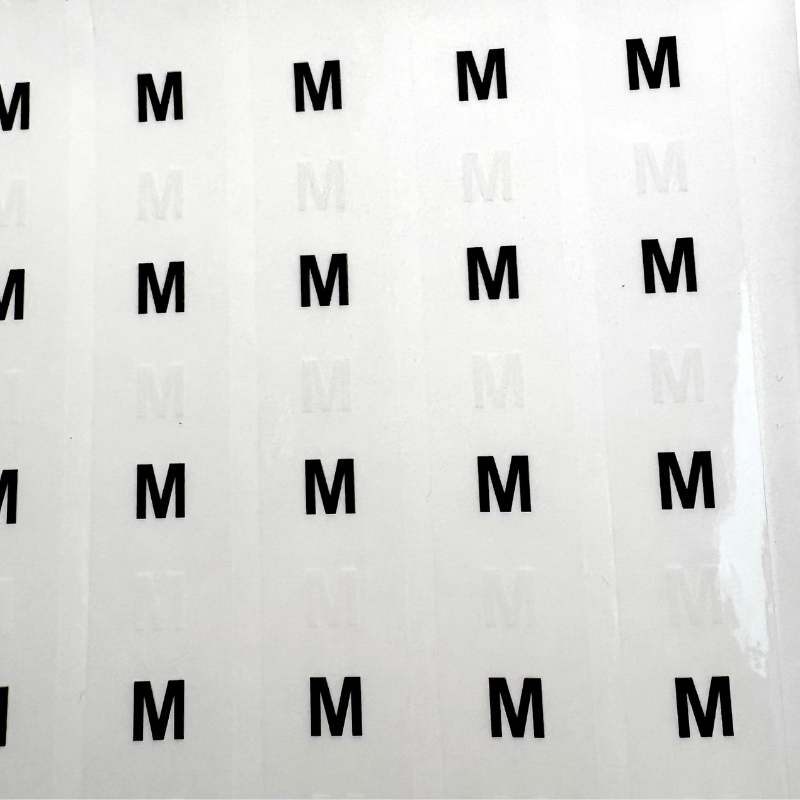
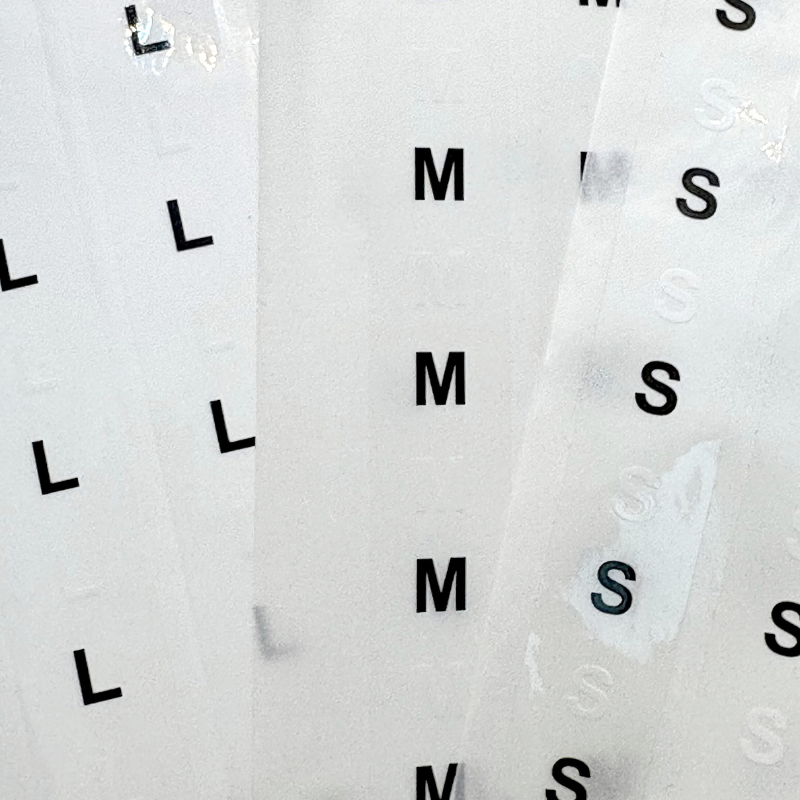
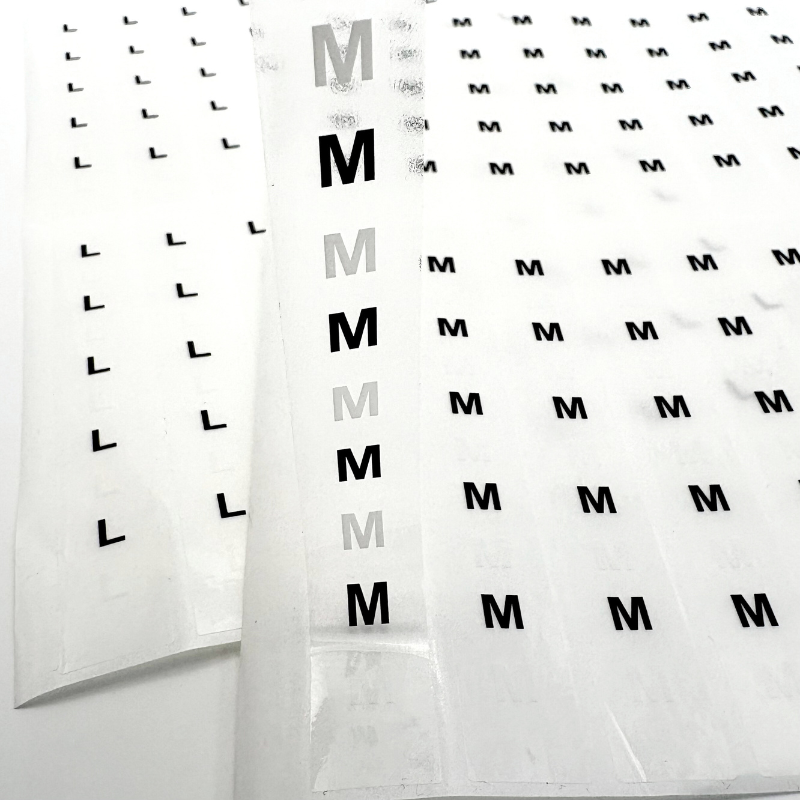
Long size strips: Display repeated size markings along folded jeans, trousers, shirts, and other garments.
Custom-shaped stickers: Coordinate with your brand identity or specific packaging layout.
Sticker dimensions should balance visibility with the available application area. For long strips, the spacing and repetition of size markings can be adjusted to suit the folded product presentation.
Size Markings and Custom Information
Print alphabetical sizes such as XXS–5XL, numerical sizes, waist and length measurements, or other designations used in your collection.
Customization options can include:
Brand-specific size ranges and typography.
Color coding to distinguish sizes.
Logos and collection names.
Product references or style numbers.
Barcodes or QR codes, where the label dimensions allow.
Size conversions vary between brands and markets. Any combined sizing, such as EU, UK, and US equivalents, should follow your approved size chart rather than a generic conversion.
Material Options and Appearance
Material selection affects visibility, flexibility, print quality, and application performance. Depending on the design, options can include:
Paper labels: An opaque printing surface for clear text and color-coded designs.
Clear film labels: Allow the garment color or packaging surface to remain visible around the printed information.
White or colored film labels: Provide a contrasting background and a coordinated appearance across different products.
On transparent stickers, white ink or a solid printed panel may be considered to improve readability against dark or patterned fabrics. Samples should be reviewed on the actual garment so text remains clear under typical retail lighting.
Adhesive Selection for Garment Applications
Clothing size stickers are generally intended for temporary identification. The adhesive should hold the label in place during the agreed handling period while allowing suitable removal from the intended surface.
Performance depends on the fabric composition, weave, texture, surface treatment, storage conditions, and length of contact. An adhesive that works on denim may behave differently on coated fabrics, delicate knits, brushed textiles, or water-repellent finishes.
For direct garment application, test samples on the actual fabric before bulk use. Check adhesion, removal, visible residue, discoloration, and any effect on the fabric surface after representative storage conditions.
Where direct application is unsuitable, the sticker can be placed on a hang tag, packaging bag, or another approved surface. Claims such as “residue-free” or “safe for all fabrics” should only be used when supported for the specified application.
Print Clarity and Retail Readability
Size markings should be recognizable at a glance. Clear fonts, suitable contrast, and consistent positioning help customers and staff identify products quickly.
For color-coded ranges, retain a visible size designation so the information does not depend on color alone. If barcodes or QR codes are included, their dimensions, contrast, and surrounding clear space should support reliable scanning. Verify readability on a finished sample in its intended position.
Supply Formats for Your Packing Process
Size stickers can be supplied in rolls or sheets, depending on the label construction and application method.
Rolls can support repetitive manual labeling or compatible dispensing equipment. Sheets provide a convenient format for smaller packing stations and mixed-size handling. Different sizes can be packed separately, or an agreed assortment can be prepared with clearly specified quantities for each size.
For machine application, roll dimensions, winding direction, label spacing, and liner compatibility should be confirmed before production.
Sample Approval and Quality Review
Before bulk production, confirm the artwork, size quantities, label dimensions, material, adhesive, and supply format against an approved sample.
Relevant checks can include:
Accuracy of size markings and product references.
Print clarity and consistency across the size range.
Cutting quality and separation from the release liner.
Adhesion and removal on the intended surface.
Barcode readability, where applicable.
Quantities and identification of each size variant.
Request a Custom Quotation
Send your required sticker format, dimensions, size range, quantity per size, preferred material, and artwork. Include the fabric or packaging surface, expected contact period, and application method so suitable adhesive and supply options can be reviewed.
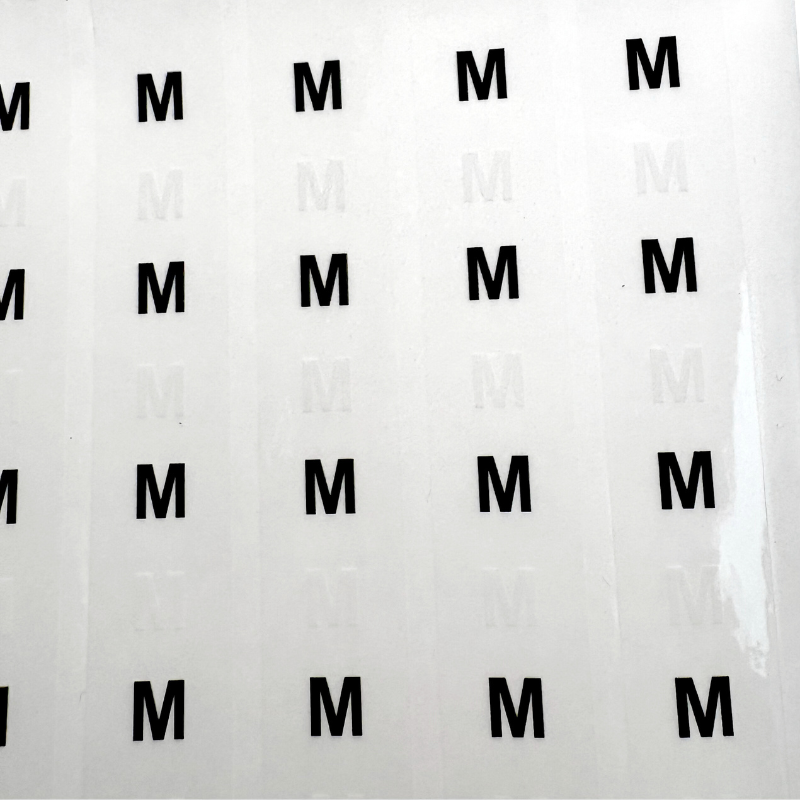
Custom clothing size stickers are packed according to their supply format, dimensions, and size assortment. Clear identification helps prevent size mixing during receiving, storage, and garment packing.
Packing options can include:
Roll packing: An agreed number of labels per roll, with each roll identified by size and item reference.
Sheet packing: An agreed number of labels per sheet and sheets per pack.
Separate size packing: Different size markings, designs, and colors packed separately.
Assorted-size packing: Mixed-size orders organized according to an approved quantity breakdown.
Protective wrapping: Helps reduce dust exposure, edge damage, and handling marks.
Carton identification: Labels showing product references, size assortments, quantities, and agreed batch details.
For roll orders, confirm the core diameter, maximum outer diameter, winding direction, and label orientation. Packing lists should clearly state the number of labels supplied for each size.
Final carton dimensions, net weight, and gross weight are confirmed after the order specifications are approved. Store labels in their protective packaging away from direct sunlight, excessive heat, and moisture. Storage conditions and shelf life should follow the selected adhesive and label-material specifications.