


Embossed Custom Patches PVC 3D Rubber Label
Embossed Custom PVC Patches and 3D Rubber Labels
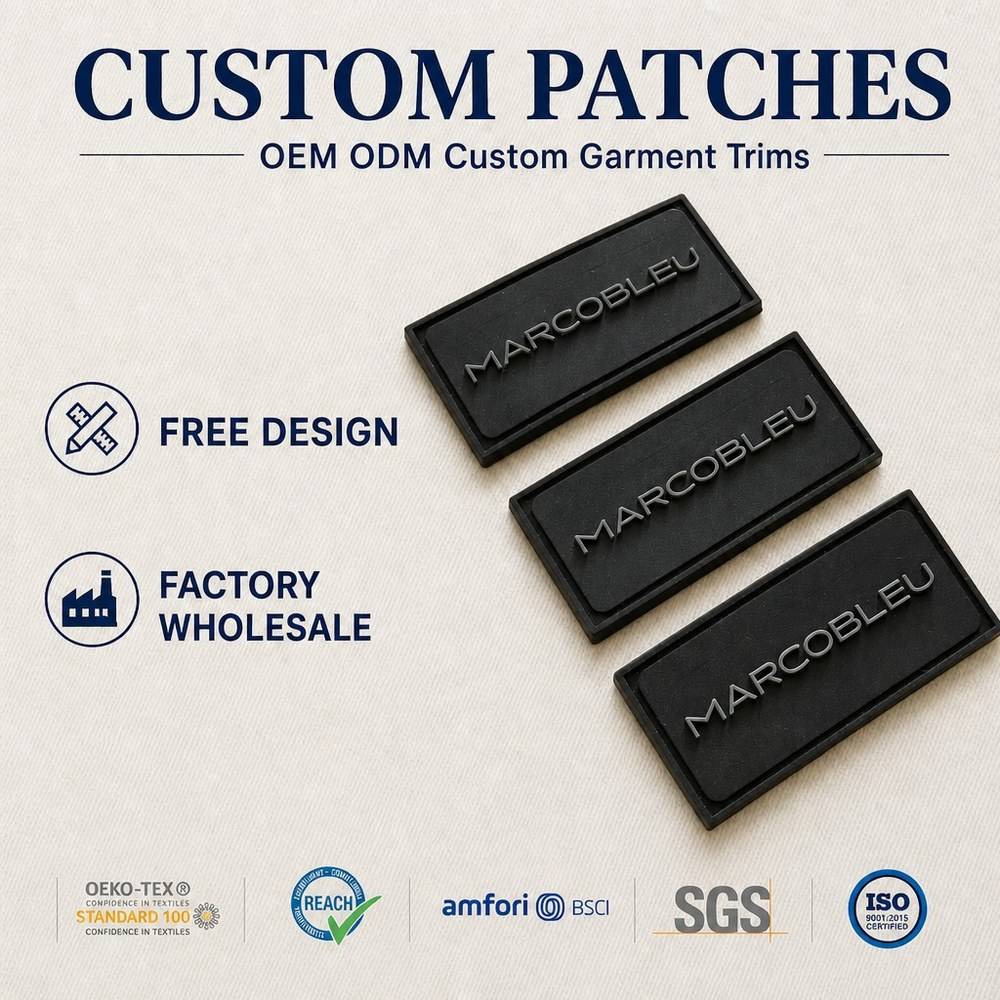
Add dimensional branding and a durable decorative detail to your garments and accessories with custom embossed PVC patches. Designed for clothing, jackets, sportswear, uniforms, bags, caps, footwear, and outdoor products, these patches combine raised logo details with a flexible molded construction.
Custom PVC patches can be produced with embossed, raised, recessed, layered, or textured elements. From a simple one-color logo to a detailed multi-level design, each patch can be developed around your brand identity, product placement, and attachment requirements.
3D Embossed PVC Construction
The dimensional effect is formed during the molding process, creating raised lettering, logos, borders, and graphic elements on the patch surface. Recessed backgrounds and multiple levels can be combined to create depth and visual contrast.
The final relief depends on:
Patch size and overall shape.
Artwork line thickness and spacing.
Number of layers and color areas.
Selected PVC grade and thickness.
Mold design and production method.
Intended attachment method.
Bold graphics and clearly separated lettering generally provide better definition. Very fine lines, small characters, and closely spaced details should be reviewed at actual size before production.
Custom Shapes, Colors, and Surface Details
Choose a standard rectangular, square, round, oval, or custom die-cut outline. Patch edges can follow your logo, mascot, product shape, or collection theme.
Customization options may include:
Single-color or multi-color PVC designs.
Raised and recessed logo elements.
Flat, textured, matte, or glossy surfaces.
Contrasting borders and background layers.
Engraved, molded, or embossed lettering.
Reflective or specialty effects where compatible.
Custom thickness and dimensional profiles.
Color references can be provided to communicate your target appearance. The final result may vary according to the PVC formulation, surface texture, lighting, and production process, so a physical sample is recommended for approval.
Attachment Options for Different Products
PVC patches can be supplied with an attachment method suited to the product and production process:
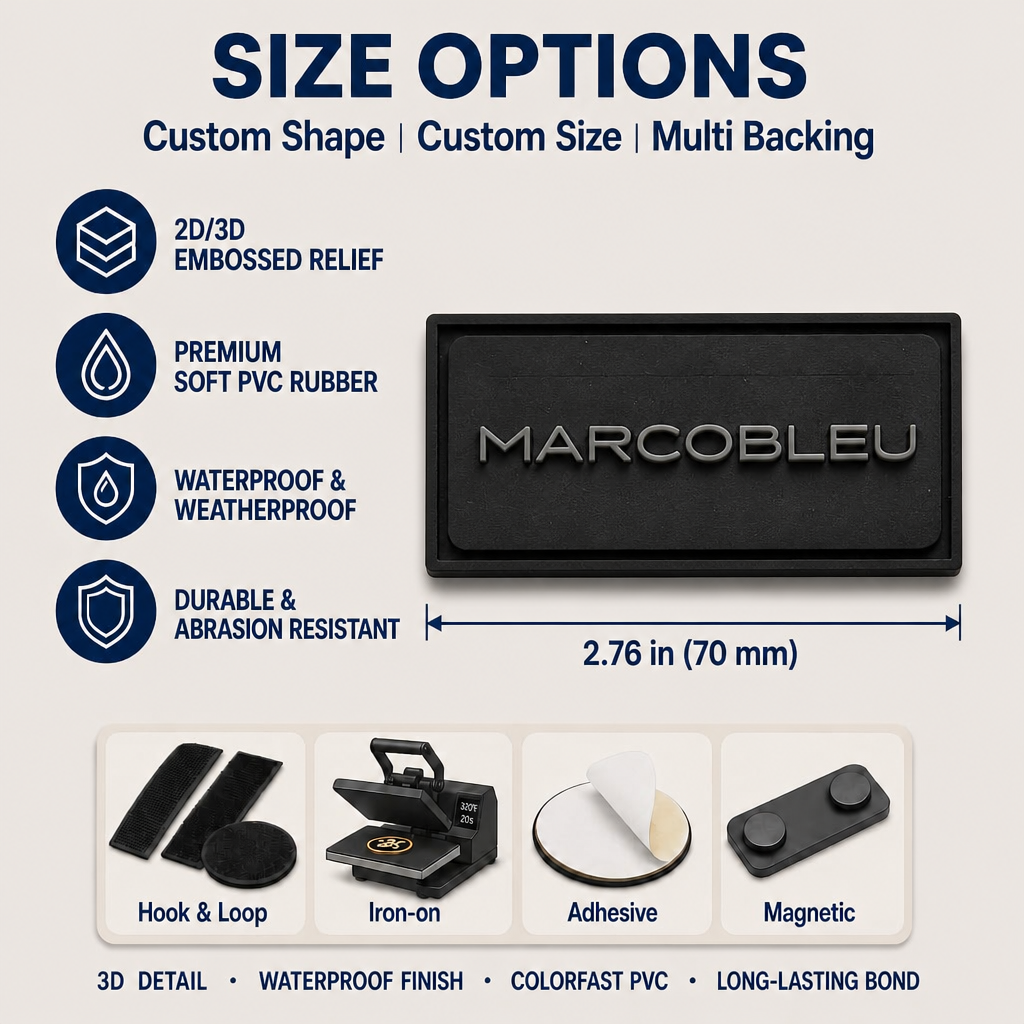
Sew-on backing: Suitable for garments, bags, caps, and products requiring a permanent stitched attachment.
Heat-applied backing: Suitable only for compatible fabrics and application conditions.
Hook-and-loop backing: Allows the patch to be removed and replaced on compatible products.
Adhesive backing: Suitable for selected smooth surfaces and temporary or light-duty applications.
Magnetic or other special backing: Available only where appropriate for the design and intended use.
The attachment method should be selected according to the fabric, surface texture, washing conditions, patch weight, and expected handling. PVC material alone does not determine attachment strength.
Suitable Applications
Custom embossed PVC patches can be developed for:
Denim jackets and casualwear.
Sportswear and team apparel.
Workwear, uniforms, and utility clothing.
Outdoor jackets and bags.
Caps, backpacks, and footwear.
Streetwear and promotional merchandise.
Children’s garments, subject to applicable small-part requirements.
Patch placement should avoid thick seams, sharp curves, and uneven surfaces that may prevent consistent attachment.
Flexible Feel and Product Compatibility
PVC patches can be produced in flexible or firmer constructions, depending on the intended use. A flexible patch may suit curved surfaces and moving garments, while a thicker construction can create a stronger dimensional appearance.
Patch thickness and weight should be considered together with the fabric and attachment method. Large or heavy patches may require additional stitching or reinforcement, especially on lightweight or stretch materials.
Installation and Care Evaluation
For sew-on patches, use suitable thread and secure stitching around the patch border or designated sewing channel. For heat-applied patches, confirm press temperature, pressure, dwell time, peeling method, and fabric compatibility through sampling.
Before bulk production, evaluate the patch on the actual product and check:
Attachment strength and edge lifting.
Surface appearance after washing or cleaning.
Flexibility during garment movement.
Resistance to rubbing and abrasion.
Color stability and surface condition.
Comfort and possible contact with the wearer.
Washability, waterproofing, scratch resistance, and chemical resistance should only be claimed for the approved construction and agreed test conditions.
Material and Compliance Information
PVC formulations, plasticizers, inks, and backing materials should be selected according to the destination market and product requirements. If restricted-substance testing, recycled content, or specific material documentation is required, please provide the requirement before quotation.
A molded PVC patch is not automatically recyclable, biodegradable, non-toxic, or suitable for every garment category. Such claims should be supported by product-specific documentation.
Sample Approval and Quality Review
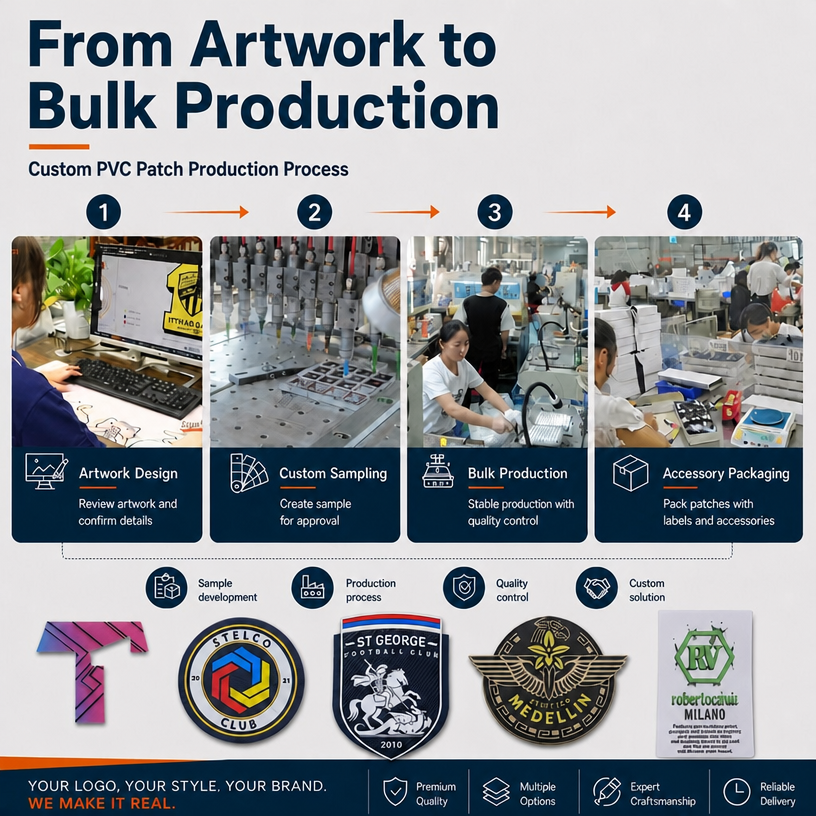
Before bulk production, confirm:
Material type and patch thickness.
Artwork, colors, raised levels, and recessed details.
Shape, dimensions, and edge profile.
Backing and attachment method.
Garment or product surface.
Washing, cleaning, and storage conditions.
Packing and labeling requirements.
An approved physical sample provides a clear reference for repeat orders and helps reduce differences between design approval and finished production.
Request a Custom Quotation
Send us your logo or artwork, preferred patch size, shape, colors, thickness, backing, application surface, quantity, and care requirements. A reference sample or product photo can help us review the structure and recommend a suitable attachment method.
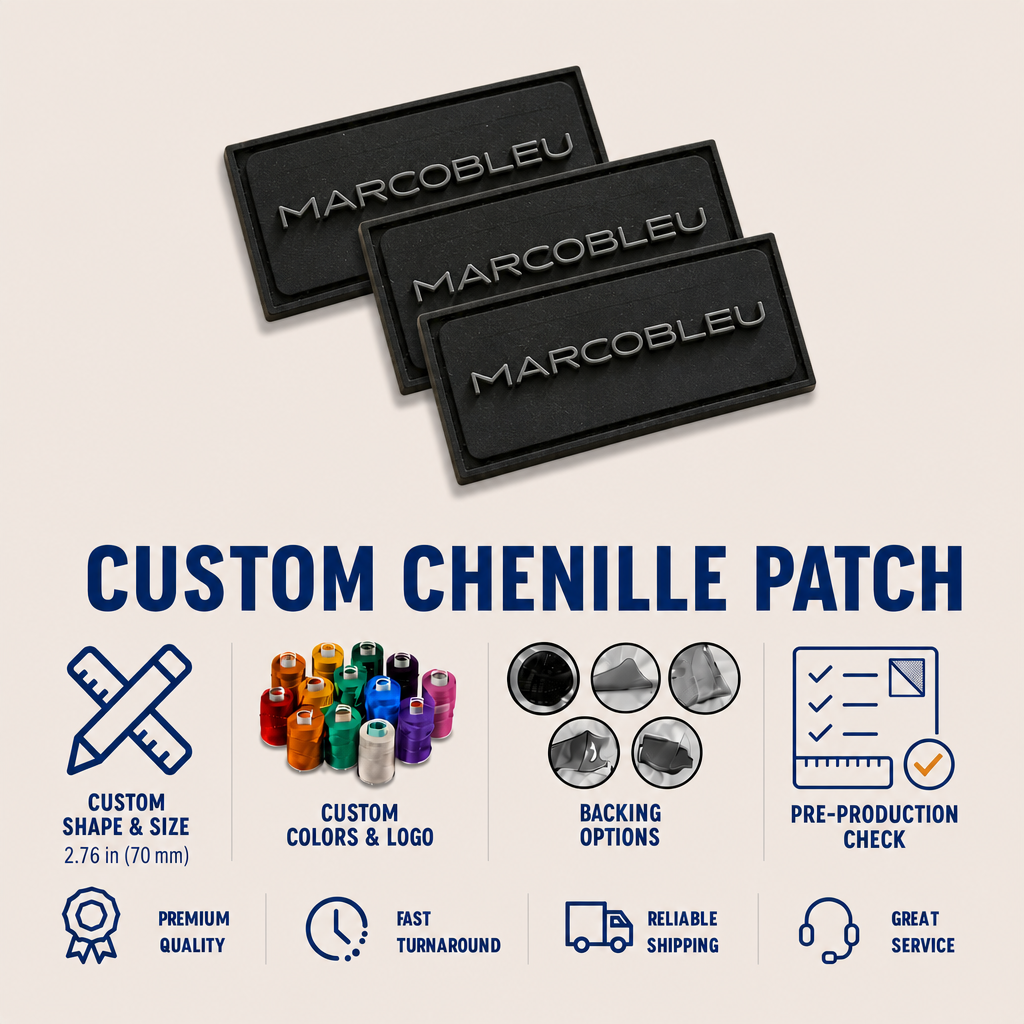
Custom embossed PVC patches are packed according to their size, thickness, backing, surface finish, and order quantity. Packing is designed to protect raised details, patch edges, adhesive surfaces, and decorative finishes.
Packaging options can include:
Counted inner packs: Patches grouped in agreed quantities for production and inventory control.
Separate specification packing: Different sizes, colors, artwork versions, and backing types packed separately.
Surface protection: Protective bags, dividers, or interleaving to reduce rubbing and pressure marks.
Backing protection: Release liners or protective sheets retained on adhesive-backed patches.
Attachment separation: Hook-and-loop components, threads, or other accessories supplied separately where required.
Batch identification: Inner-pack labels showing item references, quantities, and production details.
Outer carton marking: Carton numbers, product references, quantities, and agreed shipping information.
If patches with different attachment methods are included in one order, each version should be clearly identified to avoid incorrect application.
Final packing quantities, carton dimensions, net weight, and gross weight are confirmed after the product and packing specifications are approved.
Store patches in a clean, dry environment away from direct sunlight, excessive heat, sharp objects, chemicals, and heavy stacking pressure. Adhesive-backed versions should remain in their protective packaging until application.