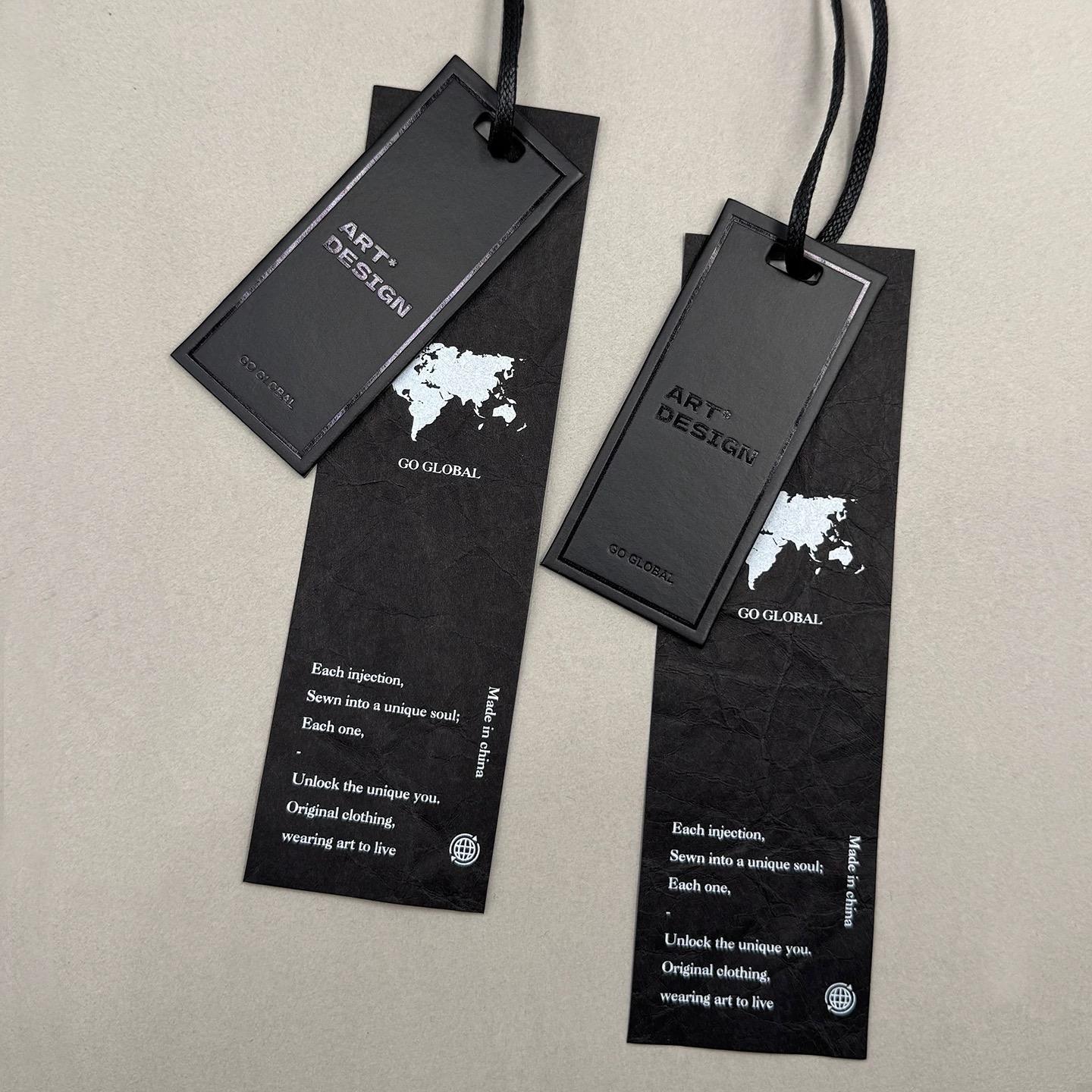

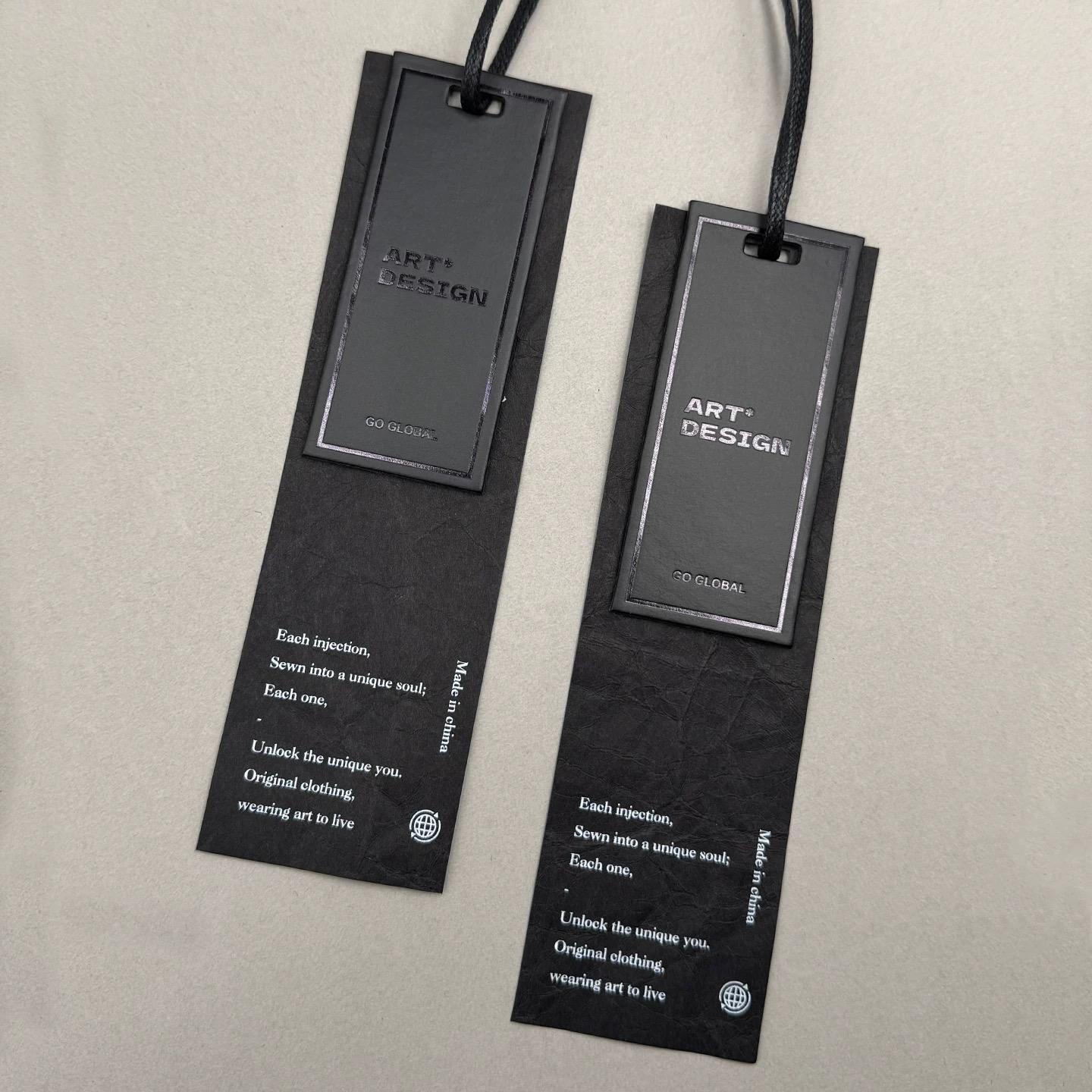
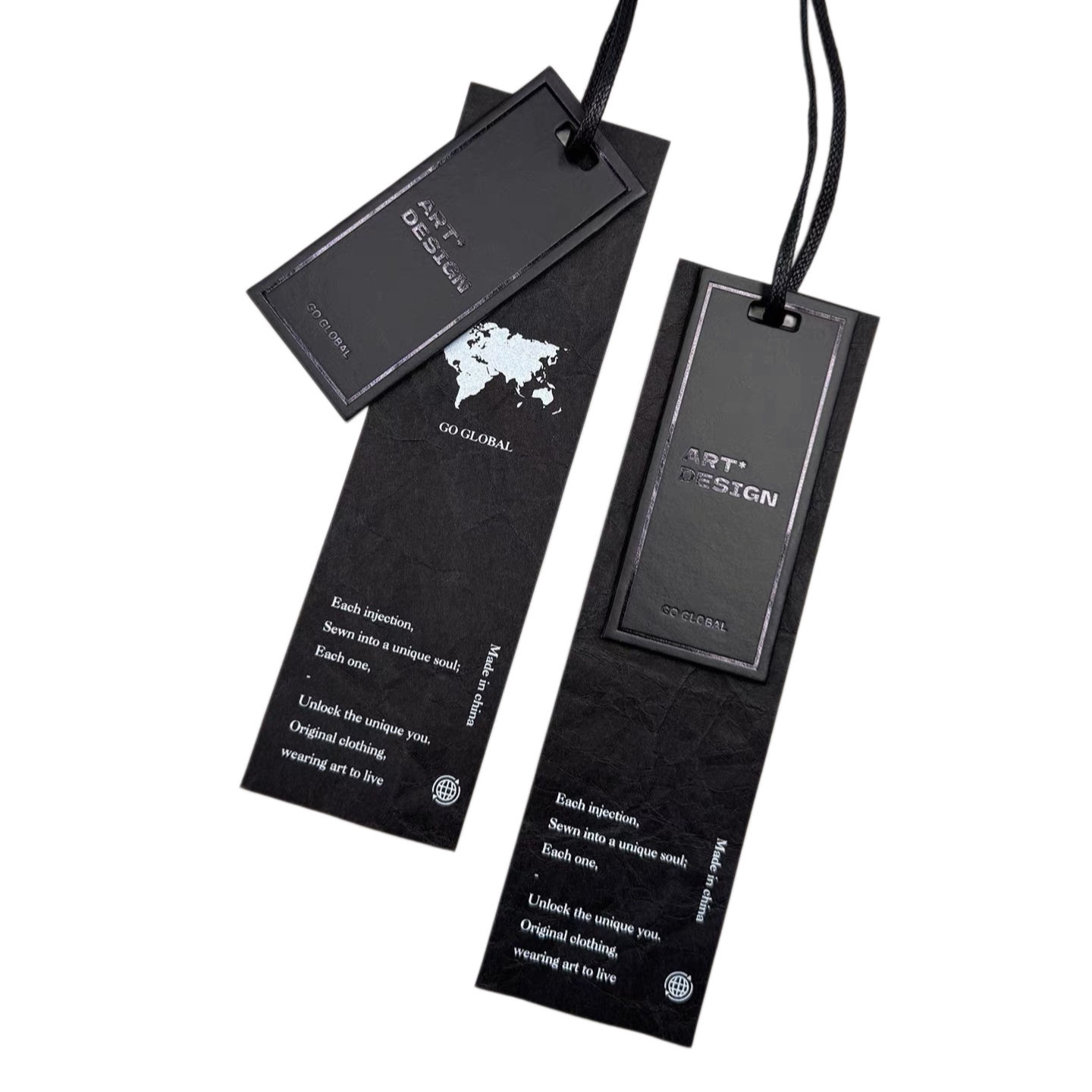
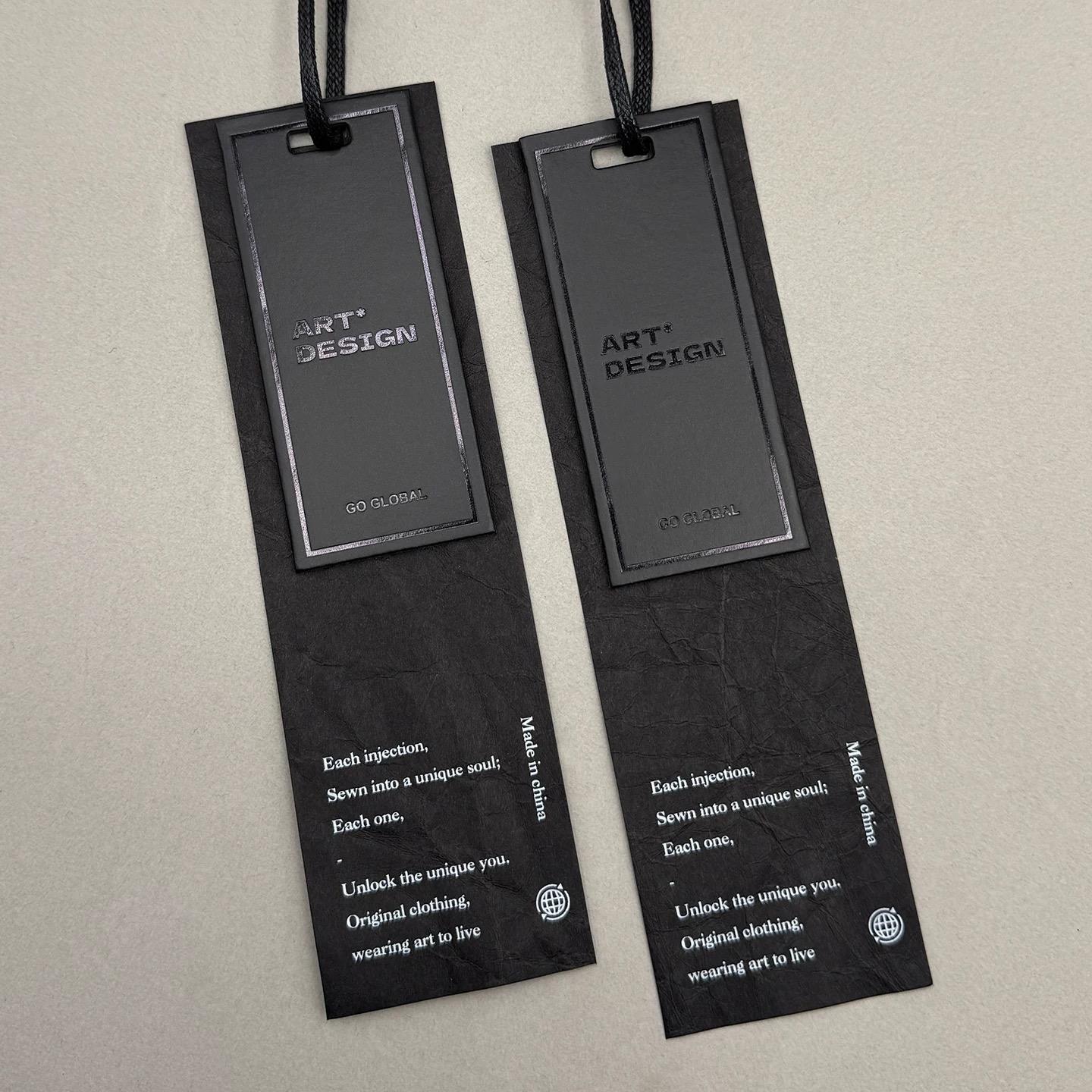
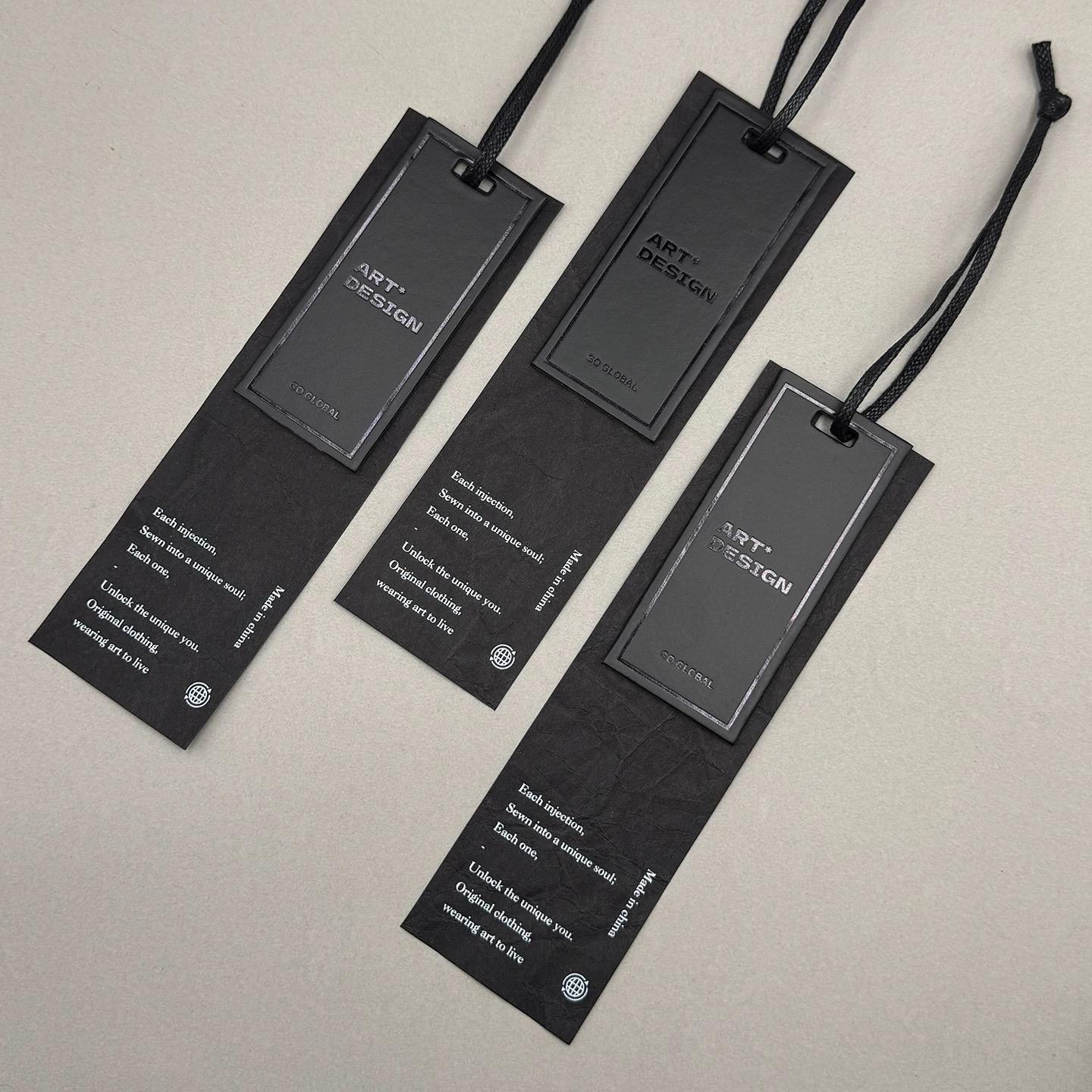
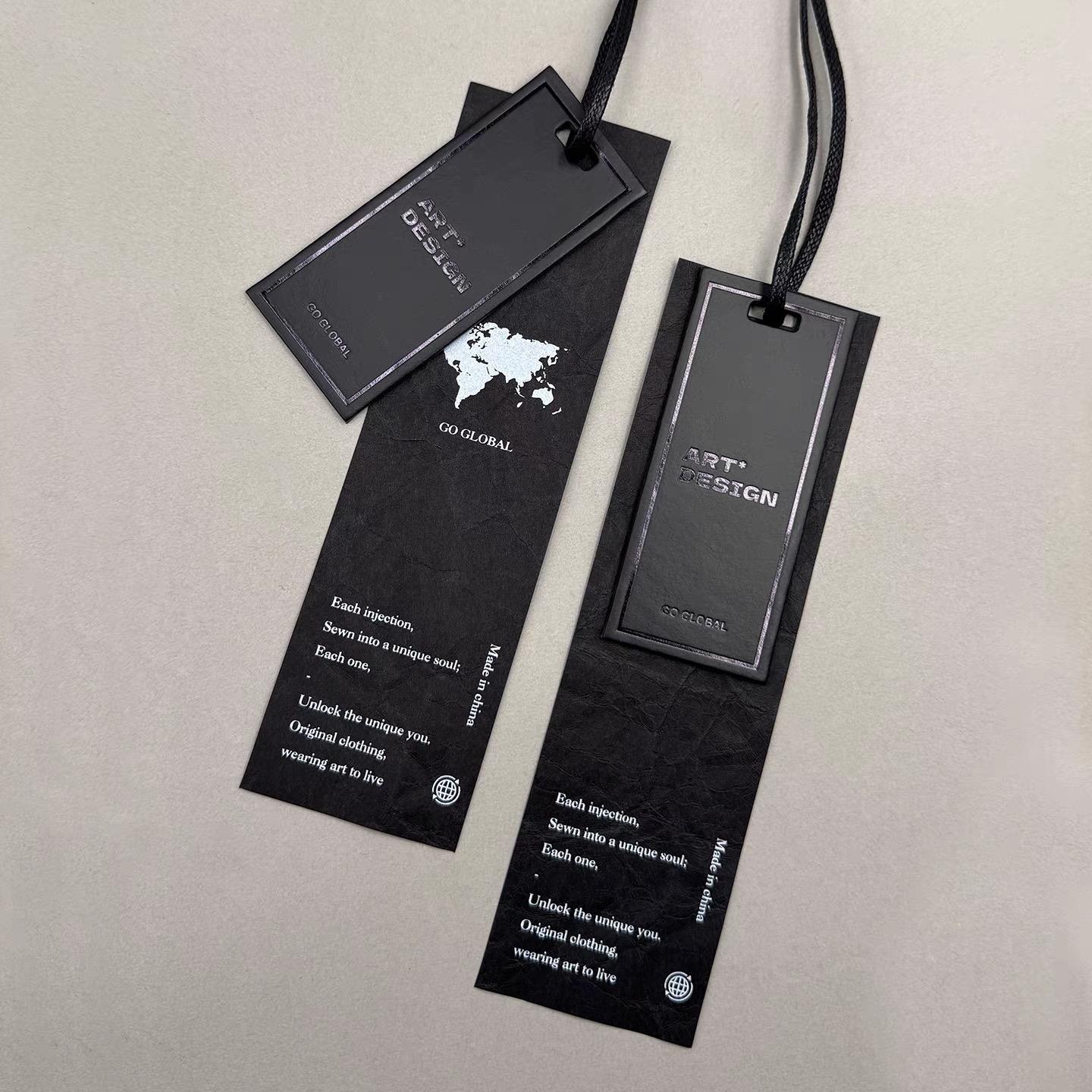

Luxury Custom Black Clothing Label Garment Tag
Luxury Custom Black Clothing Labels for Fashion Brands
Give your garments a distinctive finishing detail with custom black clothing labels designed around your brand. A black background provides a versatile setting for contrasting lettering, tonal logos, and selected decorative yarns, making it suitable for tailoring, streetwear, denim, knitwear, outerwear, and accessories.
Personalize the label material, dimensions, artwork, colors, folds, and attachment layout. From a discreet inner-neck label to a visible brand detail near the hem, each design can be developed to complement your collection.
Woven and Printed Construction Options
Choose the label construction according to your artwork, preferred texture, and garment application.
Black woven labels: Logos and lettering are formed with yarns, creating an integrated textile design. Suitable damask constructions can support detailed graphics and smaller text.
Black satin woven labels: A satin-weave background can provide a smoother, more lustrous appearance, with design suitability depending on the weave and artwork.
Black printed fabric labels: Branding is printed onto a suitable black textile tape, offering an alternative appearance and feel for selected designs.
The final specification should identify the actual fiber composition and construction. Satin describes a weave structure rather than a specific material.
Contrasting or Tonal Logo Designs
Black labels can support a variety of brand styles:
White or light-colored lettering for strong contrast.
Black-on-black details for understated branding.
Gray or muted colors for a softer visual effect.
Brand-color logos coordinated with the garment.
Metallic-effect yarns or compatible printed accents.
Borders, monograms, and short collection messages.
Tonal artwork relies on differences in texture, sheen, or weave to remain visible. It should be assessed on a physical sample under typical viewing conditions.
For printed labels, light colors on a dark base may require an appropriate opaque printing system. Sample review helps confirm coverage, edge definition, and the finished feel of the printed area.
A Consistent Black Background
Black can vary in depth, undertone, and surface reflection across different textiles. Matte black tape, lustrous satin, and woven damask may look different even when they use similar color references.
If the label needs to coordinate with an existing garment, lining, zipper, or other trim, provide a physical reference. Where several label constructions are used within one collection, approve each material separately.
Dark yarns and tapes should also be evaluated for color transfer, particularly when the label is sewn against a light-colored fabric or lining.
Custom Dimensions and Fold Styles
Develop the label around the available sewing area and the information it needs to display. Common formats include:
End-fold labels: Folded ends provide a neat arrangement for surface sewing.
Center-fold labels: Suitable for seam insertion with artwork positioned on the visible panels.
Straight-cut labels: Flat labels with agreed stitching allowances.
Compact hem or side-seam tabs: Small branding details adapted to their finished folded position.
Specify both the total cut dimensions and the visible area after folding and sewing. Important text should remain clear of stitching lines, while the artwork orientation should be checked in the final garment position.
Texture, Comfort, and Garment Placement
A refined label should look appropriate and feel suitable for its placement. Yarn selection, tape texture, weave density, printing, thickness, and edge finish all contribute to the result.
For necklines and other skin-contact areas, review a sewn sample for stiffness, folded bulk, and edge comfort. A firmer construction may suit external branding on a jacket or bag, while a lighter label may work better inside a blouse or fine-knit garment.
Specialty yarns and decorative printing can change the surface feel. Their suitability should be assessed as part of the complete label rather than selected on appearance alone.
Coordinated Branding Across Your Collection
Create related main labels, size tabs, and external brand labels using a shared black background and consistent typography. Each format can be adjusted to suit its dimensions while retaining a recognizable identity.
Small labels often benefit from simplified artwork rather than a directly reduced version of a larger design. Separate size information can also keep the main brand label visually uncluttered.
Assign a clear item reference to each artwork, size, and fold version to support accurate ordering and garment assembly.
Care Performance and Quality Review
Before bulk production, approve the label on the intended garment and evaluate it under the specified care process.
Relevant checks can include:
Logo clarity and contrast against the black background.
Consistency of color, texture, and surface sheen.
Print coverage or woven-detail definition.
Dimensional stability after care.
Colorfastness and transfer to adjacent fabrics.
Edge condition, folds, and stitch security.
Comfort after washing or professional cleaning.
Garment dyeing, special washes, dry cleaning, and industrial laundering should be identified during development. Results from one process should not be assumed to apply to another.
Request a Custom Quotation
Send your logo artwork, preferred woven or printed construction, dimensions, black material reference, design colors, fold style, and quantity per version. Include the garment type, placement, and care requirements so suitable materials and sampling options can be reviewed.
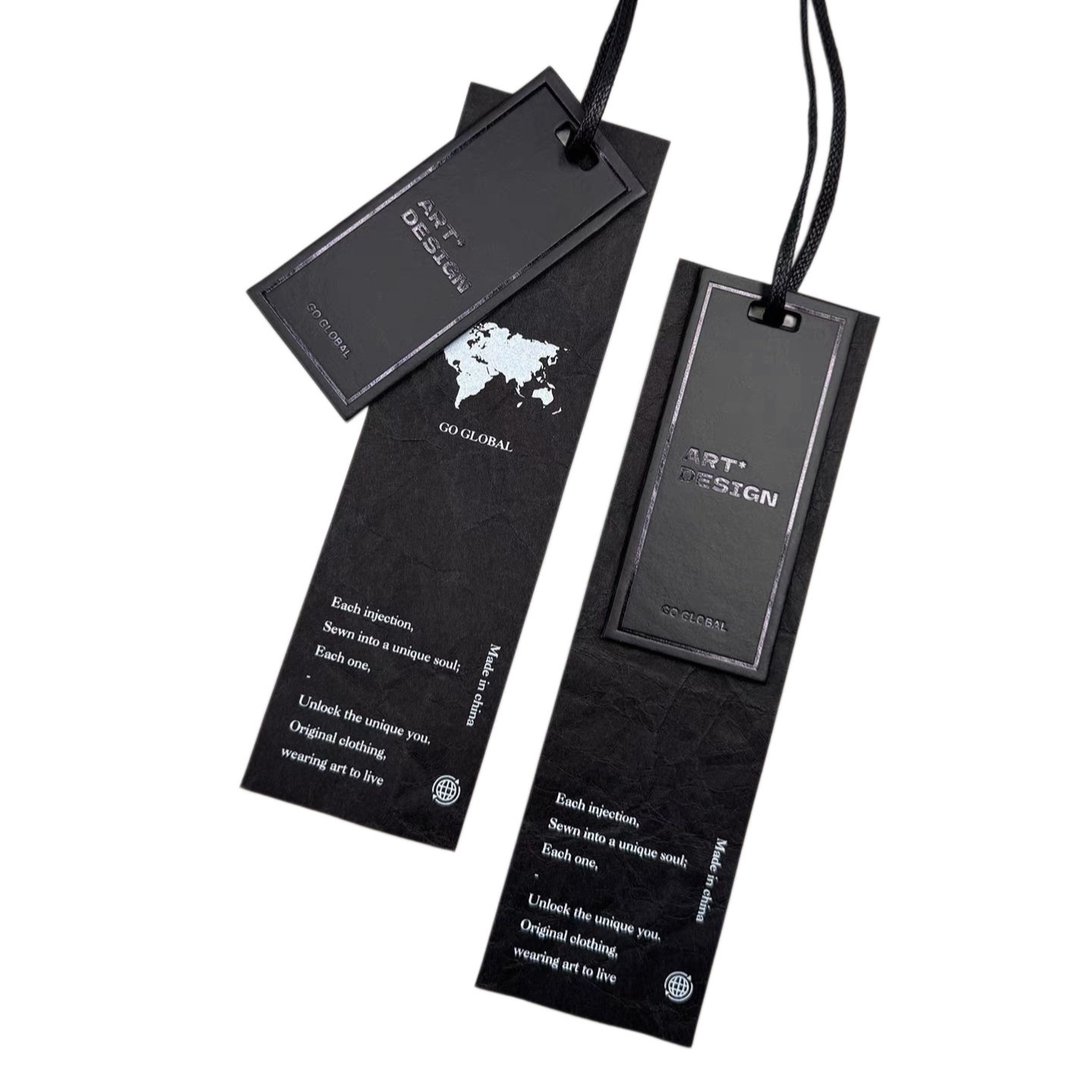
Custom black clothing labels can be supplied as cut pieces, folded labels, or continuous rolls, depending on the approved construction and sewing requirements.
Packing options can include:
Counted inner packs: Labels grouped in agreed quantities for production and stock control.
Separate version packing: Different logos, sizes, materials, and folds packed separately.
Fold protection: Labels arranged to help preserve the approved shape.
Surface protection: Suitable wrapping to limit dust, lint, and rubbing during handling.
Roll identification: Item references, repeat spacing, orientation, and quantities marked where required.
Carton labeling: Product references, quantities, and agreed batch information.
Since different black labels may look similar at a glance, inner-pack identification should clearly distinguish artwork versions, materials, and size markings.
Final packing quantities, carton dimensions, net weight, and gross weight are confirmed after approval. Store labels in clean, dry conditions away from moisture, direct sunlight, contamination, and excessive pressure.