

Custom High Precision Tailored Garment Matte Wash Label
Custom Matte Printed Care Labels for Tailored Garments
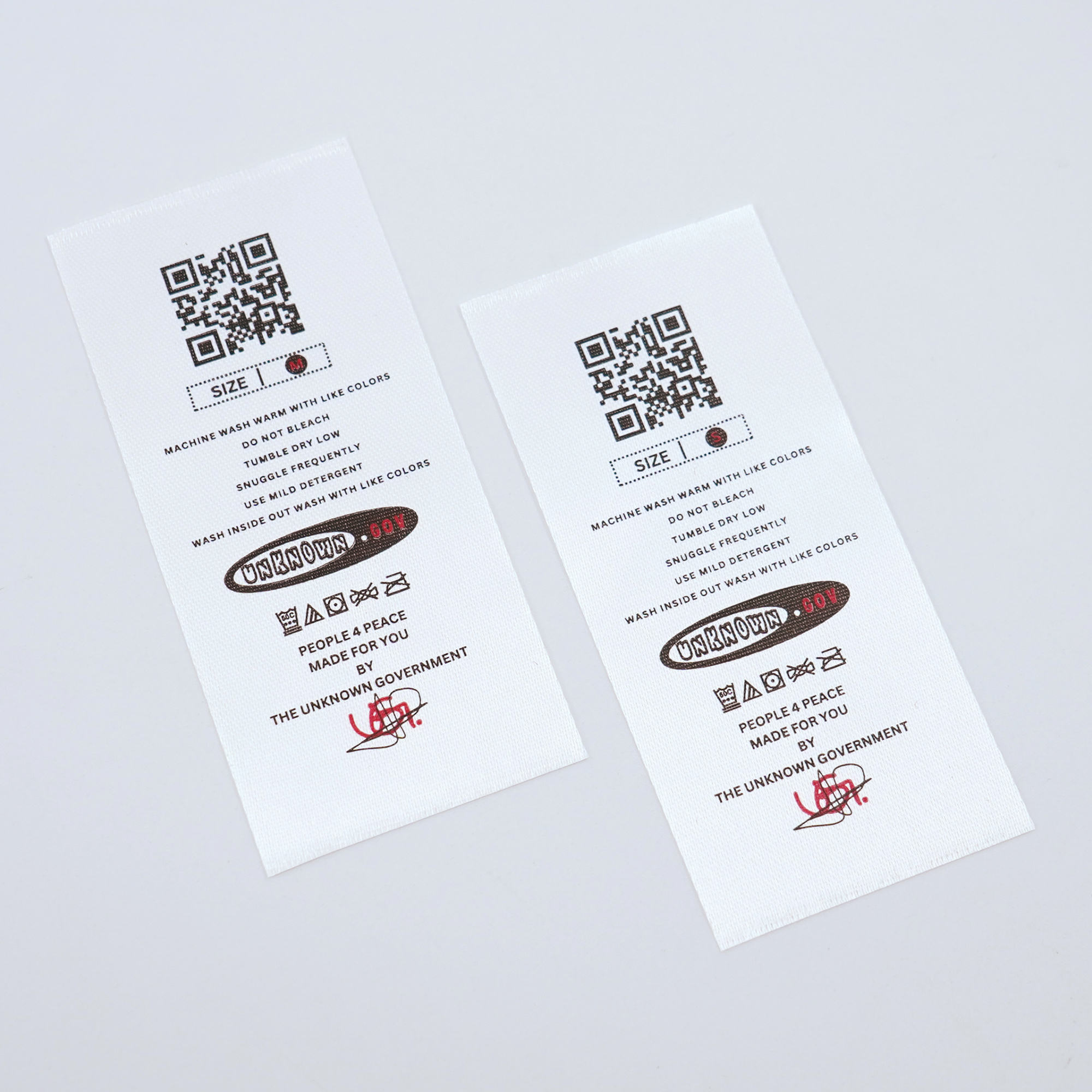
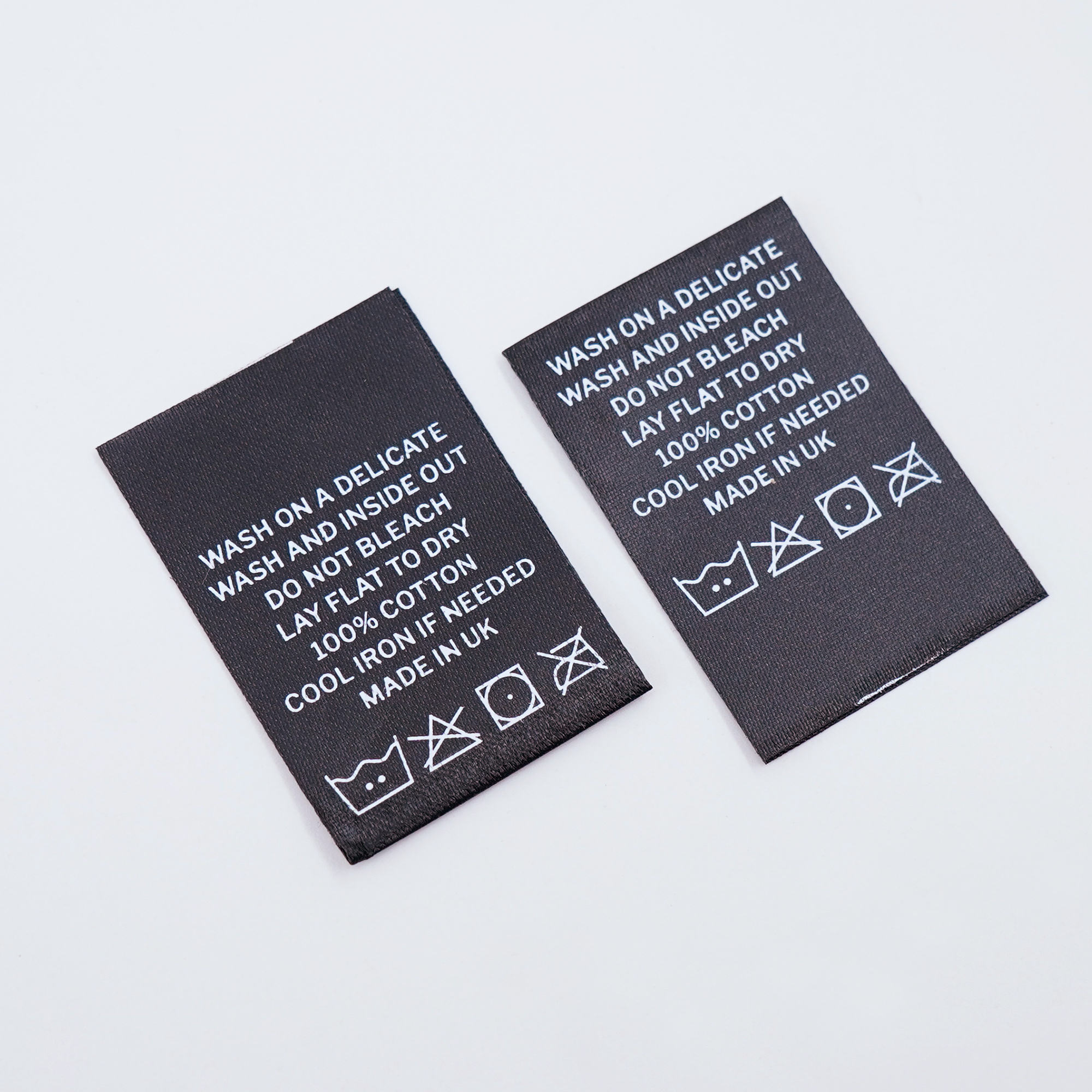
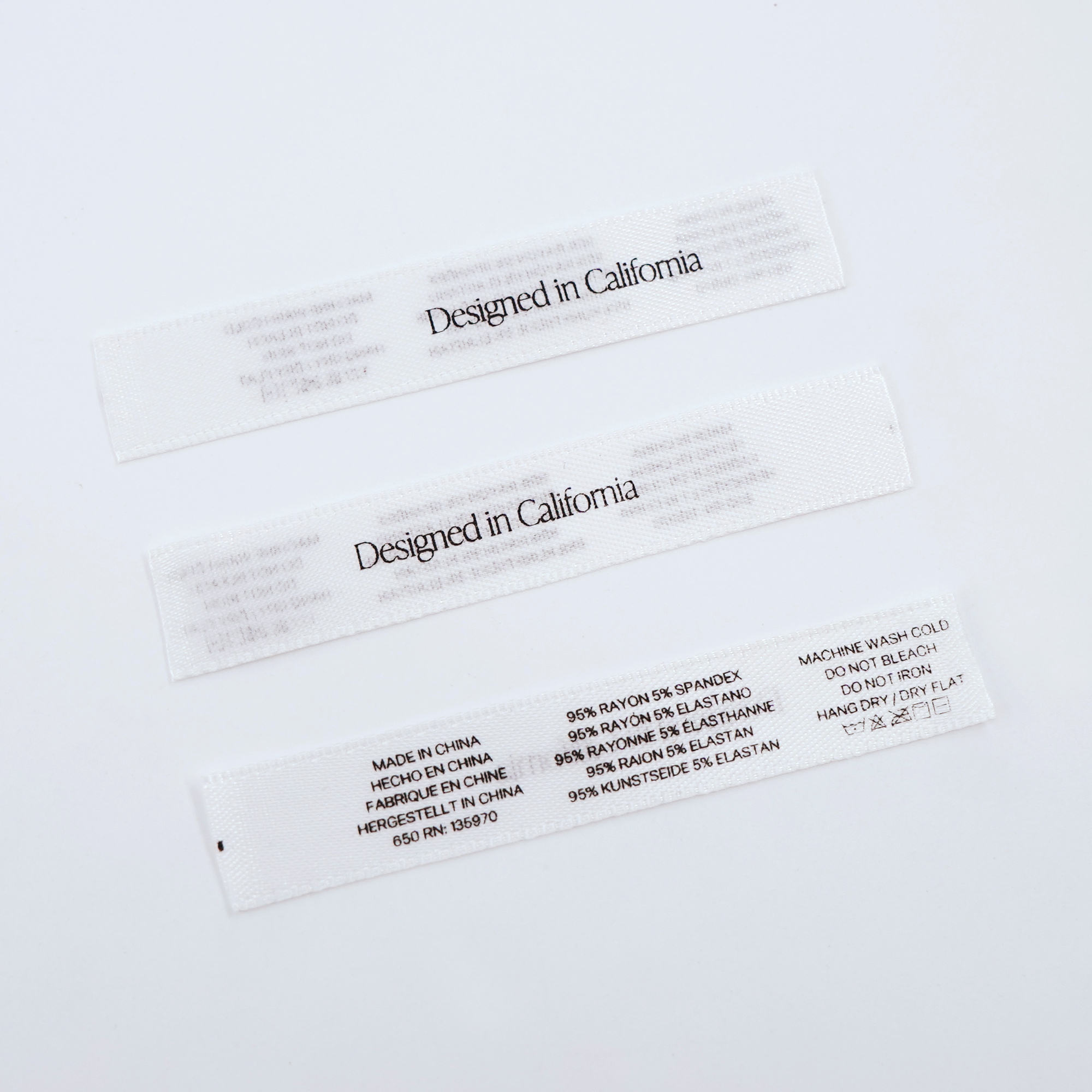
Complete your garments with clearly printed care information and a discreet matte finish. Our custom printed care labels bring together brand details, fiber composition, and washing instructions in a compact format designed to complement well-made clothing.
Suitable for suits, blazers, trousers, dresses, shirts, and other apparel, these labels can be customized in material, dimensions, layout, printing, and folding style. The low-gloss appearance provides an understated finish, while carefully arranged text helps customers find the information they need.
Matte Materials and Comfortable Placement
The label’s appearance and feel depend on its base material, surface treatment, and edge finish. Suitable matte textile tapes and coated label materials can be reviewed according to your preferred softness, print requirements, and garment application.
Material selection should consider:
Surface smoothness and light reflection.
Flexibility and thickness.
Readability of small text and symbols.
Contact with the wearer’s skin.
Compatibility with the intended washing or professional cleaning process.
A matte finish describes the surface appearance; it does not automatically indicate softness or suitability for sensitive skin. Physical samples help assess the complete label, including its edges and folded construction.
Fine-Detail Printing and Clear Layouts
Small care labels often need to carry several types of information. A well-planned layout keeps text readable without overcrowding the available space.
Customize your labels with:
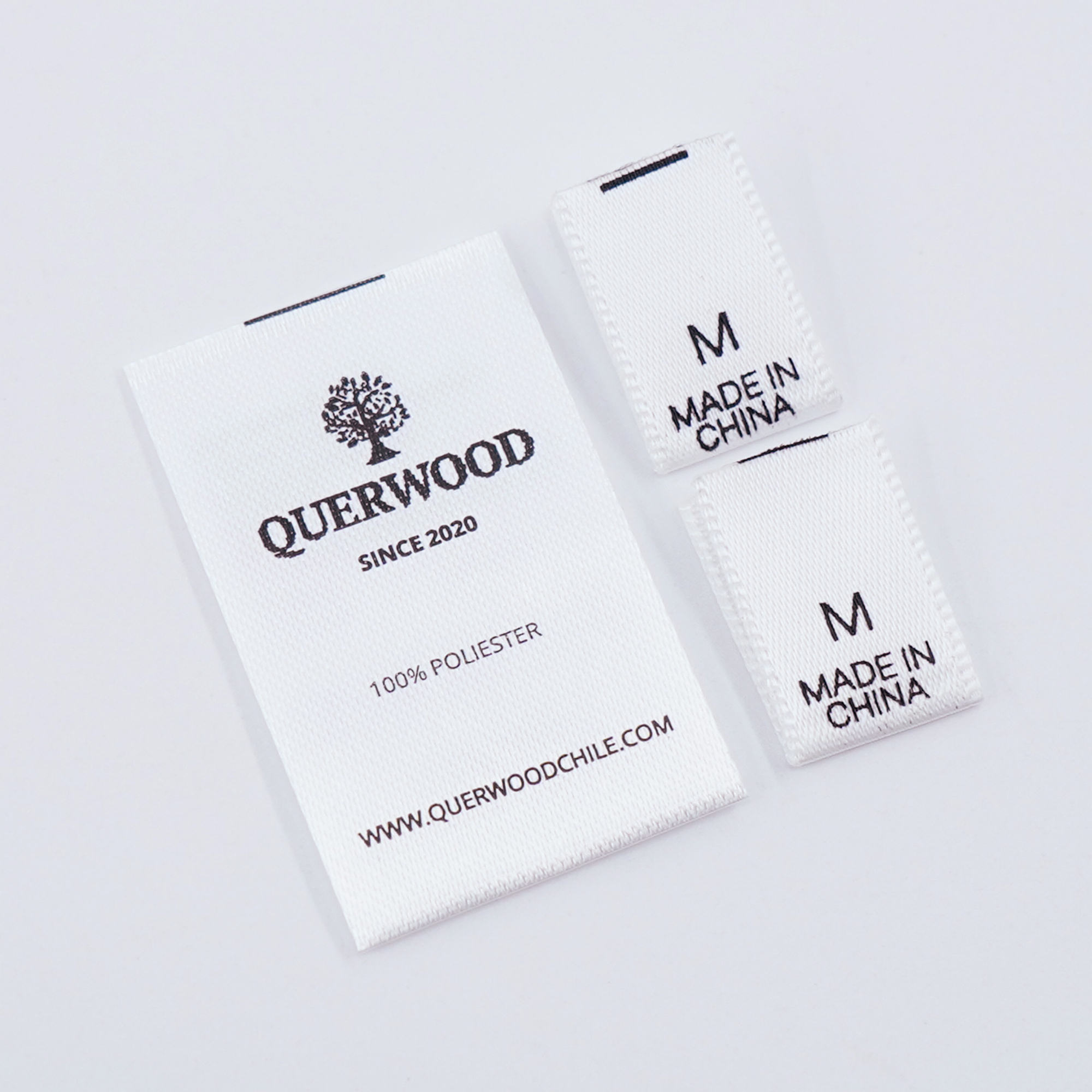
Brand names and logos.
Fiber composition and percentages.
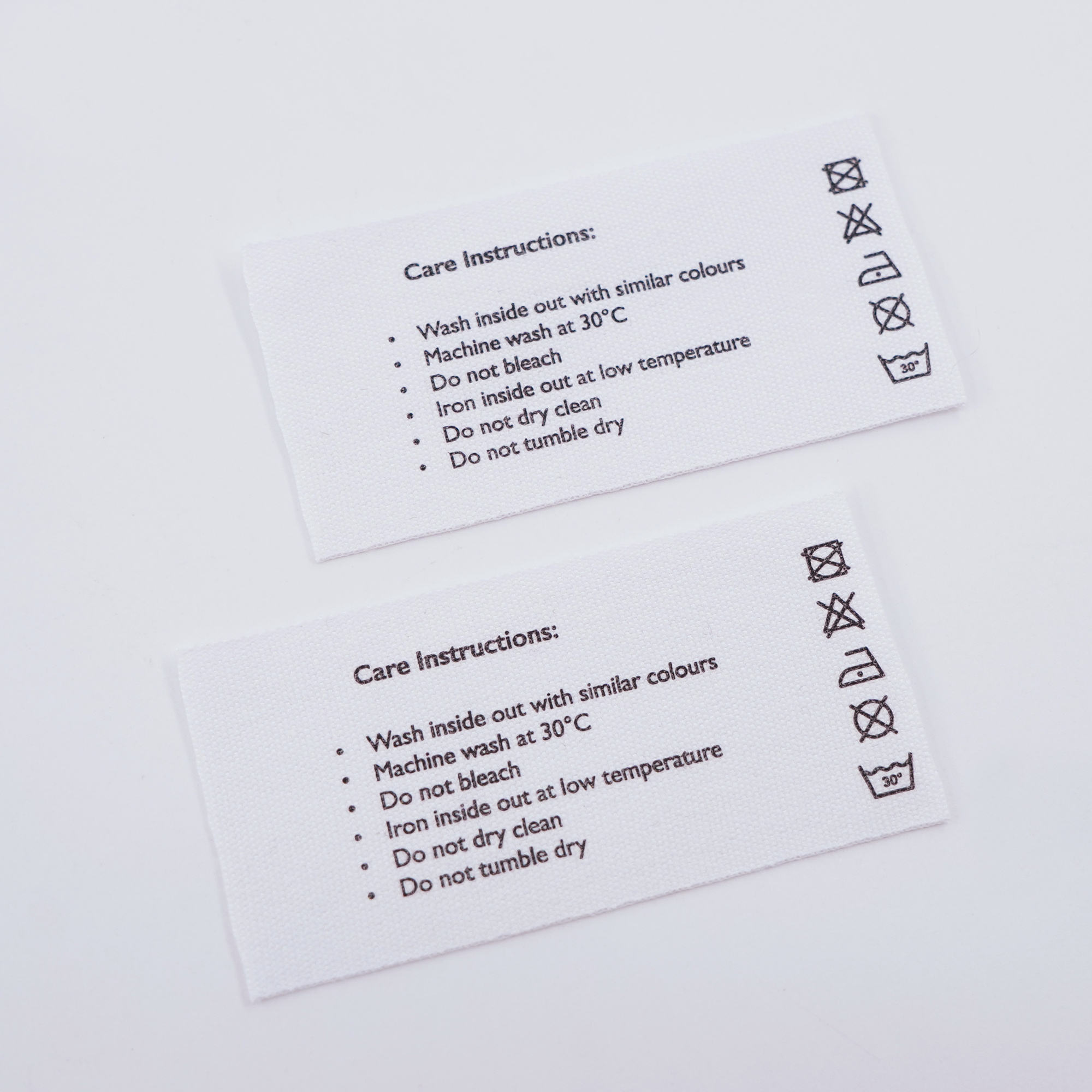
Approved washing, drying, ironing, and professional-care instructions.
Country-of-origin information.
Size markings and product references.
Multilingual text for your destination markets.
Fine lettering and care symbols should be assessed at actual print size. Font selection, spacing, contrast, and material texture all affect the result. Where more information is needed, a longer or multi-label arrangement may provide better readability than reducing the text excessively.
Single-Sided and Double-Sided Options
Single-sided printing offers a straightforward layout for concise information. Double-sided printing can accommodate additional languages or separate brand details from care instructions.
For double-sided labels, material opacity and print show-through should be reviewed during sampling. The layout should also account for folding direction so each panel remains correctly oriented after sewing.
Dark text on a light background often provides clear contrast, while other color combinations can be developed to coordinate with your garment. Final colors should be approved on the selected label material.
Custom Dimensions, Folds, and Sewing Allowances
Label width, length, and folding style can be tailored to the garment’s construction and available space. Options can include straight-cut, center-fold, and end-fold formats where suitable for the chosen material.
Clearly distinguish finished visible dimensions from the total cut size, including folds and sewing allowances. Essential information should remain outside the stitching area.
For tailored garments, placement inside a side seam, waistband, or lining can keep the label accessible while maintaining a neat interior. Material and edge-finishing methods should be selected together to help reduce fraying and uncomfortable contact.
Care Instructions Matched to the Garment
The printed instructions should reflect the complete garment, including the main fabric, lining, interlining, trims, and decorative components. A care process suitable for the outer fabric may not be suitable for every part of the finished product.
For tailored clothing, professional cleaning, pressing, and drying requirements may be particularly important. The customer should approve all composition details, translations, symbols, and care wording before production. Destination-market labeling requirements and any applicable symbol-use permissions should also be confirmed.
Print Durability and Sample Evaluation
A care label needs to remain useful throughout the garment’s intended life. Print durability depends on the combination of label material, printing system, and actual care conditions.
Before bulk production, evaluate samples using the garment’s specified washing or professional cleaning process. Relevant checks can include:
Text and symbol readability after agreed cleaning cycles.
Ink transfer, fading, or loss of detail.
Shrinkage, curling, and dimensional stability.
Edge condition and resistance to fraying.
Appearance and comfort after sewing.
Performance claims should relate to the approved construction and test conditions. A label evaluated for domestic washing should not automatically be described as suitable for dry cleaning or industrial laundering.
Artwork Approval and Repeat Orders
Confirm the artwork version, material, dimensions, print colors, folds, and quantity breakdown against an approved sample. For collections with different compositions or care instructions, use distinct item references to help prevent incorrect labels from being sewn into garments.
Request a Custom Quotation
Send your artwork or required text, label dimensions, quantity per version, preferred material, and folding requirements. Include the garment type, application position, destination markets, and intended care process so suitable printing and material options can be reviewed.
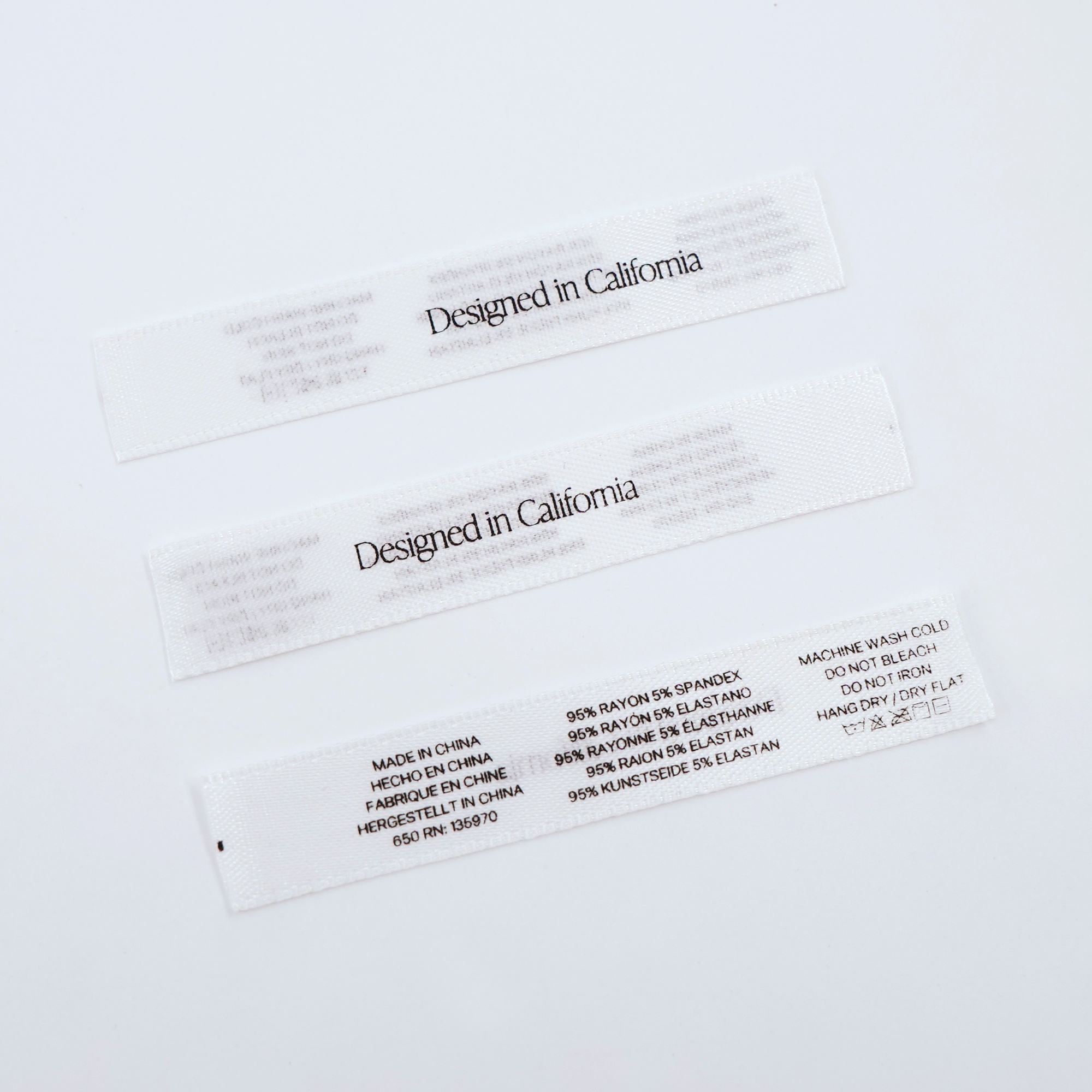
Custom matte care labels can be supplied cut, folded, or in continuous rolls, according to the approved construction and your production requirements.
Packing options can include:
Counted inner packs: Agreed quantities for garment assembly and stock control.
Separate artwork packing: Different languages, compositions, care instructions, and sizes packed separately.
Fold protection: Suitable packing to help preserve the shape of prepared labels.
Roll identification: Clearly marked artwork references, quantities, and winding details where applicable.
Carton labeling: Item codes, order references, quantities, and agreed batch information.
Where several label versions look similar, identification should distinguish the actual content, not just the label size or color. This helps operators select the correct version during production.
Final packing quantities, carton dimensions, net weight, and gross weight are confirmed after approval. Store labels in clean, dry conditions, protected from direct sunlight, moisture, contamination, and excessive pressure.