

Garment Accessories Custom logo Clothing Sewing Overcoat blazer Coat Tuxedo Metal Suit Buttons
Custom Logo Metal Buttons for Suits, Blazers & Overcoats
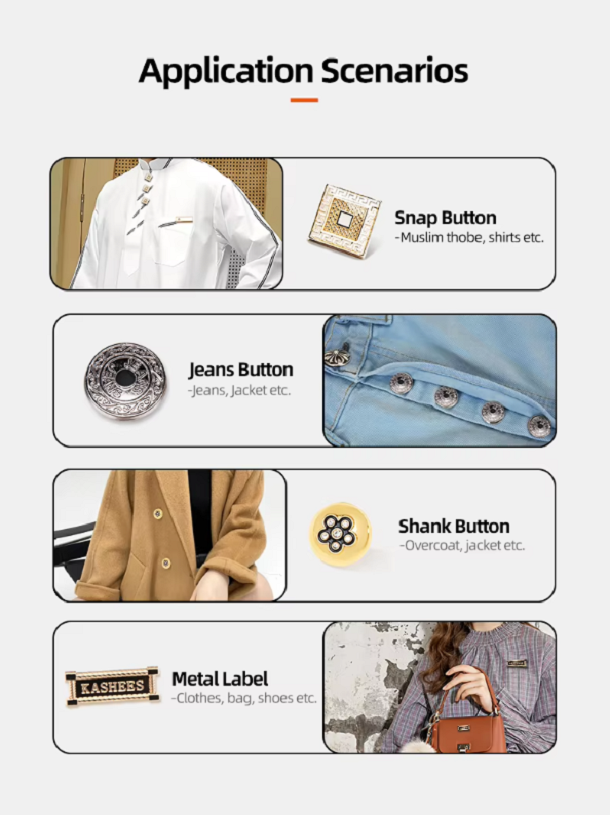
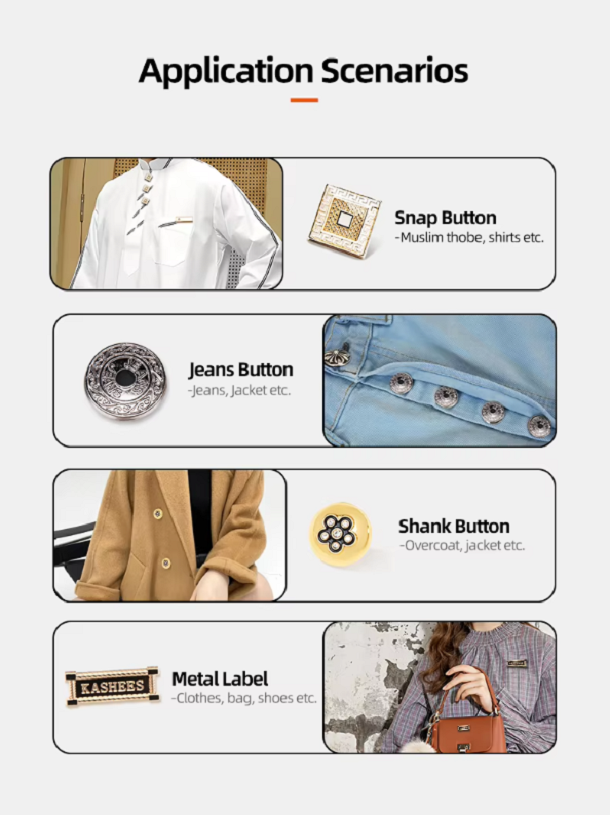
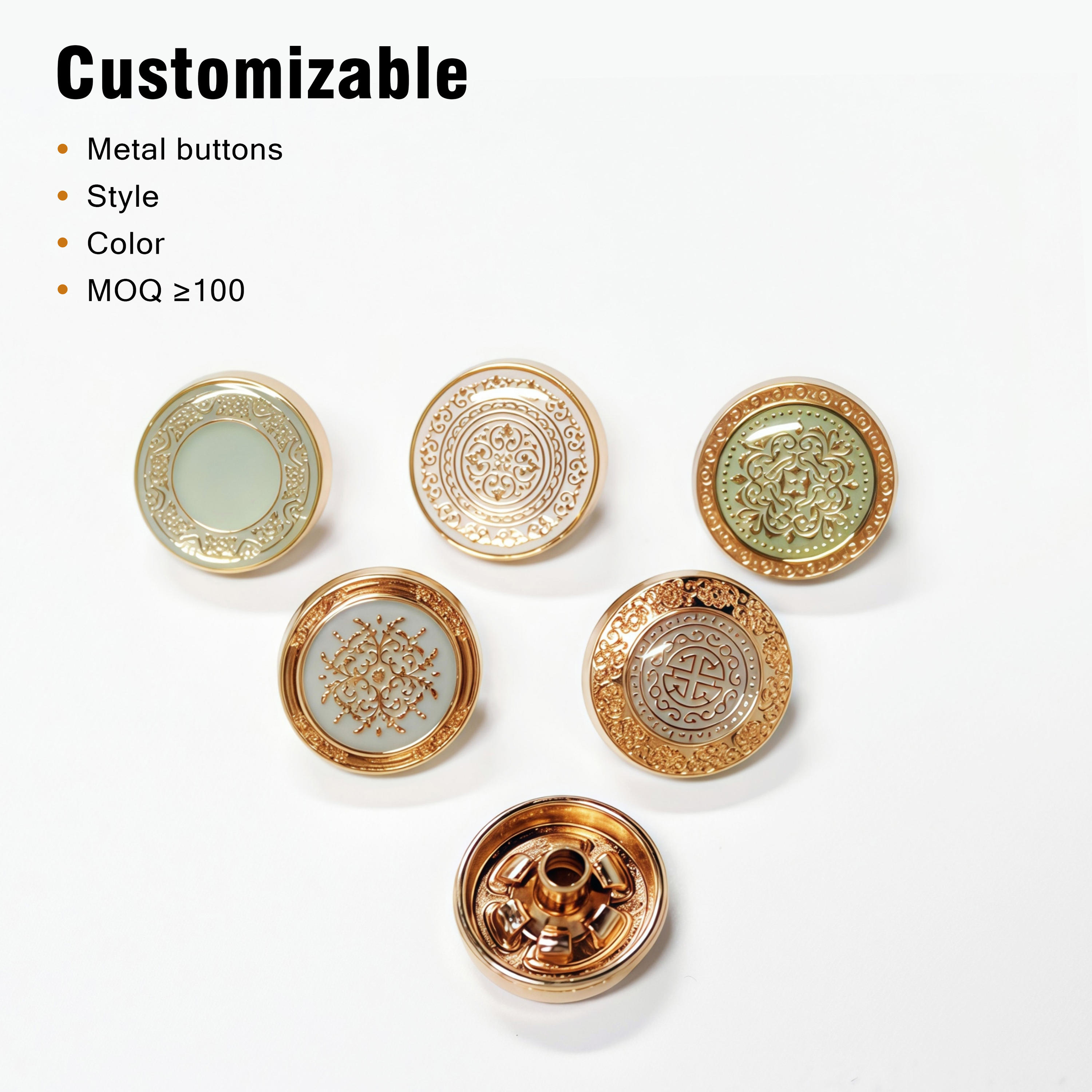
Complete your tailoring collection with custom metal buttons designed to complement structured garments and distinctive brand identities. Suitable for blazers, suits, overcoats, uniforms, and selected formalwear designs, these buttons combine decorative metal finishes with sew-on attachment.
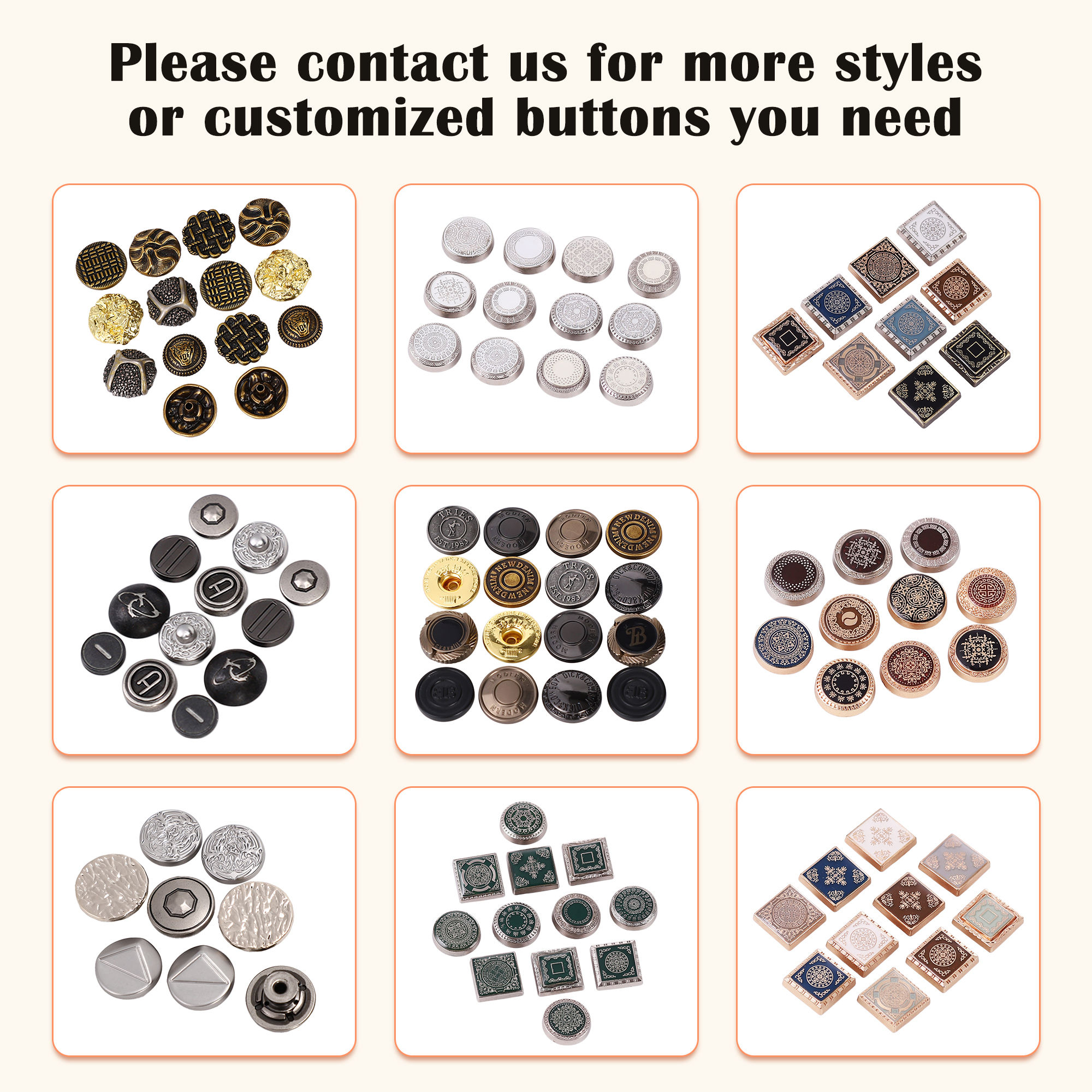
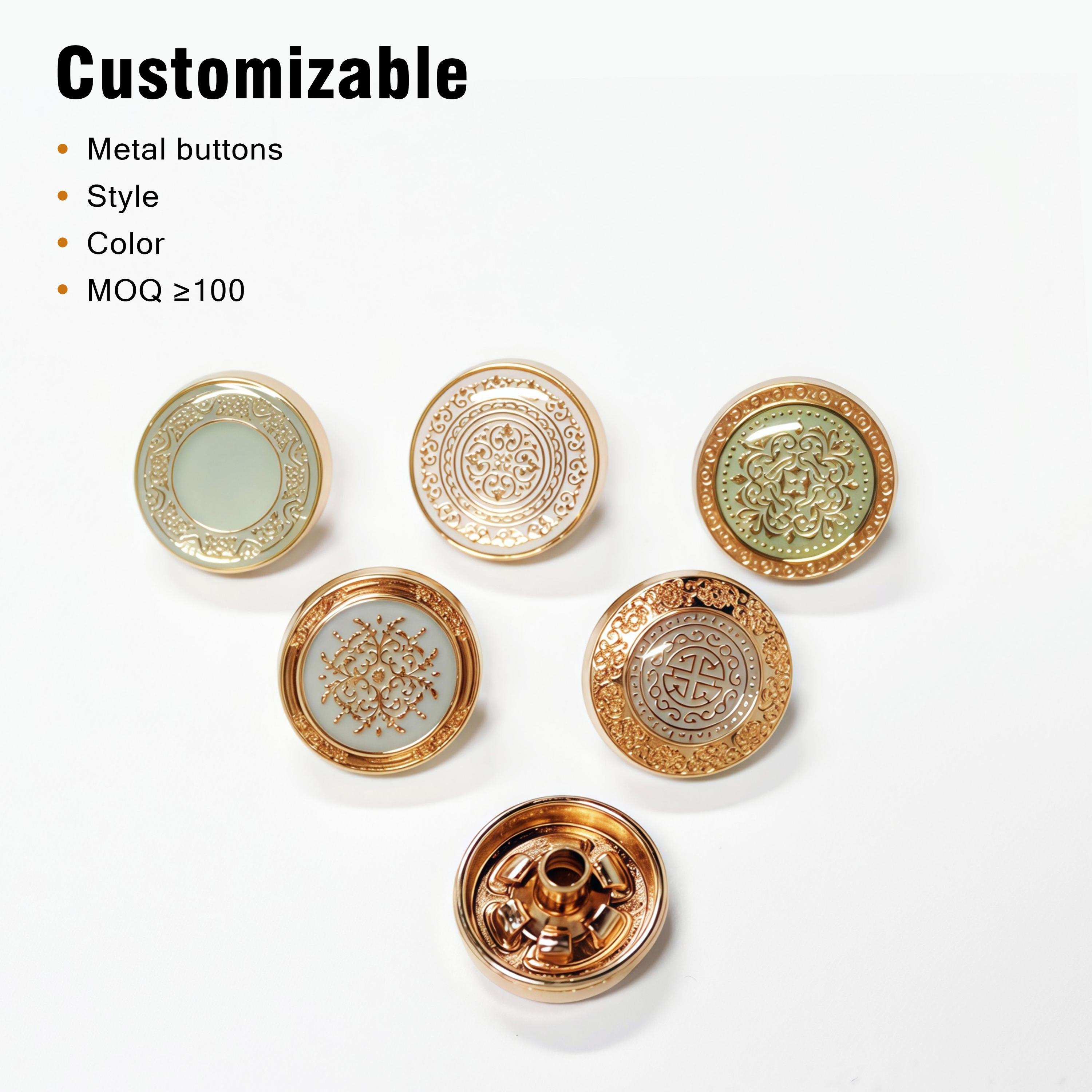
Personalize the button profile, dimensions, logo, surface texture, and finish. From understated front buttons to crest-style designs and coordinated cuff sets, each specification can be developed around your garment and collection.
Metal Materials and Button Construction
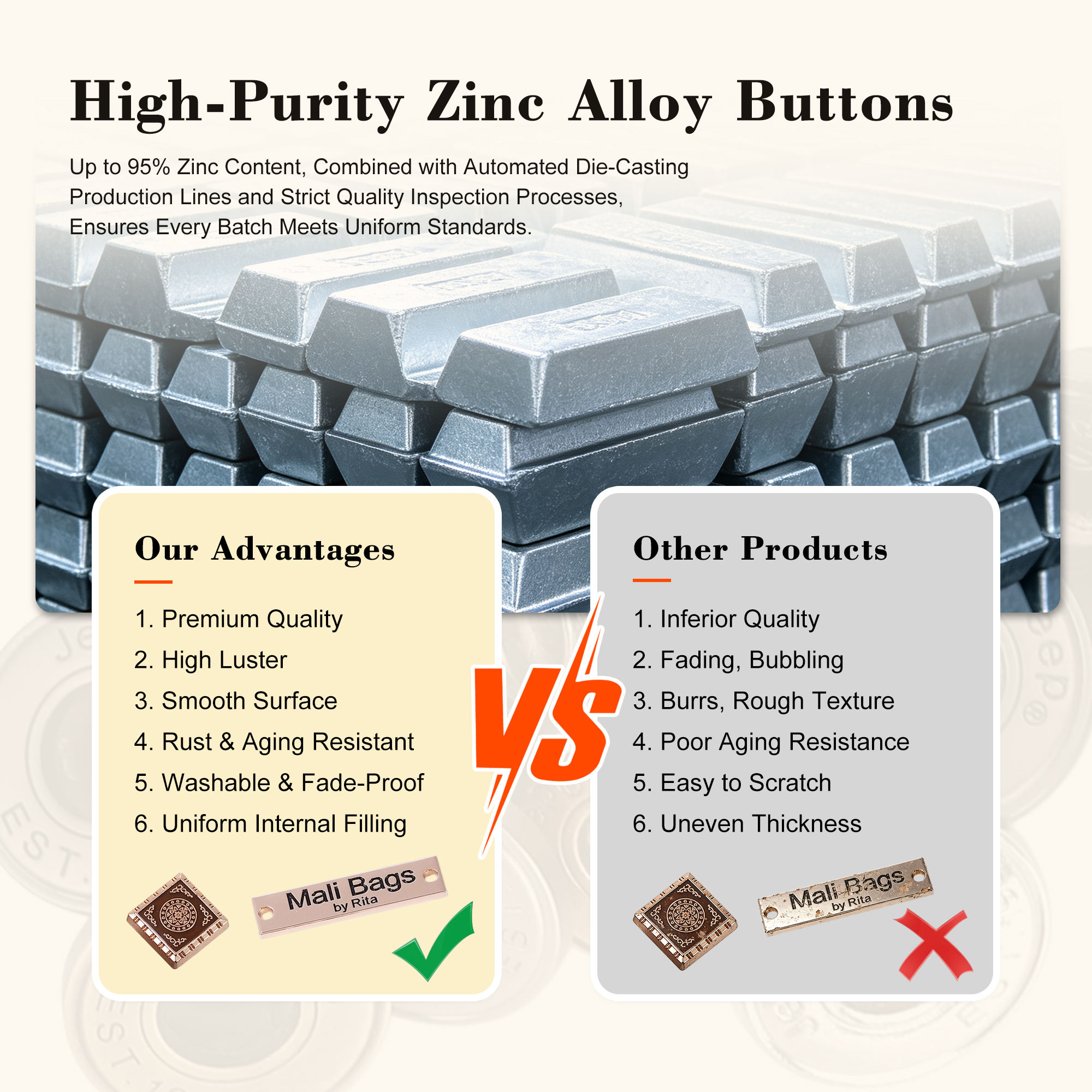
Material selection influences weight, detail reproduction, surface finishing, and cost. Depending on the design, options can include brass, zinc alloy, or other specified metal constructions.
Buttons may be produced with solid or hollow structures. A solid construction can provide a substantial feel, while a suitable hollow construction can reduce weight on the garment. The appropriate choice depends on button size, fabric support, and the desired appearance.
The approved specification should identify the base metal, attachment structure, and surface treatment. A gold-tone, silver-tone, or antique-brass finish describes appearance rather than material composition.
Sew-On Styles for Tailored Garments
Choose an attachment structure suited to the design and fabric:
Shank buttons: A rear loop allows sewing without visible holes on the button face, leaving more space for logos and decorative details.
Two-hole or four-hole buttons: Sew-through designs offer visible stitching that can be coordinated with the garment.
Recessed-face designs: Where available, a recessed area can help accommodate the thread while preserving the intended surface profile.
For shank buttons, the loop opening should accommodate the selected thread and sewing method. Its height must also suit the fabric layers and buttonhole construction.
Sew-through buttons on thicker garments may require a thread shank to provide space beneath the button when fastened.
Custom Logos, Crests, and Decorative Details
Create a recognizable brand feature with your logo, initials, monogram, emblem, or decorative pattern.
Depending on the material and manufacturing process, options can include:
Raised or recessed molded details.
Stamped logos and borders.
Engraved lettering.
Smooth or textured backgrounds.
Contrasting polished and matte areas.
Decorative rims and concentric patterns.
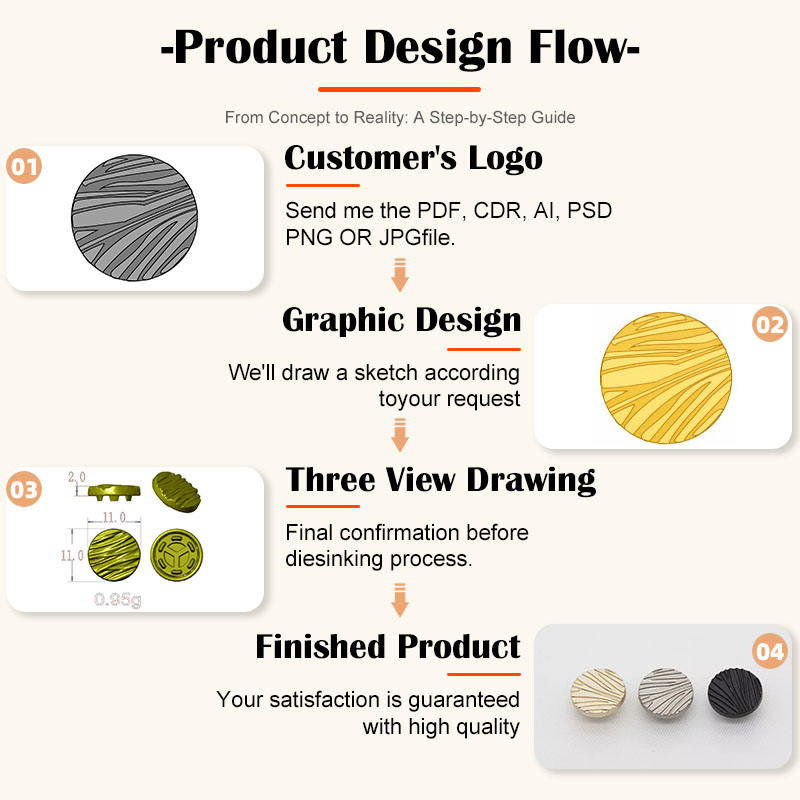
Engraving produces recessed marks, while raised details require a suitable forming process. Specify the intended effect clearly during artwork approval.
Small lettering and intricate crests should be reviewed at the actual button size. Cuff versions may need simplified artwork to retain clear detail.
Finishes for Different Collection Styles
Coordinate your buttons with the garment fabric, lining, buckles, and other trims. Finish options may include gold-tone, silver-tone, brass-tone, gunmetal, black, and antique effects, with polished, brushed, or matte appearances where available.
Polished surfaces can create a prominent accent on blazers, while lower-gloss finishes may suit understated tailoring and outerwear. Textured backgrounds can help separate a logo from the surrounding face.
Metal buttons can also suit selected tuxedo and formalwear concepts. Confirm the finish against the lapel, fabric, and other decorative elements, since traditional tuxedo styles often use fabric-covered buttons.
Matching Front and Cuff Sizes
Develop coordinated button sets for jacket fronts, cuffs, pockets, and overcoats. Keep a consistent design identity while adapting the proportions to each position.
Specifications can include:
Diameter in millimeters or button ligne.
Overall thickness and face profile.
Button weight.
Shank height and opening dimensions.
Hole size and spacing for sew-through versions.
Logo dimensions and border proportions.
Matching sets should be reviewed together. Scaling a design down without adjustment may reduce lettering clarity or change the visual balance between the front and cuff buttons.
Fabric Support and Sewing Compatibility
A metal button’s weight should be appropriate for the garment. Heavy buttons can pull on lightweight fabrics or distort unsupported attachment points.
Test the button on the actual combination of outer fabric, interfacing, and lining. Reinforcement or a backing button may be appropriate for selected overcoat constructions.
Check that the button passes through the finished buttonhole comfortably and holds the overlapping fabric in the intended position. The rear loop, sewing holes, and underside should be smooth enough to avoid unnecessary thread abrasion or fabric damage.
For machine sewing, confirm compatibility with the button holder, needle, thread, and garment assembly process.
Care and Surface Performance
Tailored garments may require dry cleaning, steam pressing, or specific washing conditions. Button materials and finishes should be evaluated under the intended process.
Relevant checks can include:
Surface color and finish after cleaning.
Corrosion, staining, or transfer to adjacent fabric.
Coating wear and logo readability.
Thread condition around holes or shanks.
Shank integrity and attachment security.
Appearance after normal fastening and handling.
Pressing equipment should be used in a way that protects both the button and surrounding fabric. Specific chemical, coating, or restricted-substance requirements should be identified before quotation.
Sample Approval and Order Consistency
Before bulk production, approve the base material, size, profile, weight, logo, finish, attachment structure, and packing arrangement.
A complete sample set helps confirm coordination between front, cuff, and pocket buttons. Agreed appearance references and dimensional requirements provide a clear basis for repeat orders.
Request a Custom Quotation
Send your logo or reference sample, required button sizes, quantity per size, preferred metal and finish, attachment style, and garment application. Include fabric thickness, care requirements, and any matching-set or spare-button needs so suitable specifications can be reviewed.
Custom metal suit and coat buttons are packed according to their size, profile, finish, and order quantity. Protective packing helps reduce scratching, metal-to-metal rubbing, and damage to rear shanks.
Options can include:
Counted inner packs: Buttons grouped in agreed quantities for sewing-line use.
Separate size packing: Front, cuff, and pocket sizes clearly identified.
Coordinated garment sets: Matching buttons grouped according to the approved set arrangement.
Surface protection: Suitable wrapping, dividers, or trays where required for decorative finishes.
Separate design packing: Different logos, colors, and attachment styles kept in distinct packs.
Pack identification: Item references, quantities, and agreed batch details.
The packing list should distinguish individual button quantities from complete garment sets. Spare buttons and any individual spare-button packaging should be specified separately.
Final carton dimensions, packing quantities, net weight, and gross weight are confirmed after approval. Store buttons in clean, dry conditions away from moisture, corrosive chemicals, and excessive pressure. Keep finishes separated to help preserve their appearance.