


High Quality Metal Jeans Rivet
Custom Metal Jeans Rivets for Denim Garments
Reinforce pocket corners and selected stress points with custom metal jeans rivets. Designed for jeans, denim jackets, workwear, canvas garments, bags, and other textile products, these rivets combine practical reinforcement with a recognizable metal detail.
We offer custom options for rivet size, cap profile, post length, surface finish, logo decoration, and component configuration. Specifications can be developed around your denim weight, fabric construction, installation equipment, and brand presentation.
Metal Materials and Component Construction
Depending on the required appearance, strength, and finishing process, available metal options may include:
Brass or brass-based components.
Steel or stainless-steel components.
Zinc alloy or other specified metal constructions.
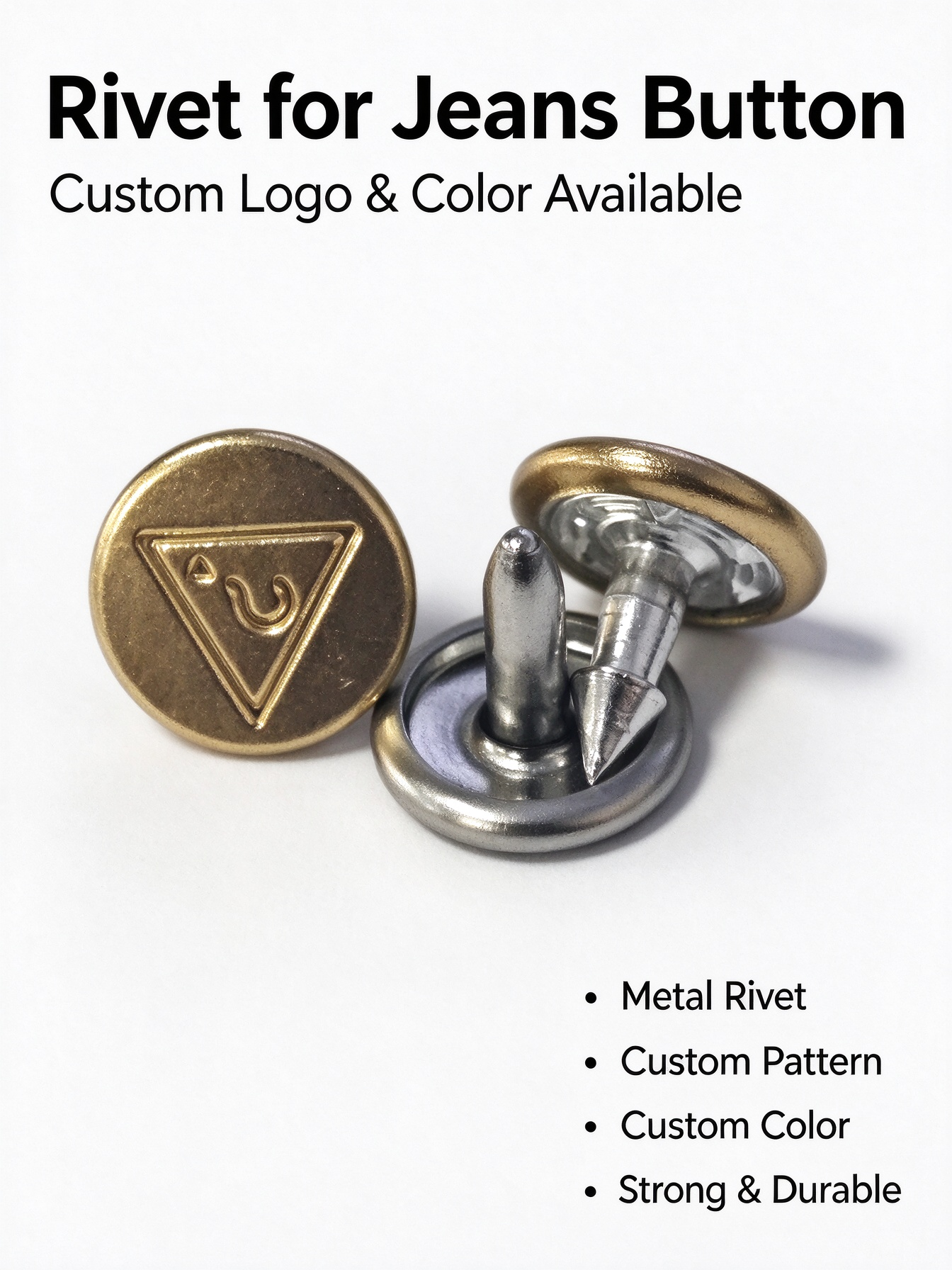
A typical jeans rivet consists of a decorative cap and a compatible post. The cap diameter, post length, post diameter, and setting method must be selected as a complete system.
The correct post length depends on the compressed thickness of the denim and reinforcement layers. A post that is too short may not form a secure attachment, while excessive length or pressure can deform the fabric or component.
The actual base metal, plating, coating, and surface finish should be clearly stated in the approved specification. A silver-tone or brass-tone appearance does not automatically identify the base metal.
Rivet Styles for Different Applications
Available structures may include:
Single-cap rivets: A decorative cap on one visible side.
Double-cap rivets: Decorative cap surfaces on both sides where the reverse side is visible.
Low-profile rivets: Suitable where a less prominent surface is preferred.
Domed or raised rivets: Create a stronger decorative effect.
Custom logo rivets: Feature engraved, embossed, recessed, or stamped branding.
Plain reinforcement rivets: Designed for a clean and functional appearance.
The best style depends on the garment design, visible side, fabric thickness, desired appearance, and setting equipment.
Custom Shapes, Logos, and Surface Finishes
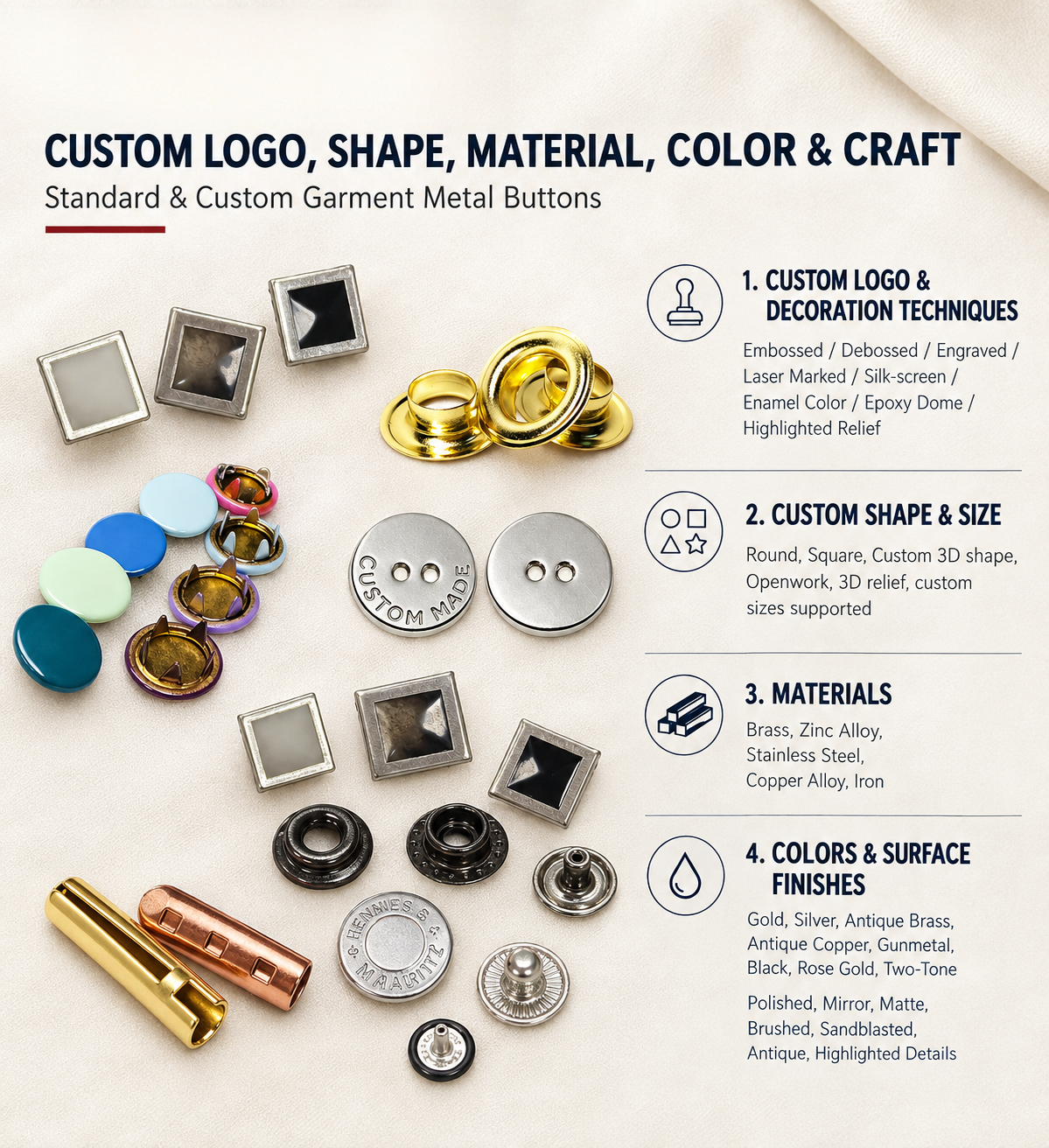
Customize the cap with your brand logo, initials, lettering, symbols, or decorative pattern. For small rivet faces, bold artwork and clear spacing generally produce better definition.
Surface finish options may include:
Brass-tone and copper-tone effects.
Silver-tone, nickel-tone, or stainless-steel appearances.
Gunmetal and black finishes.
Matte, brushed, polished, or antique effects.
Textured or patterned cap surfaces.
Finish color can vary with the base metal and process. Physical samples are recommended when rivets must match jeans buttons, zippers, snaps, or other garment hardware.
Designed for Denim and Heavy Fabrics
Metal jeans rivets are commonly used at:
Front and back pocket corners.
Coin-pocket corners.
Stress points on denim jackets.
Workwear and utility garments.
Canvas bags and textile accessories.
Reinforced areas requiring a decorative metal detail.
For thick denim, coated fabric, leather, or multi-layer constructions, test the complete rivet and setting process on the actual material. Reinforcement patches may be required for lightweight or easily damaged fabrics.
Installation and Attachment Performance
Rivet performance depends on the cap, post, fabric, reinforcement, die set, machine pressure, and installation method. Before bulk production:
Confirm cap and post compatibility.
Select post length for the compressed fabric thickness.
Use setting dies designed for the selected rivet.
Check alignment and secure forming.
Inspect the surrounding fabric for tearing or excessive compression.
Confirm that no sharp edges or exposed points remain.
Evaluate the rivet after the intended washing and finishing process.
A rivet that appears secure before washing may behave differently after laundering, abrasion, bleaching, or industrial finishing. Sample testing should reflect the actual production conditions.
Quality and Performance Requirements
Depending on the application, quality review may include:
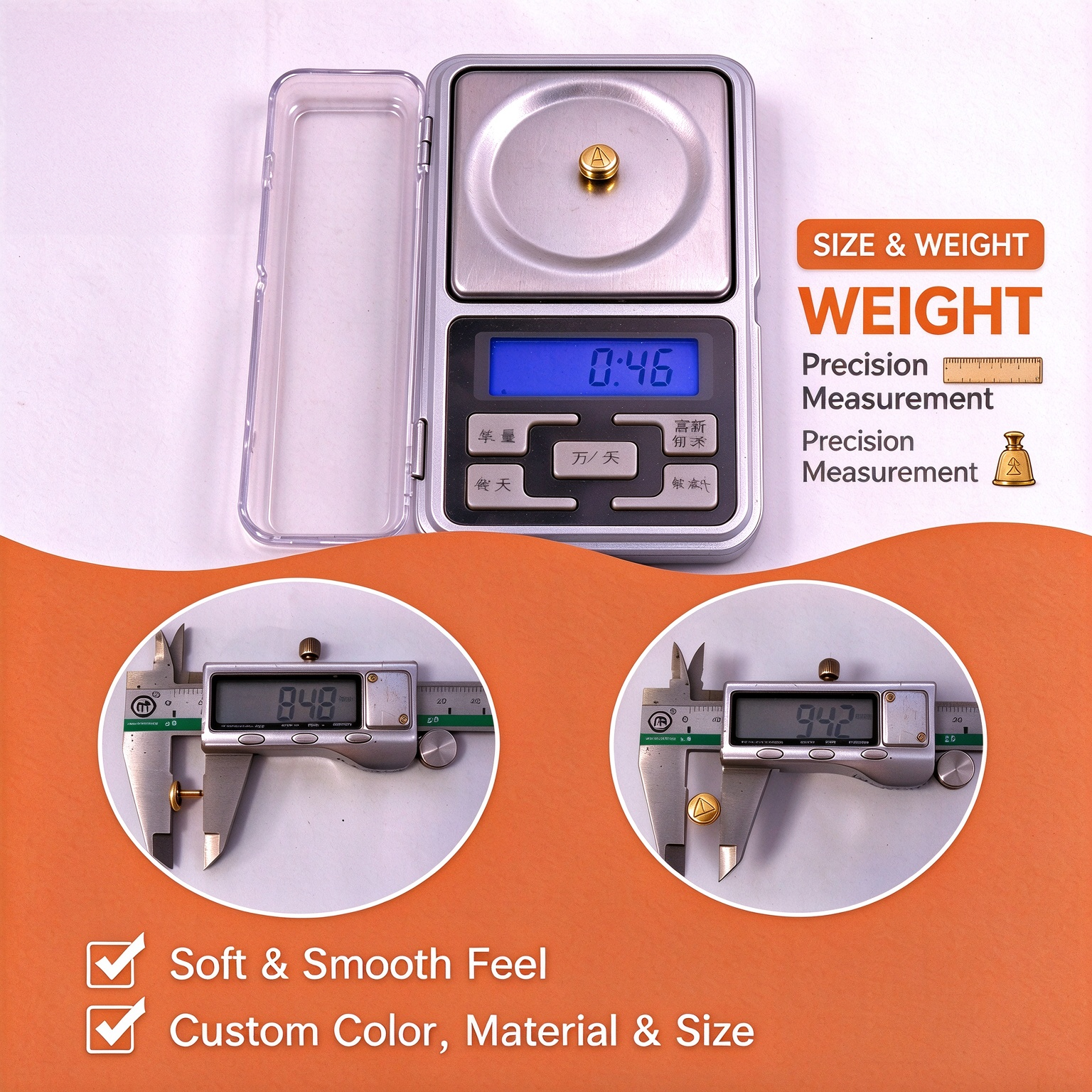
Cap diameter, post dimensions, and overall consistency.
Logo clarity and placement.
Surface finish and color consistency.
Attachment strength on the actual fabric.
Resistance to corrosion or surface change.
Edge safety and absence of burrs.
Appearance after agreed washing and drying cycles.
Specific testing for corrosion resistance, restricted substances, or children’s garments should be discussed before quotation. A general “high-quality” statement does not replace product-specific specifications or testing.
Sample Approval and Repeat Orders
Before bulk production, approve a sample covering the material, size, profile, finish, artwork, component pairing, installation method, and packing arrangement.
For repeat orders, use the approved item reference and identify any changes to the fabric, finish, logo, component dimensions, or washing process. Changes to tooling or surface treatment may affect the final appearance and attachment performance.
Request a Custom Quotation
Send us your rivet artwork or reference sample, cap diameter, preferred metal appearance, denim thickness, intended application, order quantity, and washing process. These details help us recommend a suitable rivet construction and prepare an accurate quotation.

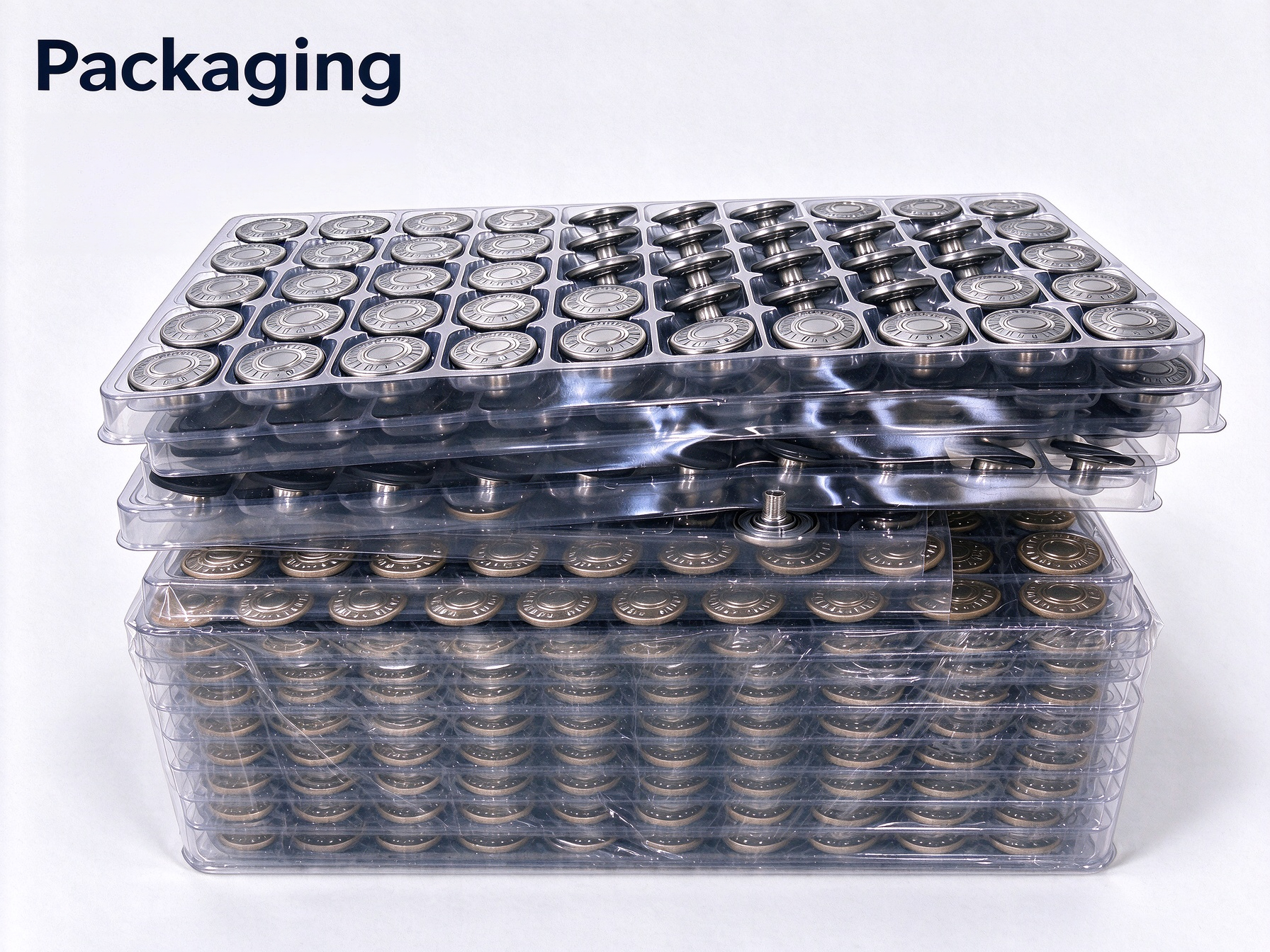
Custom metal jeans rivets are packed according to their size, finish, component configuration, and order quantity. Packing is designed to reduce scratching, surface rubbing, oxidation, and mixing between different specifications.
Packaging options can include:
Counted inner packs: Rivets grouped in agreed quantities for production and inventory control.
Separate component packing: Caps and posts packed separately where required.
Separate specification packing: Different sizes, finishes, logo designs, and product references packed separately.
Surface protection: Suitable bags, dividers, or protective materials to reduce metal-to-metal contact.
Batch identification: Inner-pack labels showing item references, quantities, and agreed batch information.
Outer carton marking: Carton numbers, product references, quantities, and packing details.
The order confirmation should state whether the quantity refers to individual components or complete cap-and-post sets.
Final packing quantities, carton dimensions, net weight, and gross weight are confirmed after the product and packing specifications are approved.
Store rivets in a clean, dry environment away from moisture, corrosive chemicals, excessive humidity, and direct sunlight. Keep different finishes and components separated to help preserve surface appearance.