

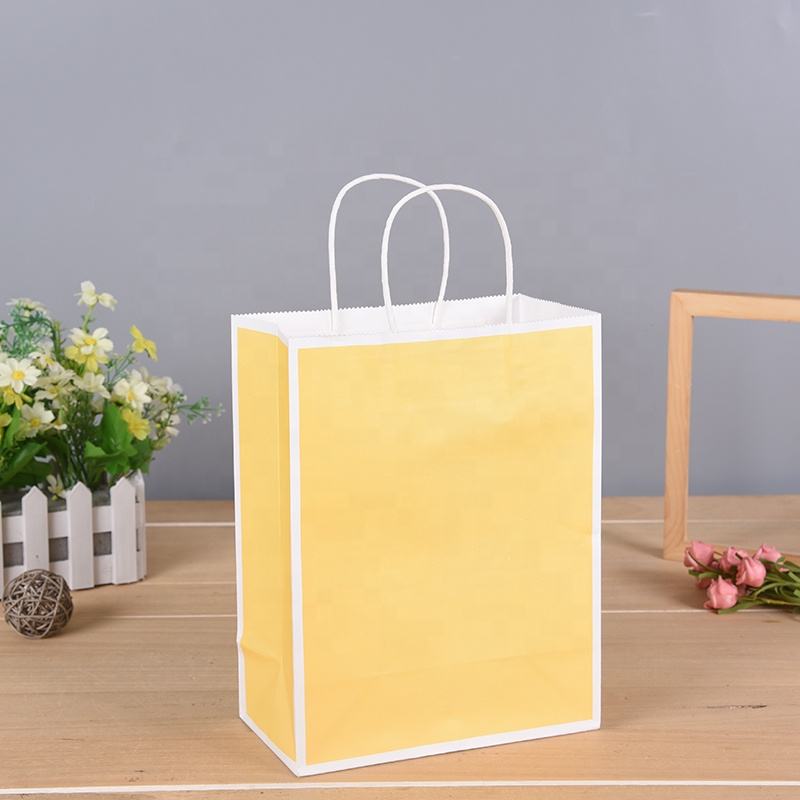
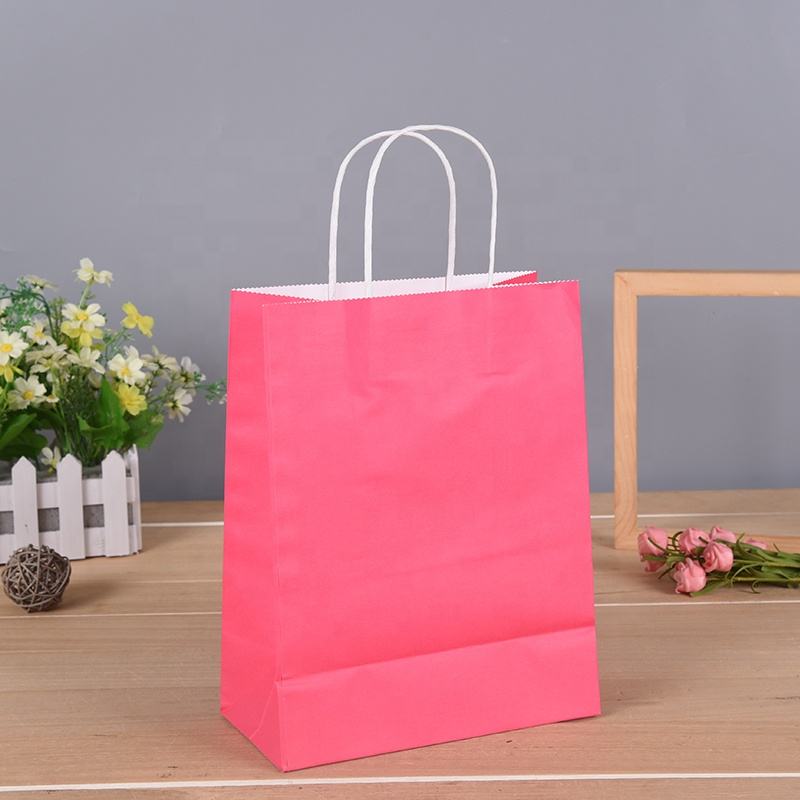

Unlaminated Paper Bags
Custom Unlaminated Paper Bags for Retail & Brand Packaging
Present your products with the distinctive texture and understated appearance of unlaminated paper bags. Made without an added film-lamination layer, these bags allow the character of the selected paper to remain a visible part of your packaging design.
Suitable for clothing stores, boutiques, accessory brands, and gift packaging, our custom unlaminated paper bags can be tailored in material, dimensions, printing, and handle style. From simple kraft designs to refined specialty-paper packaging, we help you develop a presentation that complements your products and brand identity.
What Does “Unlaminated” Mean?
Unlaminated paper bags do not have a film layer laminated onto the paper surface. Their appearance and feel depend on the paper selected, rather than a matte or gloss plastic film.
“Unlaminated” does not necessarily mean “uncoated.” Paper may have a coating from the paper mill, and printed surfaces may receive varnish or other treatments if specified. If you require uncoated paper or no additional surface treatment, please include this in your specifications.
Paper Options and Surface Character
Material options can include:
Brown kraft paper: Provides a warm paper tone and a natural-looking surface for simple logos and bold graphics.
White kraft paper: Offers a lighter background for brand colors and a clean retail presentation.
Uncoated white cardstock: Gives suitable designs a structured appearance and a smooth paper feel.
Textured specialty paper: Adds tactile detail and visual character to boutique and gift packaging.
Recycled-content paper: Available subject to material sourcing, with recycled-content claims confirmed through supporting documentation.
Paper selection should consider printing requirements, bag dimensions, intended contents, and budget. Samples help assess texture, stiffness, opacity, and the finished appearance.
Custom Printing for Your Brand
Personalize the front, back, and side panels with your logo, illustrations, brand story, or retail information. Simple typography, well-spaced graphics, and carefully selected colors can work particularly well with the visible texture of unlaminated paper.
Printing results vary with paper color, absorbency, and surface texture. Brown kraft can alter the appearance of printed colors, while absorbent or textured papers may soften fine details. Large areas of dark ink may also show rubbing or handling marks more readily on some paper stocks.
We recommend reviewing artwork with the selected paper in mind. Physical printed samples are especially useful when precise color matching, small lettering, or dense ink coverage is important.
Sizes, Handles, and Structural Options
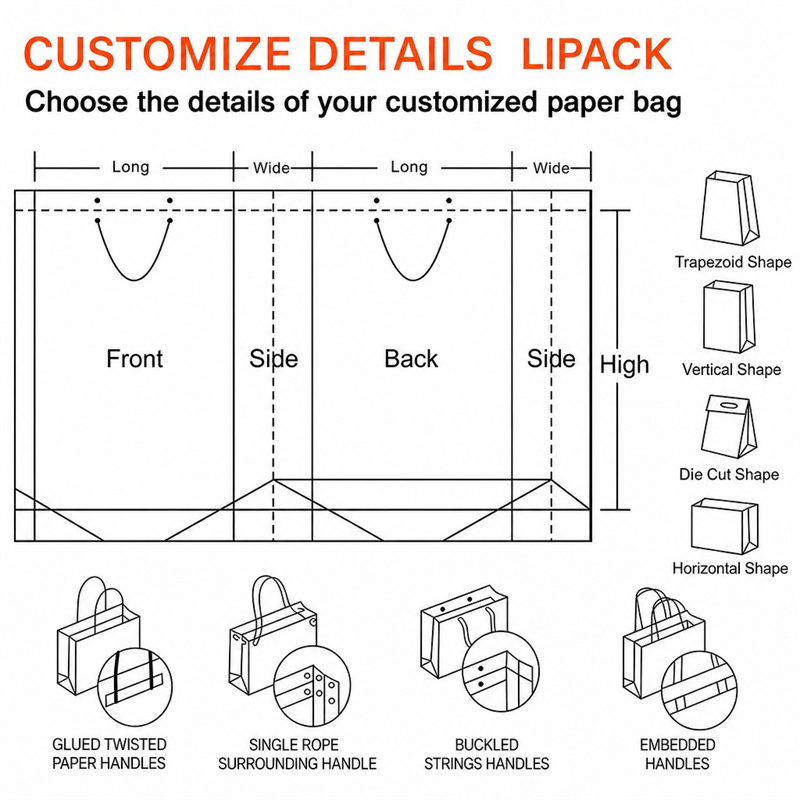
Bag dimensions can be customized for clothing, scarves, accessories, boxed products, and other retail items. Please specify sizes as width × side gusset depth × height, with handle length or drop listed separately.
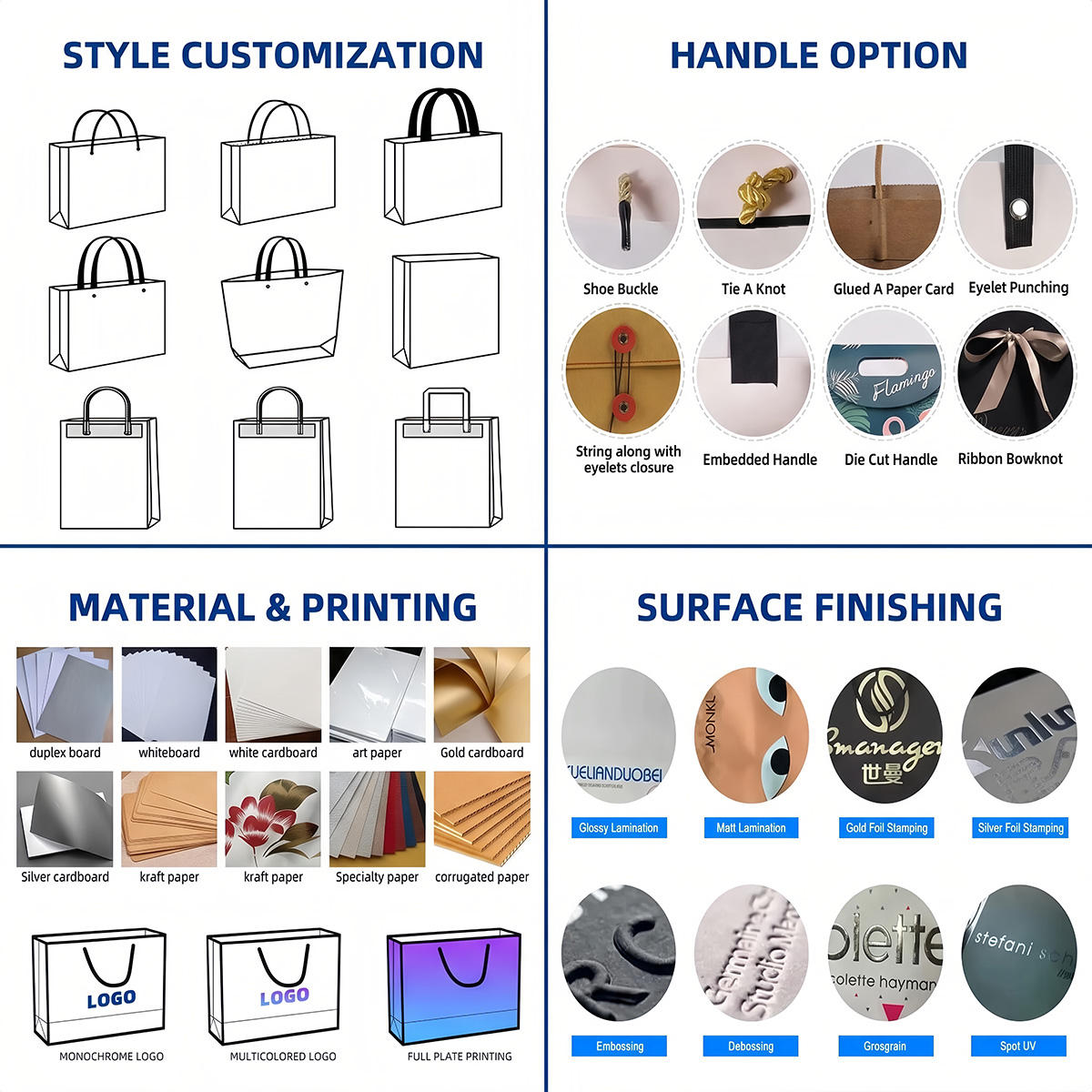
Handle options can include twisted paper, flat paper, cotton cord, ribbon, or die-cut openings, depending on the bag construction. Folded top edges, reinforced handle areas, and bottom inserts can be incorporated where appropriate.
Carrying performance depends on the complete design: paper properties, bag proportions, seams, reinforcement, and handle attachment. The intended product weight should be provided so these elements can be considered together.
Decorative Finishes Without Film Lamination
An unlaminated bag can still include decorative details. Depending on material compatibility, options may include foil stamping, embossing, or debossing to highlight your logo and create texture.
For designs intended to retain an untreated paper surface, printing and finishing choices should be clearly agreed before sampling. Any requested varnish or protective coating should be identified separately.
Practical Use and Material Considerations
Unlaminated paper surfaces generally offer less protection against moisture, grease, and surface rubbing than comparable film-laminated surfaces. These bags are best selected for applications where their paper feel and appearance suit the expected handling conditions.
Avoiding film lamination may support some recycling pathways, but recyclability depends on the complete bag construction and local collection requirements. Handles, adhesives, inks, coatings, and decorative elements should all be considered. Claims such as “plastic-free,” “recyclable,” or “biodegradable” require product-specific support.
Sampling and Order Review
Before bulk production, confirm the paper, dimensions, artwork, handle design, reinforcement, and packing arrangement against an approved sample. Relevant checks can include print clarity, folding accuracy, seam adhesion, handle attachment, and performance with the intended contents.
To request a quotation, send your preferred dimensions, product type and approximate weight, paper preference, artwork, quantity, and delivery destination. Include any requirements for material composition, testing, or documentation so these can be reviewed at the beginning of the project.

Unlaminated paper bags are generally packed flat where the design allows, helping reduce shipping volume and storage requirements. Packing methods are selected to protect exposed paper surfaces, printed graphics, handles, and folded edges during handling.
Available arrangements can include:
Quantity-based inner packing: Bags grouped in agreed quantities for counting and distribution.
Separate specification packing: Different sizes, colors, and artwork versions packed separately.
Surface protection: Protective wrapping or interleaving where needed to reduce rubbing and ink transfer.
Handle positioning: Handles arranged to help minimize pressure marks on adjacent bags.
Outer carton identification: Labels showing product references, quantities, and agreed batch information.
Final packing quantities, carton dimensions, net weight, and gross weight are confirmed after specifications are approved. If plastic-free shipping packaging is required, please state this separately so suitable protective materials can be reviewed.
Store bags in a clean, dry location away from direct sunlight, moisture, and excessive stacking pressure. Keep cartons closed until needed to help limit dust exposure and handling damage.