

Wholesale Custom Brand Name Silk Screen Printing Heat Transfer
Wholesale Custom Brand Name Screen-Printed Heat Transfer Labels
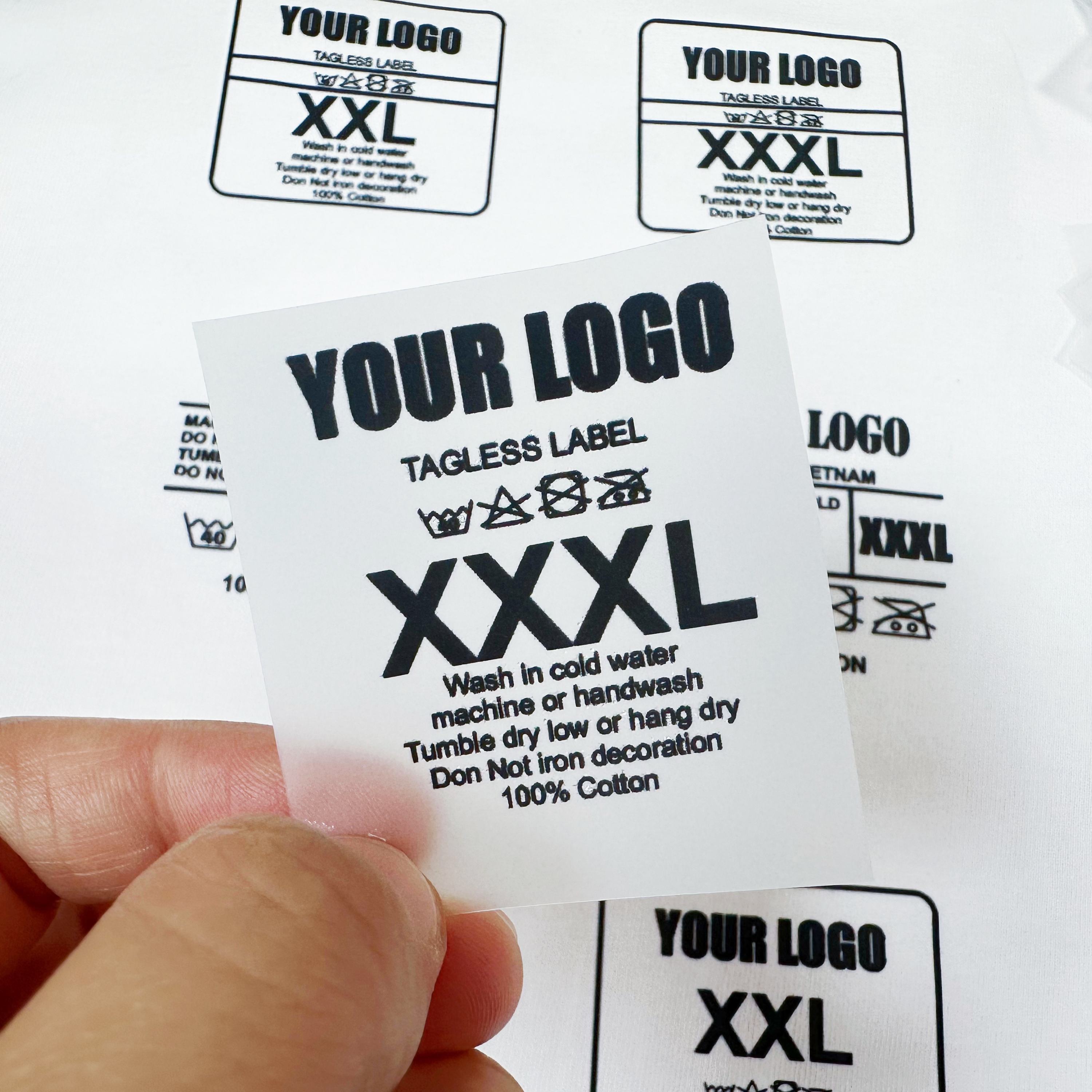
Create consistent garment branding with custom screen-printed heat transfer labels featuring your brand name, logo, and essential product information. Designed for apparel brands, garment manufacturers, and wholesale buyers, these transfers provide a streamlined alternative to sewn labels for compatible clothing and textile accessories.
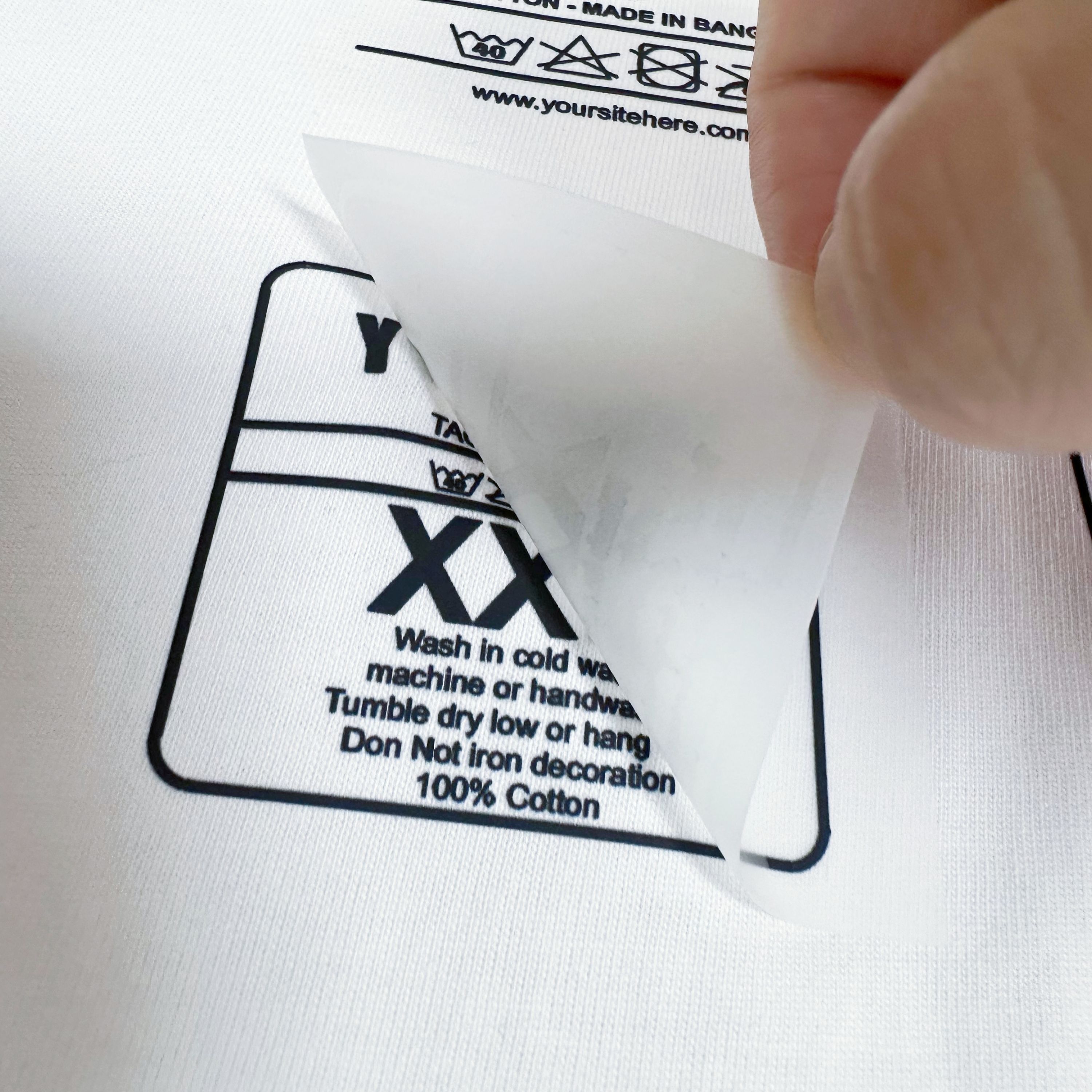
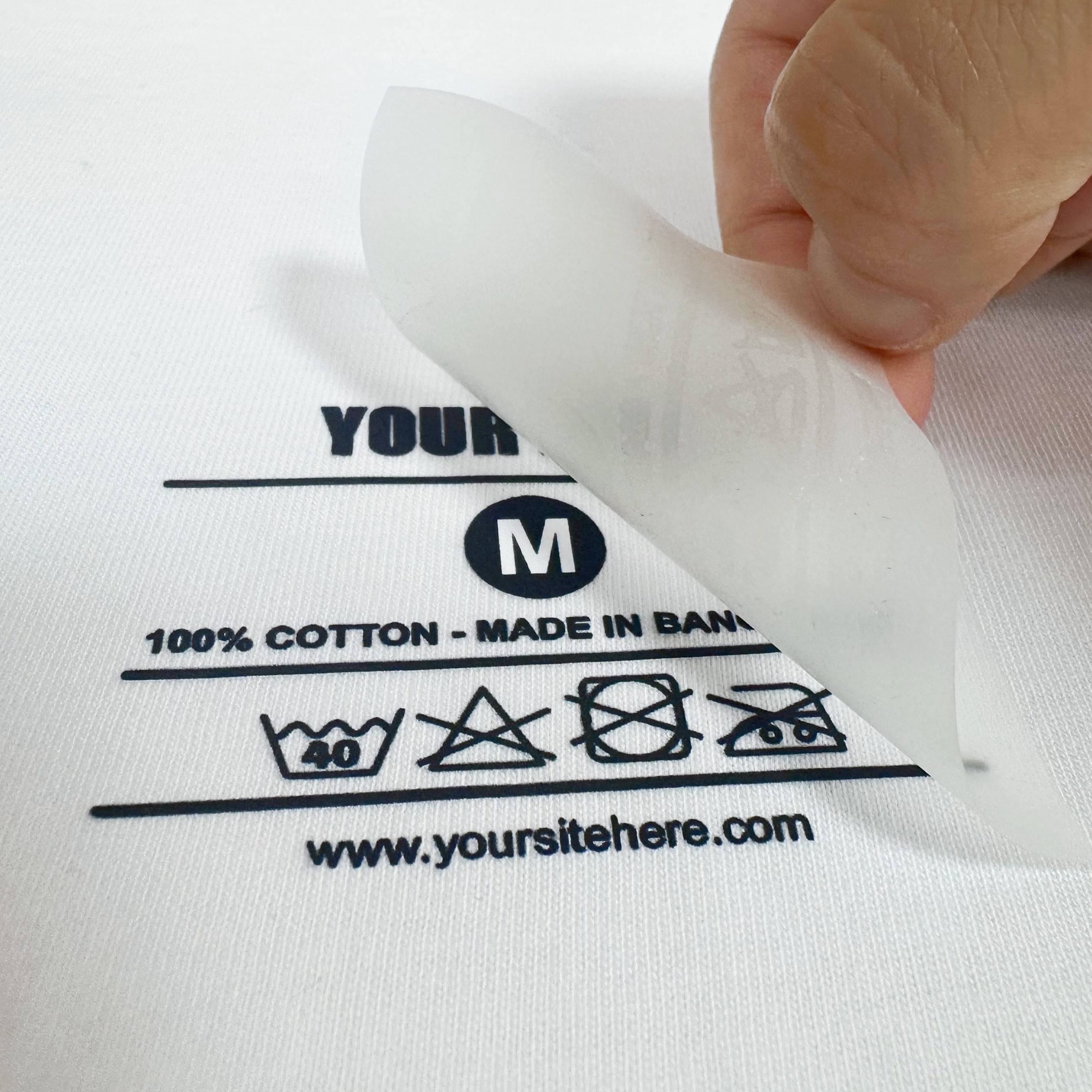
Artwork is screen-printed onto a temporary release carrier and transferred to the garment using controlled heat and pressure. After application and carrier removal, the design remains on the fabric, creating a clean presentation without a separate fabric label or stitched border.
Customize the dimensions, print colors, artwork layout, carrier arrangement, and quantity breakdown to suit your collection and production workflow.
Clear Brand Names and Logo Details
Screen printing is well suited to defined lettering, solid-color graphics, and repeat designs. Personalize your transfers with:
Brand names, logos, and monograms.
Collection names and short slogans.
Neck-label branding and size markings.
Fiber composition and approved care information.
Country-of-origin text.
Selected external garment graphics.
Fine lettering, narrow strokes, and closely spaced characters should be reviewed at the actual transfer size. Vector artwork with fonts converted to outlines helps preserve the approved typography and reduce discrepancies during preparation.
For labels containing several lines of information, an organized layout and adequate spacing are more effective than reducing the text excessively.
Transfer Systems Matched to Your Fabric
Screen printing describes the production process rather than a single material formulation. Depending on the application, suitable transfer systems may include water-based, plastisol, silicone, or other specified ink-and-adhesive combinations.
The selected system affects the finished feel, opacity, flexibility, application settings, and care performance. A thin transfer may suit discreet inner-neck branding, while other constructions can provide a more substantial effect for external logos.
Fabric composition and surface treatment must be considered together. Cotton, polyester, blends, and stretch fabrics may require different specifications. Water-repellent finishes, heat-sensitive materials, textured surfaces, and heavily dyed fabrics need particular evaluation.
Custom Colors and Print Appearance
Choose single-color or multicolor designs to coordinate with your garments and brand identity. Spot-color printing can support recognizable brand graphics, with physical references used to approve the final appearance.
Light-colored graphics on dark garments may require an appropriate opaque base. For dyed or sublimated polyester, a suitable migration-control construction may be needed to help limit garment dye showing through the transfer.
Multicolor artwork should allow sufficient detail size and spacing for accurate registration. Samples should be assessed after application to the intended garment, since fabric color, texture, and heat exposure can affect the result.
Wholesale Orders and Multiple Versions
Wholesale orders can be organized around a shared brand design with variations for garment sizes, product ranges, languages, or composition details.
To support accurate quotation and packing, provide:
The total order quantity.
Quantity per artwork and size version.
Transfer dimensions for each design.
Print colors and garment colors.
Required carrier format.
Any differences in fabric or application requirements.
Using consistent artwork dimensions and transfer constructions across suitable products can simplify purchasing and application. However, garments with different fabrics or care requirements should not automatically use the same transfer specification.
Minimum order quantities, sampling charges, setup costs where applicable, and production schedules are confirmed according to the project.
Carrier Layouts for Garment Production
Transfers can be supplied individually or arranged on sheets, depending on the design and application method. A shared carrier can hold separate letters and graphic elements in their approved positions during pressing.
Carrier margins, orientation, and spacing can be planned to help operators position the artwork consistently. For sheet layouts, allow sufficient separation if individual transfers will be cut apart before use.
Each version should have a clear item reference, particularly where brand artwork looks similar but size or composition information differs.
Heat Application and Garment Compatibility
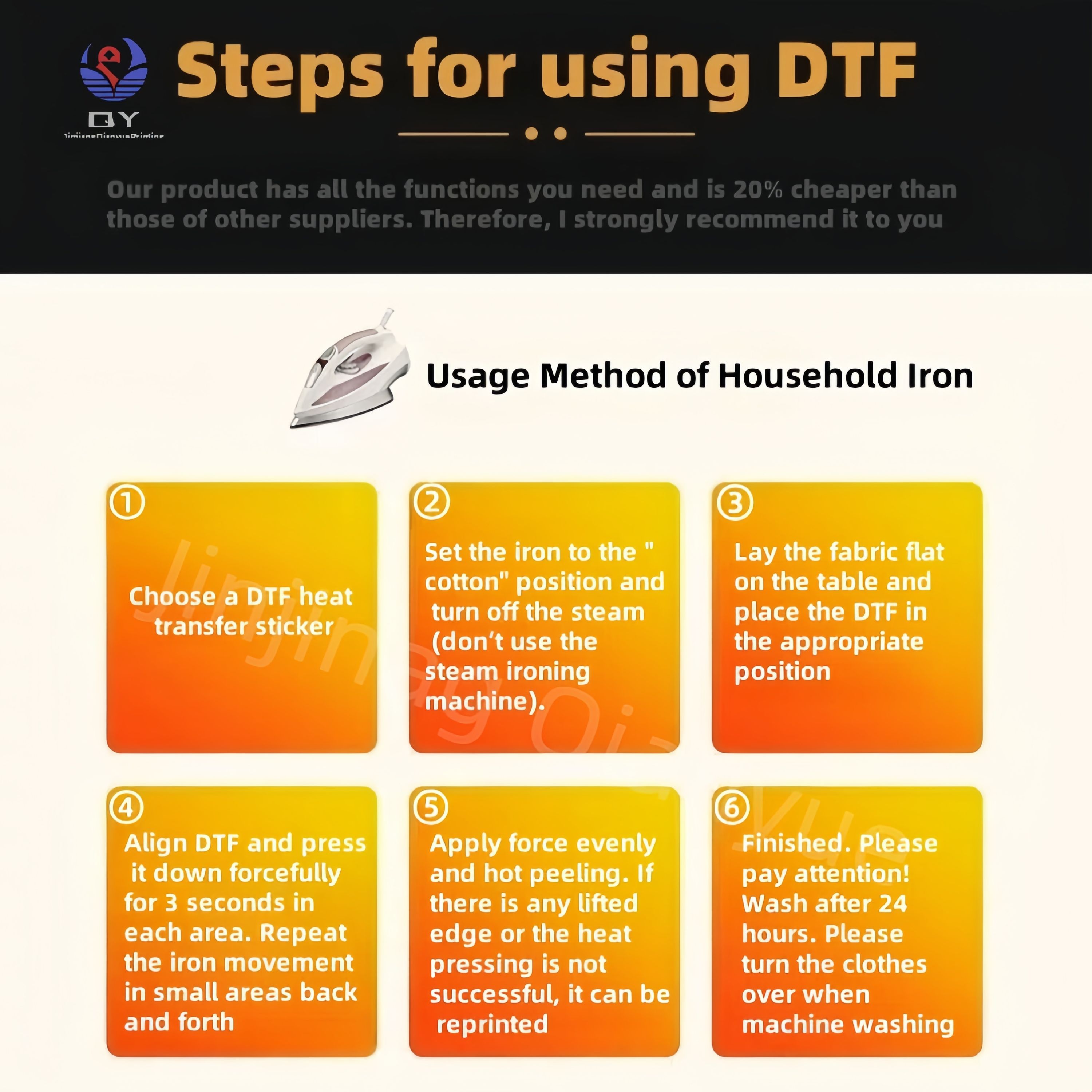
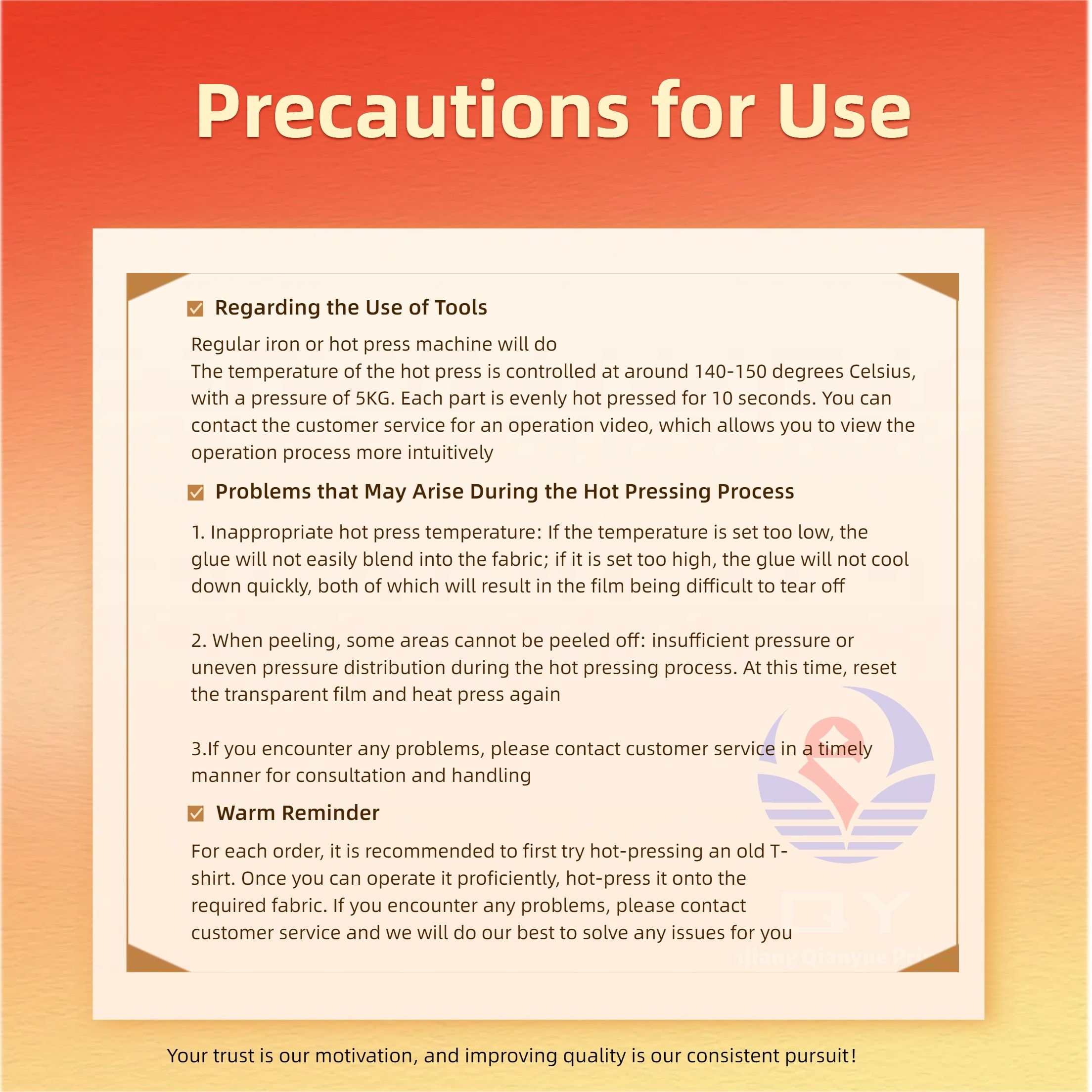
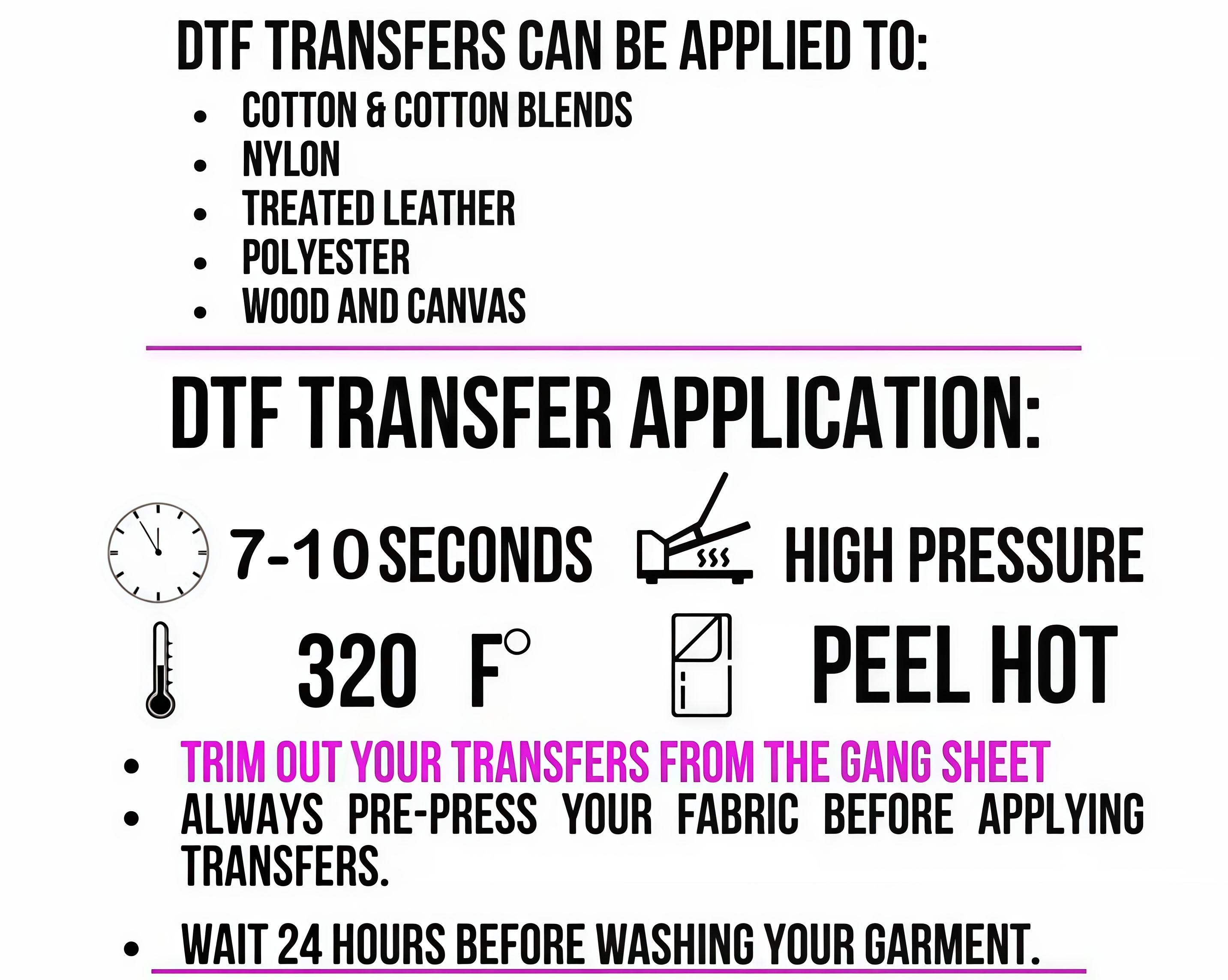
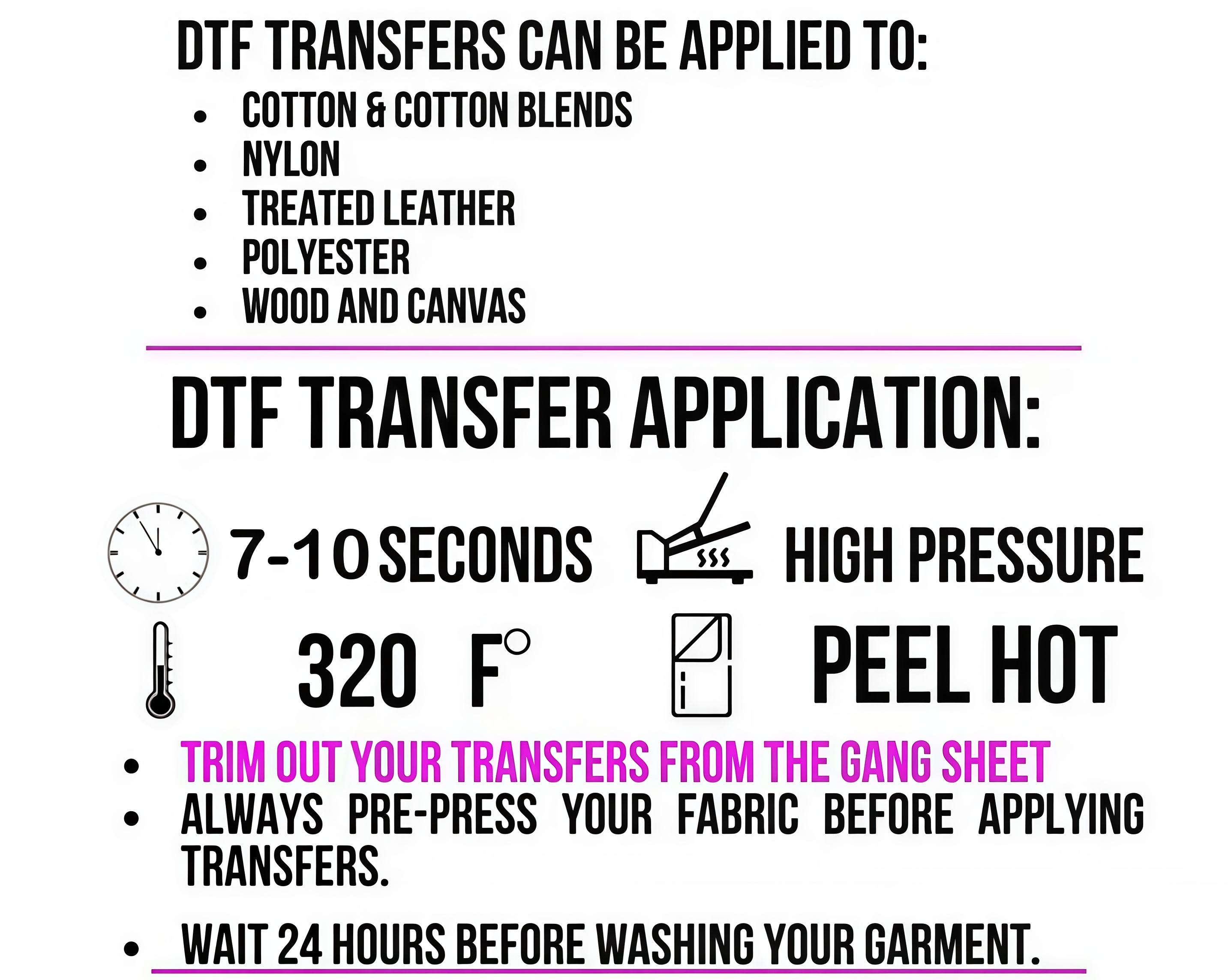
Reliable application depends on the transfer, garment, heat press, and operating conditions. Before bulk use, confirm:
Press temperature, dwell time, and pressure.
Any required pre-pressing step.
Hot, warm, or cold carrier-peeling instructions.
Any specified finishing press.
The waiting period before washing.
The approved garment-care conditions.
Seams, collars, zippers, and uneven fabric layers can prevent consistent contact. Placement and pressing support should be evaluated on the actual garment.
Application settings are specific to the approved construction. A single temperature or pressing time should not be assumed suitable for every transfer system.
Sample Approval and Performance Review
Approve a sample applied to the intended fabric before confirming bulk production. Review text clarity, dimensions, print coverage, color, carrier release, and the feel of the finished design.
Depending on the use, further checks can include:
Adhesion and resistance to edge lifting.
Appearance after agreed washing and drying cycles.
Stretch and recovery on elastic fabrics.
Resistance to cracking and surface rubbing.
Dye migration after application and storage.
Heat marks, discoloration, or changes to the garment surface.
Performance claims should relate to the tested transfer-and-fabric combination. Any restricted-substance or other documentation requirements should be specified during quotation.
Request a Wholesale Quotation
Send your artwork, transfer dimensions, colors, quantity per version, garment fabric, garment color, and intended placement. Include care requirements and your preferred carrier format so suitable specifications, sampling arrangements, and pricing can be reviewed.
Screen-printed heat transfer labels are supplied on release carriers and packed according to their dimensions, artwork versions, and application requirements. Packing helps keep the transfers clean, flat, and organized before garment production.
Options can include:
Counted inner packs: Agreed quantities of individual transfers or sheets.
Separate version packing: Different sizes, languages, compositions, and artwork references packed separately.
Protective separation: Suitable interleaving where needed to help prevent sticking and surface contact.
Flat packing: Supports carrier condition and reduces bending or creasing.
Application identification: Item references linked to the approved pressing and peeling instructions.
Carton labeling: Quantities, order references, and agreed batch information.
The packing list should state whether quantities refer to individual transfers or sheets and identify the number of transfers per sheet.
Final carton dimensions, packing quantities, net weight, and gross weight are confirmed after approval. Store transfers in their original packaging, protected from moisture, excessive heat, direct sunlight, and heavy pressure. Storage conditions and shelf life should follow the selected transfer system.