
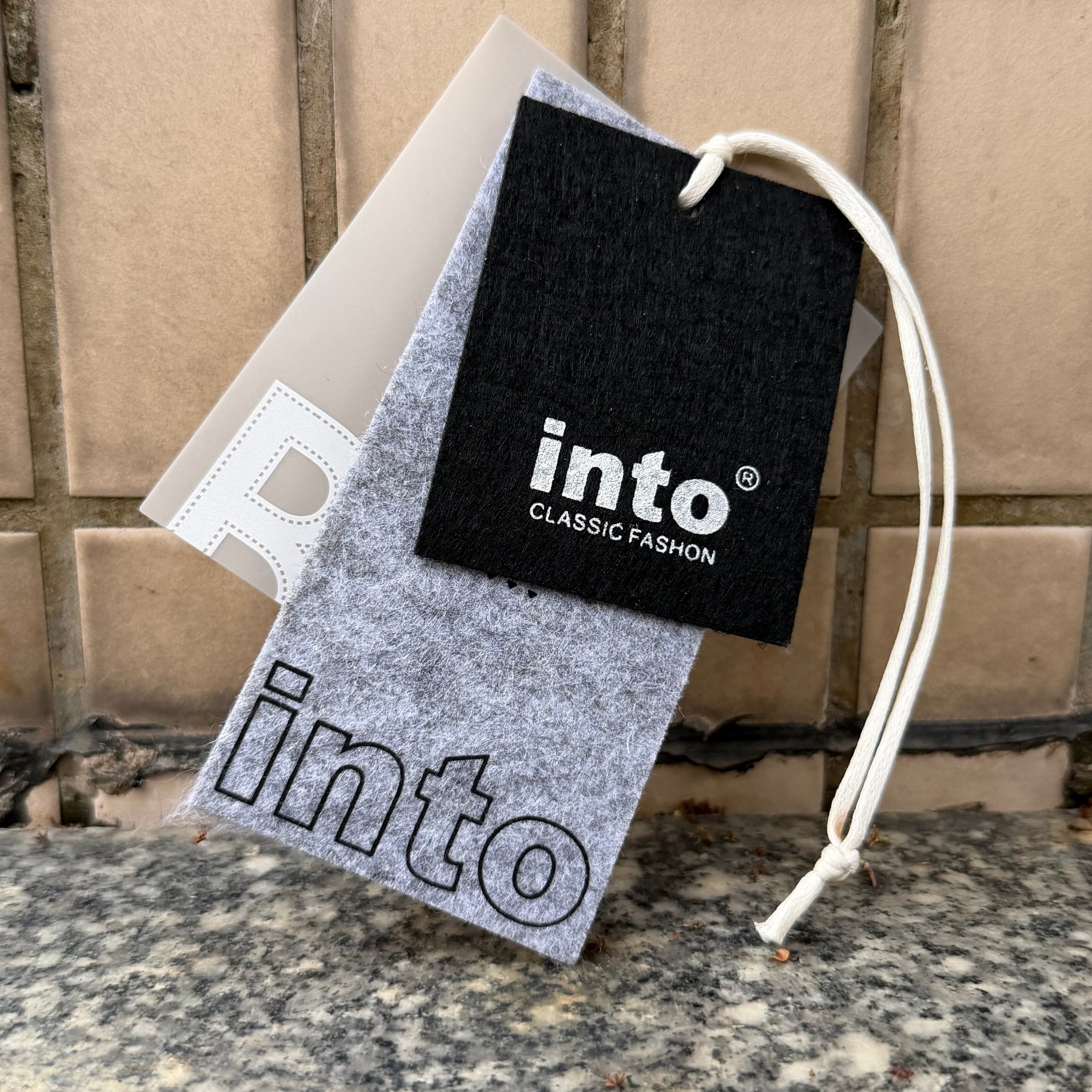


Eco-friendly Custom Debossed Garment Hangtags
Custom Debossed Paper Hang Tags for Clothing Brands
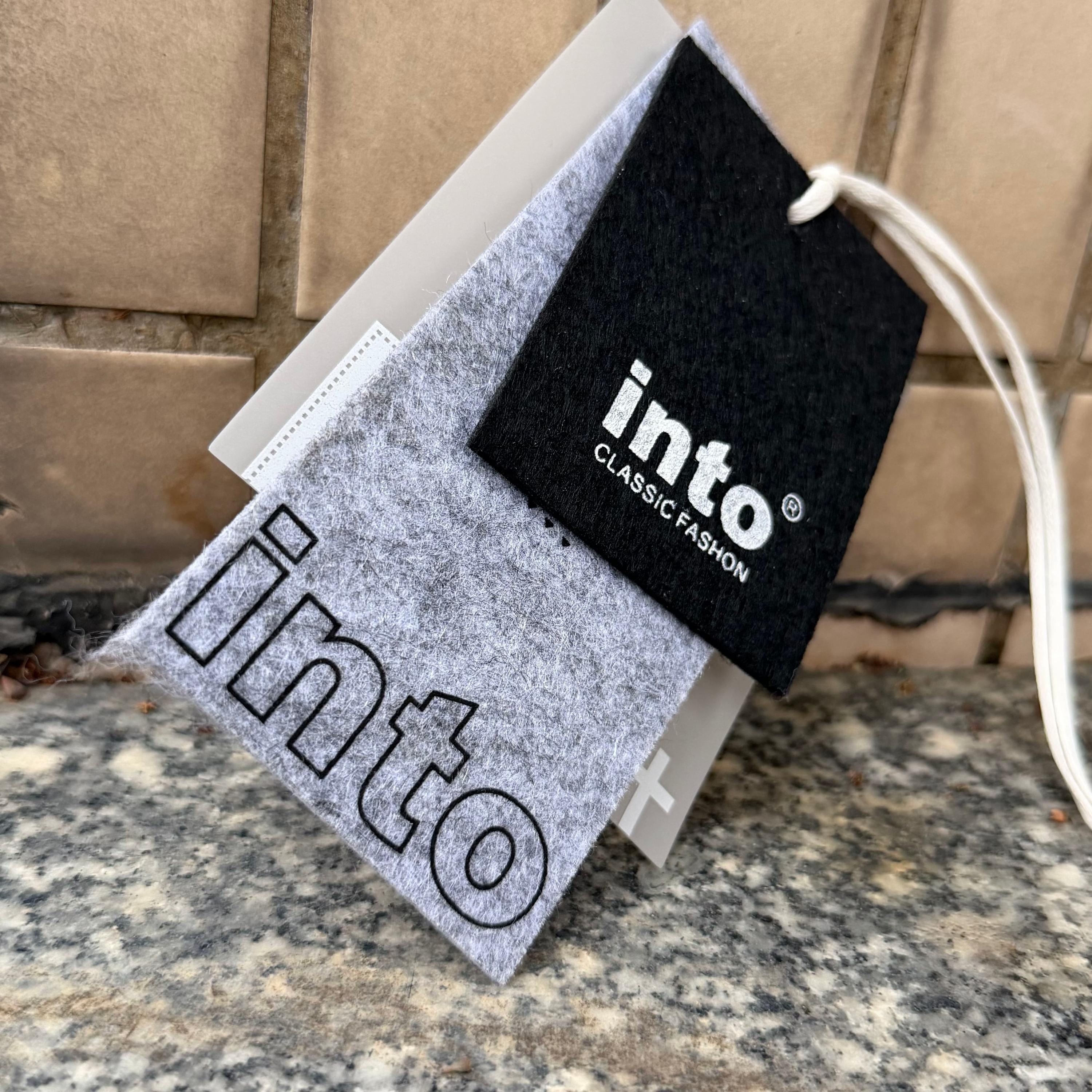
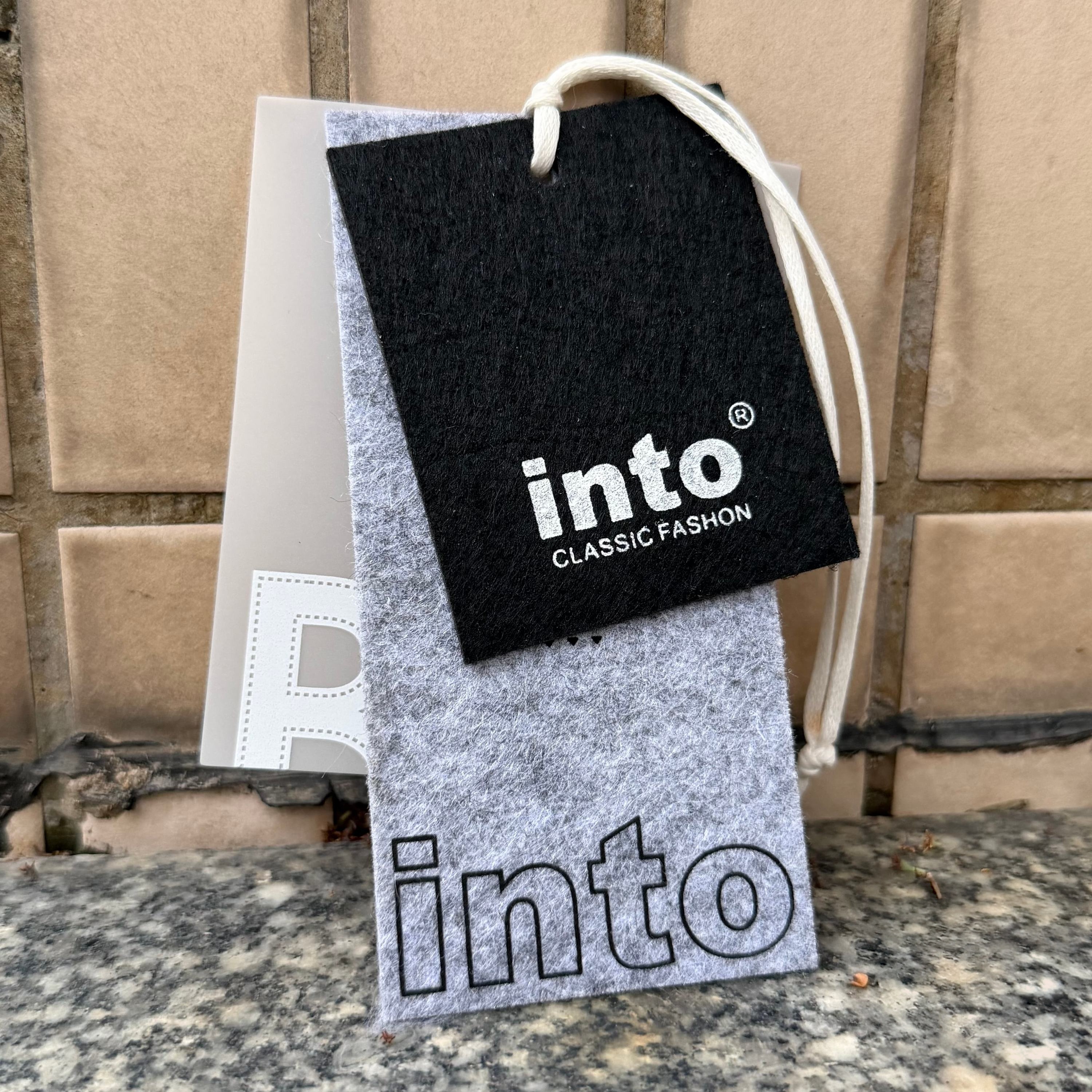
Give your garment packaging a distinctive tactile detail with custom debossed hang tags. Recessed logos and lettering create subtle depth in the paper surface, offering an understated presentation for fashion brands, denim collections, knitwear, tailoring, and accessories.
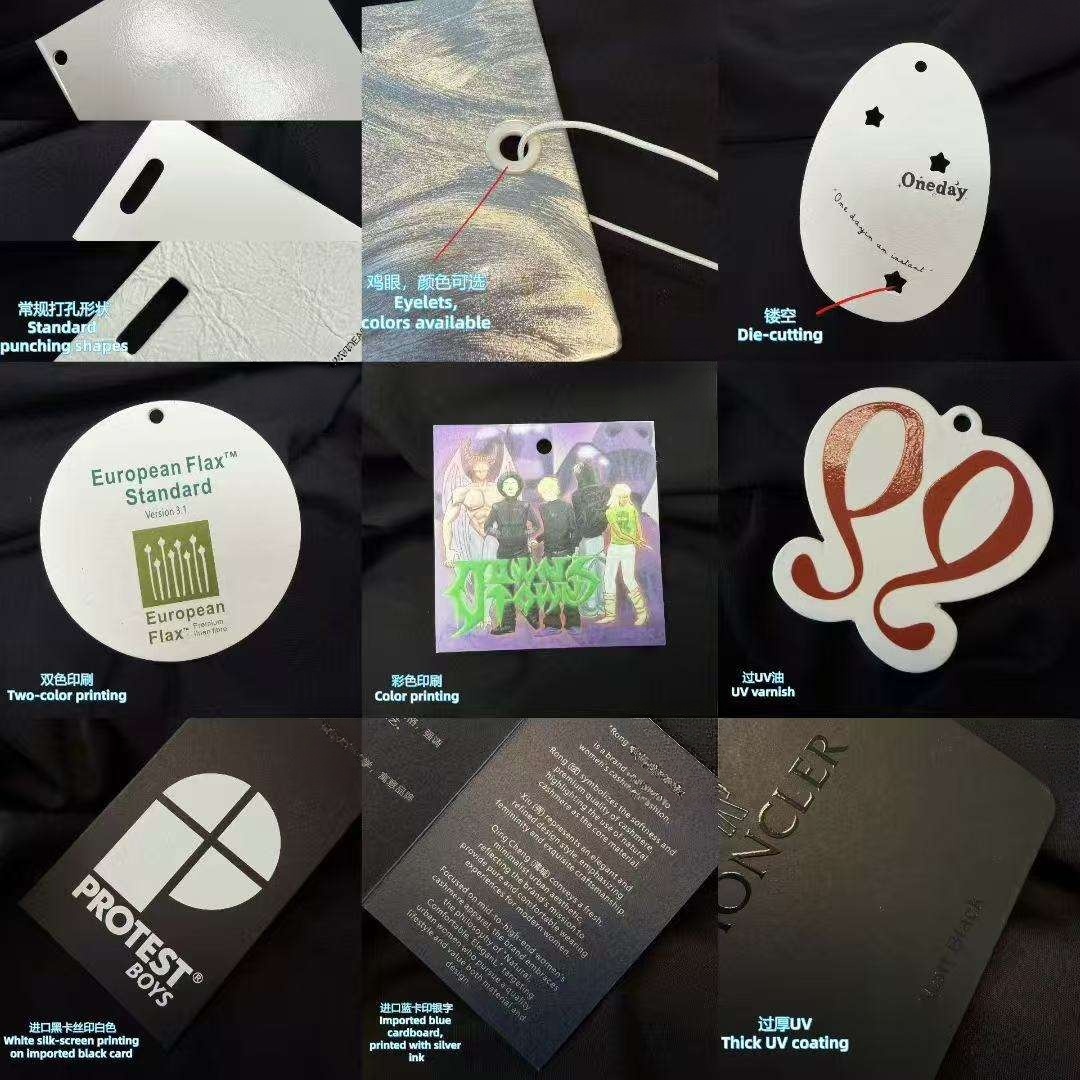
Customize the paper, dimensions, shape, artwork, printing, and attachments to suit your collection. From a minimal logo on textured stock to a printed tag with carefully positioned recessed details, each design can be developed around your brand identity.
Recessed Logos with a Refined Finish
Debossing presses selected artwork into the paper, creating an indented impression. Unlike embossing, which raises the design, debossing places the logo or lettering below the surrounding surface.
Design options can include:
Blind debossing: A recessed design without ink or foil in the pressed area.
Printed and debossed details: Color graphics aligned with the recessed artwork.
Foil-accented debossing: Metallic or other compatible foil effects combined with an indented design.
Debossed borders and patterns: Selected decorative elements that add texture around the branding.
The achievable depth depends on paper thickness, compressibility, tooling, and artwork. Bold lettering and well-spaced shapes generally provide clearer definition than very fine lines or tightly packed details.
Paper Options and Material Specifications
Select paper for its appearance, feel, and suitability for the desired impression. Options can include uncoated cardstock, kraft paper, textured specialty stock, and documented recycled-content papers.
Thicker, more compressible papers may support a more pronounced recessed effect. Dense or thin stocks may produce a shallower impression or show changes on the reverse side. A physical sample helps establish the right balance between detail, stiffness, and tag thickness.
If recycled content is required, specify the percentage and any post-consumer content requirement during quotation. Paper color and visible fibers do not establish recycled content; the selected grade should have supporting material information.
Finishing Choices for Your Packaging Requirements
For brands seeking a simpler material construction, designs can be developed without film lamination and with carefully selected attachments. Blind debossing can also provide visual detail without ink or foil in the recessed area.
These design choices should be described accurately rather than treated as proof that the complete tag is environmentally preferable in every respect. Recyclability depends on the paper, coatings, adhesives, decorative finishes, attachments, and local collection systems.
If certification marks or specific environmental statements will appear on the tag, confirm the relevant documentation and authorization before artwork approval.
Custom Shapes, Sizes, and Layouts
Choose rectangular, square, round, oval, or custom die-cut formats. Single-card tags offer a concise presentation, while folded tags or coordinated card sets provide more space for product information.
For an effective layout:
Leave enough space around the debossed logo.
Keep fine text clear of recessed areas.
Allow adequate margins around cut edges and attachment holes.
Account for folds and scoring where applicable.
Review both sides for pressure marks or distortion.
Debossing can affect the reverse surface, depending on the material and process. If both sides carry important information, confirm the complete layout through sampling.
Printing and Product Information
Add your brand name, collection details, pricing, size, product reference, or a short brand message. Single-sided and double-sided printing can be arranged according to the selected paper and design.
Uncoated and textured papers can absorb ink differently from smooth coated stock. Paper shade also affects printed colors, particularly on brown kraft or warm-toned materials. Approve a printed sample when brand-color matching or fine detail is important.
QR codes and barcodes should be placed on a flat area with sufficient contrast and clear space. Avoid positioning them over recessed artwork or heavily textured surfaces, and verify scanning on the finished tag.
Cords and Attachment Options
Complete your hang tags with cords, ribbons, or locking fasteners selected for the tag’s dimensions and weight. Options can be reviewed in paper, cotton, polyester, or other specified materials.
Cord diameter and connector size should match the hanging hole. A larger hole or reinforced construction may be needed for heavier tag sets, but any additional component should be considered alongside the overall design and material requirements.
Tags can be supplied with attachments separately or pre-attached, as agreed.
Sample Approval and Quality Review
Before bulk production, confirm the paper specification, dimensions, artwork, debossing treatment, printing, attachments, and packing arrangement against an approved sample.
Relevant checks can include:
Paper shade, texture, thickness, and stiffness.
Debossed depth and edge definition.
Alignment between printing and recessed details.
Surface cracking, pressure marks, or reverse-side effects.
Cutting, folds, and hanging-hole condition.
Attachment compatibility and code readability.
An approved physical sample provides a useful reference for repeat production. Changes to paper grade, thickness, or artwork should be reviewed because they can alter the finished impression.
Request a Custom Quotation
Send your logo or artwork, required dimensions, quantity, preferred paper, debossing reference, printing requirements, and attachment details. Include any recycled-content targets, certification needs, or restrictions on lamination and packaging materials so suitable specifications can be reviewed.

Custom debossed paper hang tags are generally packed flat, with protection selected according to the paper, printing, tag structure, and attachment arrangement. Packing helps reduce bending, rubbing, and unwanted pressure marks during handling and shipment.
Options can include:
Counted inner packs: Tags grouped in agreed quantities for garment packing and stock control.
Separate specification packing: Different artwork versions, sizes, and paper grades packed separately.
Surface protection: Suitable wrapping or interleaving where needed to protect printed and recessed areas.
Folded-tag arrangements: Flat-scored or pre-folded supply, according to the approved construction.
Attachment packing: Cords and fasteners supplied separately or pre-attached.
Carton identification: Item references, quantities, and agreed batch information.
Paper-based, recycled-content, or plastic-free protective packaging can be discussed separately. These requirements should cover the complete shipping pack, including wrapping, tape, and any protective inserts.
Final quantities per pack, carton dimensions, net weight, and gross weight are confirmed after approval. Store tags in clean, dry conditions away from moisture, direct sunlight, and excessive stacking pressure.