

Wholesale Customized Soft Durable Garment Care Label
Wholesale Custom Soft Garment Care Labels
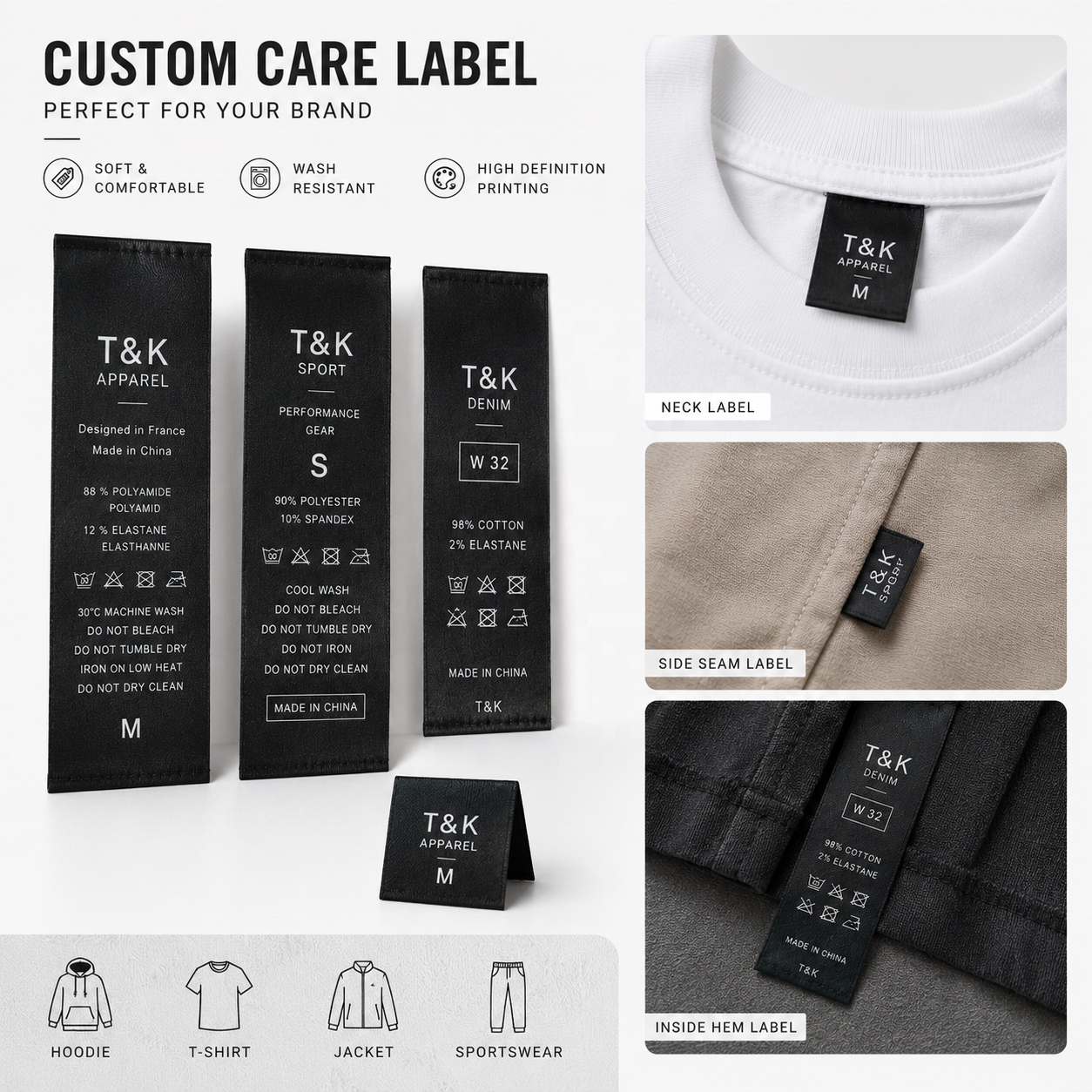
Provide clear care guidance with custom garment labels designed for a soft feel and lasting readability under the specified care conditions. Suitable for apparel brands, garment manufacturers, and wholesale buyers, these labels present essential information while fitting neatly into the garment’s interior.
Customize the material, dimensions, printing, folds, and quantity breakdown to suit your collection. From compact labels for lightweight clothing to longer multilingual formats, each specification can be developed around the information required and the garment’s construction.
Soft Materials for Comfortable Placement
Material selection affects how a care label feels, prints, folds, and performs after laundering. Options can include suitable polyester satin, soft polyester tapes, cotton tapes, and other label materials compatible with the required printing process.
Smooth tapes can support fine lettering and detailed care symbols, while textured materials offer a different appearance and feel. Satin describes a weave structure rather than a specific fiber, so the actual composition should be stated in the approved specification.
For labels worn against the skin, softness should be assessed together with thickness, stiffness, edge finish, folds, and stitching. A sewn sample provides a more useful comfort reference than an unassembled material swatch.
Clear Care Instructions and Product Information
Personalize your labels with:
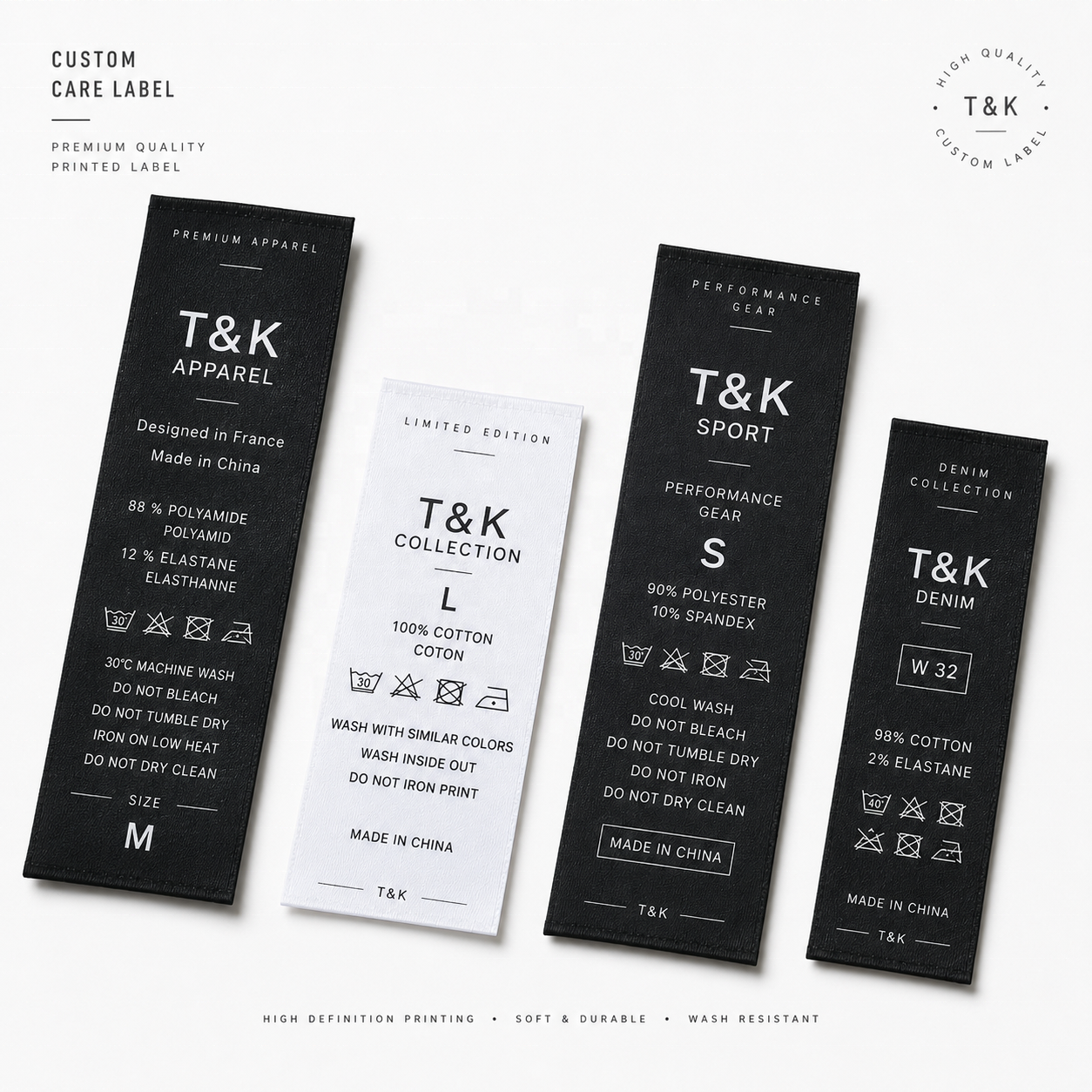
Brand names and logos.
Fiber composition and percentages.
Washing, bleaching, drying, ironing, and professional-care instructions.
Country-of-origin information.
Size markings and product references.
Multilingual text for different markets.
Other approved information required for the product.
The layout should keep essential information readable at the finished size. Clearly defined symbols, appropriate contrast, and adequate spacing help customers understand the instructions.
Care information should reflect the complete garment, including the main fabric, lining, interlining, trims, and decorative components. Final wording, translations, and symbols should be approved before production.
Single-Sided, Double-Sided, and Multi-Label Formats
Choose a format that accommodates your content without unnecessary bulk:
Single-sided labels: Suitable for concise care and composition information.
Double-sided labels: Provide additional space for languages, branding, or product details.
Folded labels: Arrange information across panels while allowing seam insertion.
Multi-label sets: Separate longer instructions or market-specific information into coordinated pieces.
For double-sided printing, review material opacity and show-through. Fold direction and panel orientation should also be checked so the information reads correctly after sewing.
Where content is extensive, increasing the label area or using a coordinated set may provide better readability than making the text smaller.
Printing Selected for the Intended Care Process
Durable printing depends on the combination of label material, ink or ribbon system, processing, and garment-care conditions. The printing method should be selected for the actual application rather than appearance alone.
Provide the intended washing temperature, drying method, ironing requirements, and any professional-cleaning conditions during development. If the garment will undergo dyeing, enzyme washing, or another production treatment after labeling, include those details as well.
Sample evaluation can assess:
Text and symbol readability after agreed care cycles.
Fading, smearing, or ink transfer.
Colorfastness and appearance.
Label shrinkage, curling, or distortion.
Edge fraying and seam integrity.
Changes in softness or stiffness after laundering.
Domestic washing, dry cleaning, and industrial laundering require different evaluations. Any durability claim should correspond to the approved construction and test conditions.
Custom Sizes, Folds, and Edge Finishing
Label width, length, and folds can be adapted to side seams, waistbands, necklines, and garment linings. Common formats include straight-cut and center-fold labels, with other constructions available where suitable.
Specify both the total cut dimensions and the visible area after folding and sewing. Keep essential information clear of stitching allowances.
Edge finishing should suit the material and application. Some cutting methods can leave a firmer edge on synthetic tapes, while cotton-based tapes may require folded or otherwise managed cut edges. The finished result should be checked for comfort and fraying on the actual garment.
Wholesale Ordering Across Multiple Styles
Organize bulk orders by garment style, composition, size, language, or destination market. Similar-looking care labels can contain different instructions, so each version should have a distinct artwork reference.
For accurate production and packing, provide:
Approved artwork for each version.
Quantity per label design.
Material and dimensions.
Printing sides and fold requirements.
Relevant garment-care conditions.
Required packing and identification details.
Shared materials and dimensions may simplify ordering where appropriate. However, different care instructions or fabric applications should remain clearly identified.
Sample Approval and Quality Review
Before bulk production, confirm the material, feel, dimensions, artwork, print clarity, folds, and packing format against an approved sample. A sewn and laundered sample helps verify both presentation and performance.
For repeat orders, retain the approved item reference and confirm any changes to composition wording, care instructions, printing materials, or garment construction.
Request a Wholesale Quotation
Send your label text or artwork, preferred material, dimensions, printing colors, fold style, and quantity per version. Include the garment type, destination market, application position, and care process so suitable specifications and sampling arrangements can be reviewed.
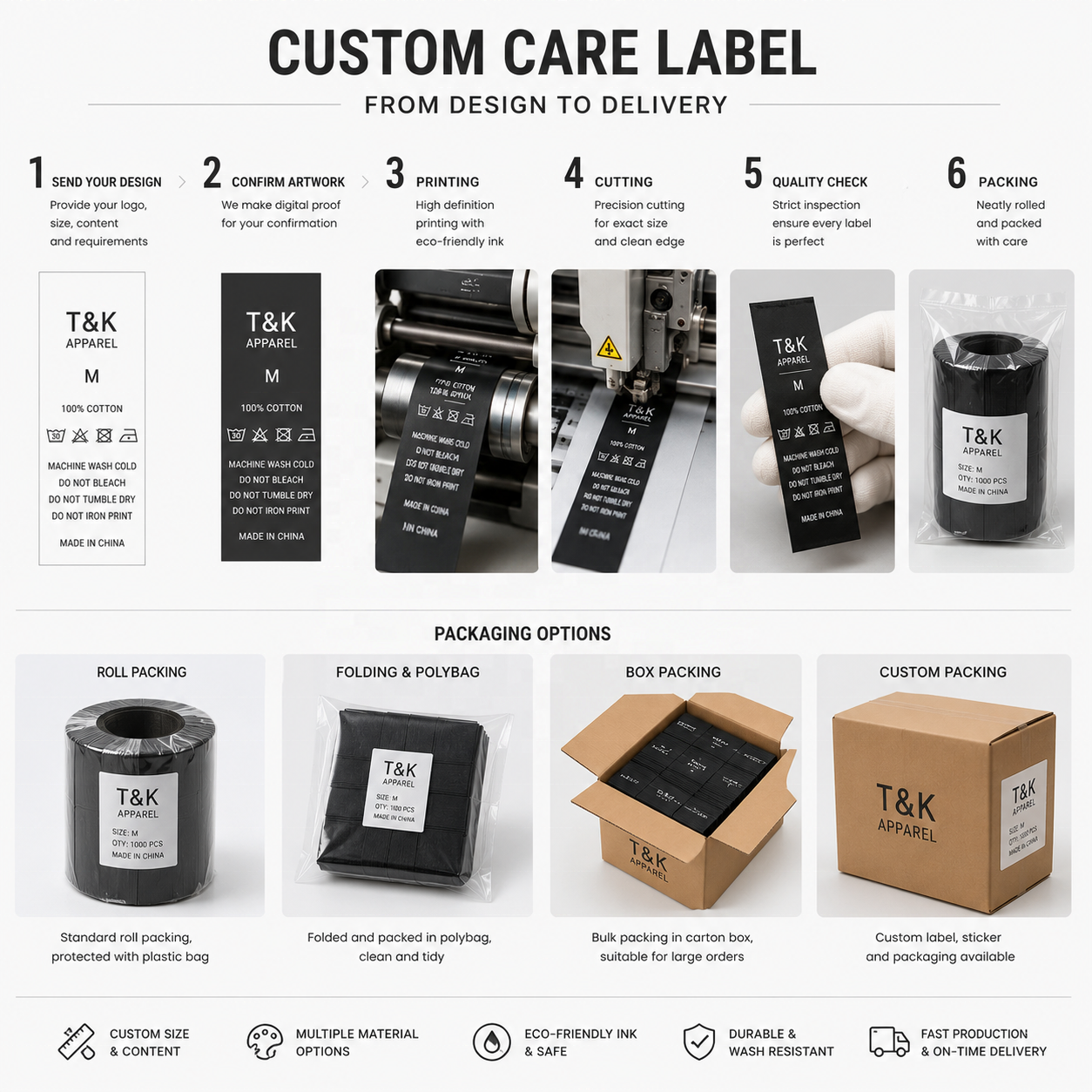
Custom garment care labels can be supplied cut, folded, or on continuous rolls according to your production requirements. Packing keeps different information versions organized and helps preserve the label condition before sewing.
Options can include:
Counted inner packs: Agreed quantities for garment assembly and stock control.
Separate content packing: Different compositions, care instructions, languages, and sizes packed separately.
Fold protection: Labels arranged to maintain the approved fold direction.
Roll identification: Artwork references, print orientation, repeat spacing, and quantities marked where required.
Protective wrapping: Helps reduce dust exposure and contamination during handling.
Carton labeling: Item references, quantities, order details, and agreed batch information.
Inner-pack identification should distinguish the actual label version, not just its color or dimensions. The packing list should provide a quantity breakdown for every approved artwork reference.
For roll supply, confirm whether the order is measured by label count or tape length. Final carton dimensions, net weight, and gross weight are confirmed after specifications are approved.
Store labels in clean, dry conditions away from direct sunlight, moisture, chemicals, and excessive pressure.