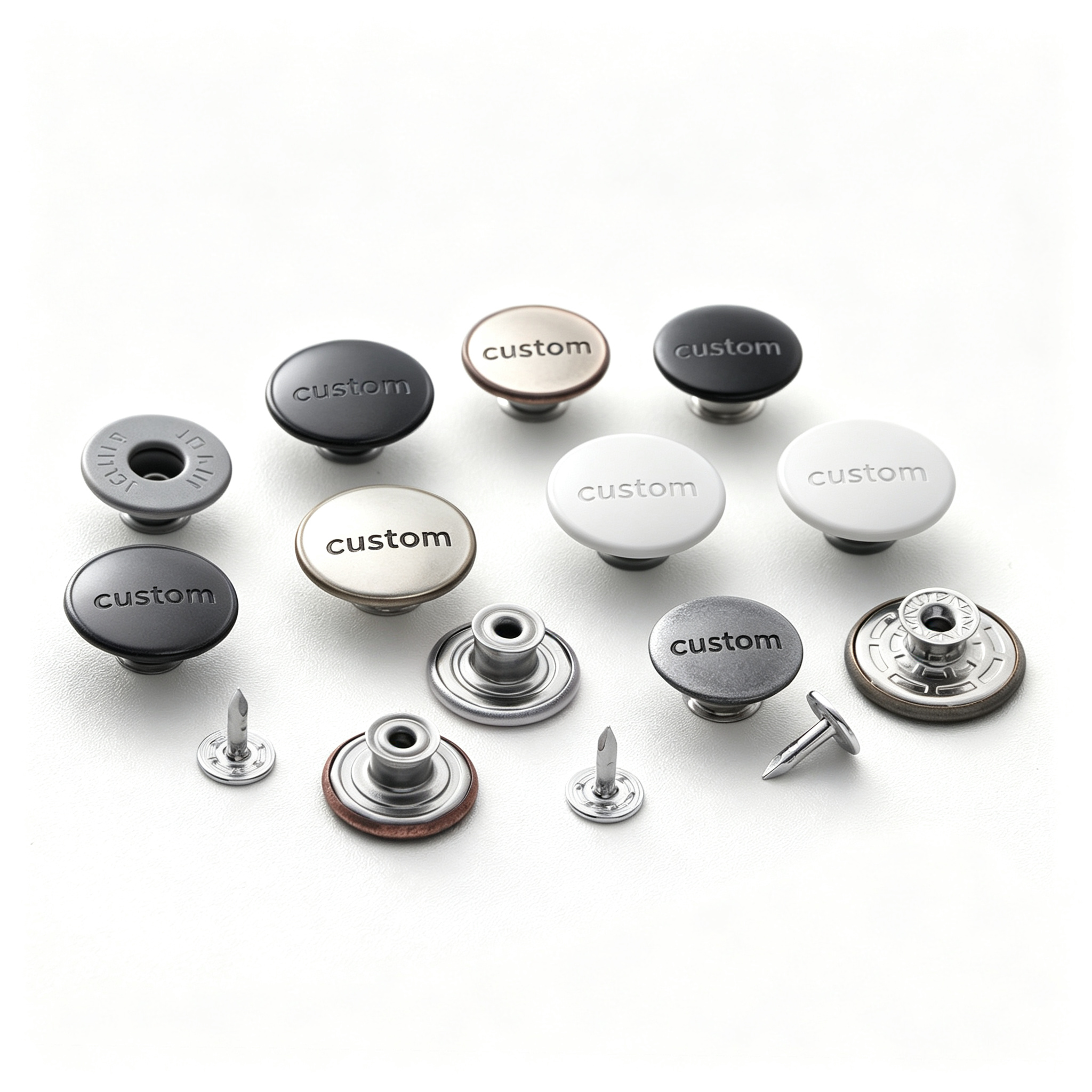

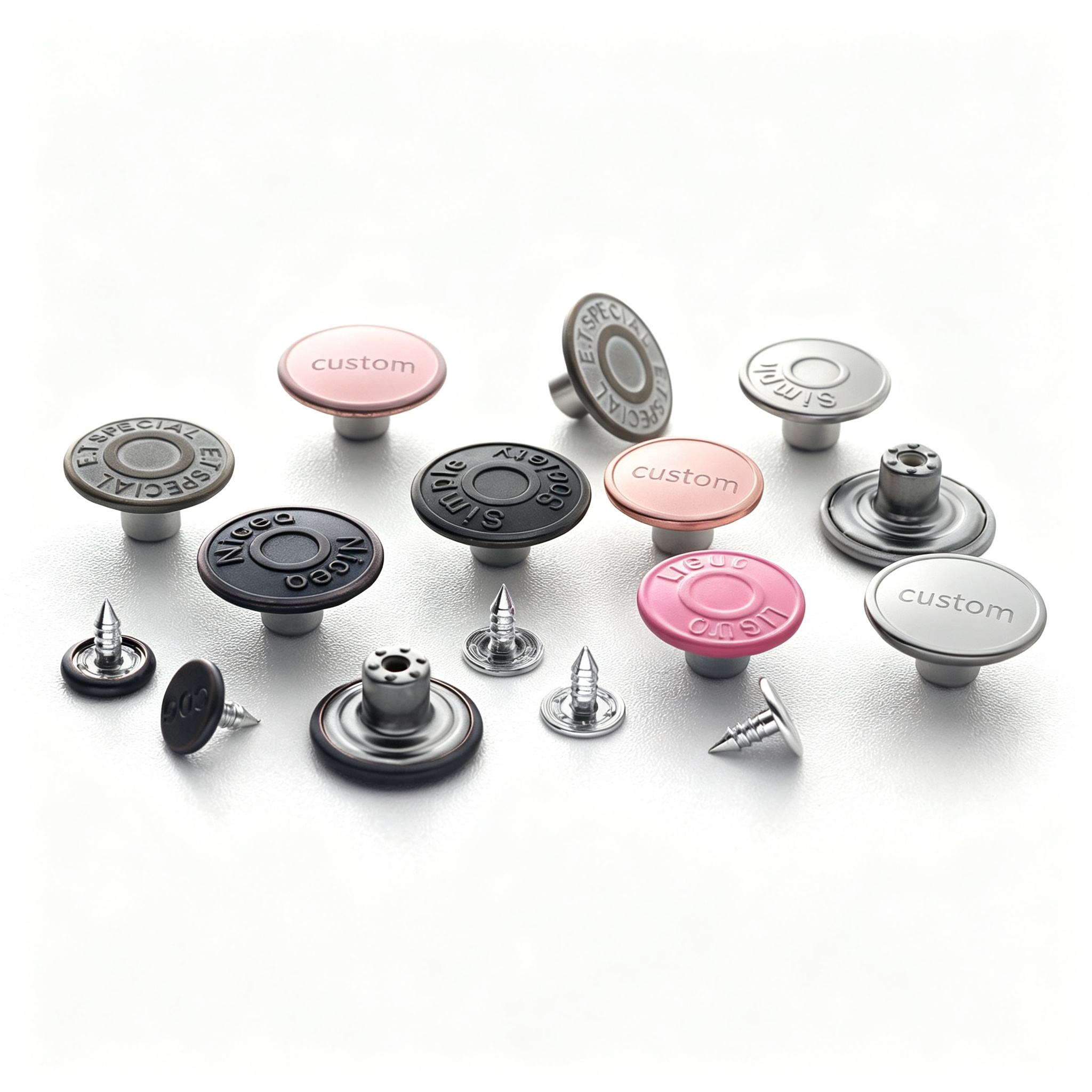

Custom Engraved Brass Jacket Jean Buttons
Custom Engraved Brass Buttons for Jackets and Jeans
Add a distinctive metal detail to your garments with custom engraved brass buttons. Designed for denim, jackets, outerwear, workwear, uniforms, and casual apparel, these buttons combine a durable metal construction with engraved logos, lettering, or decorative patterns.
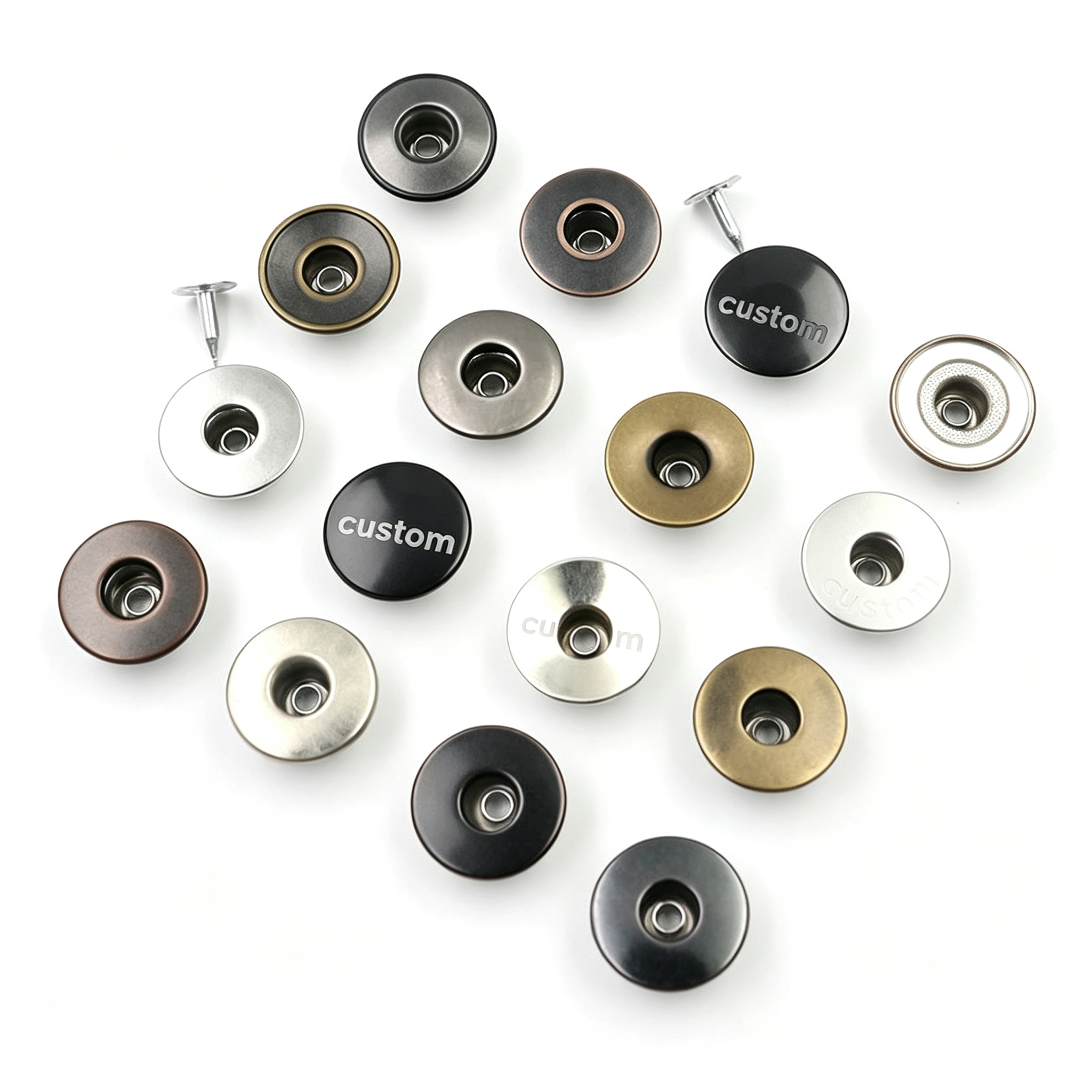
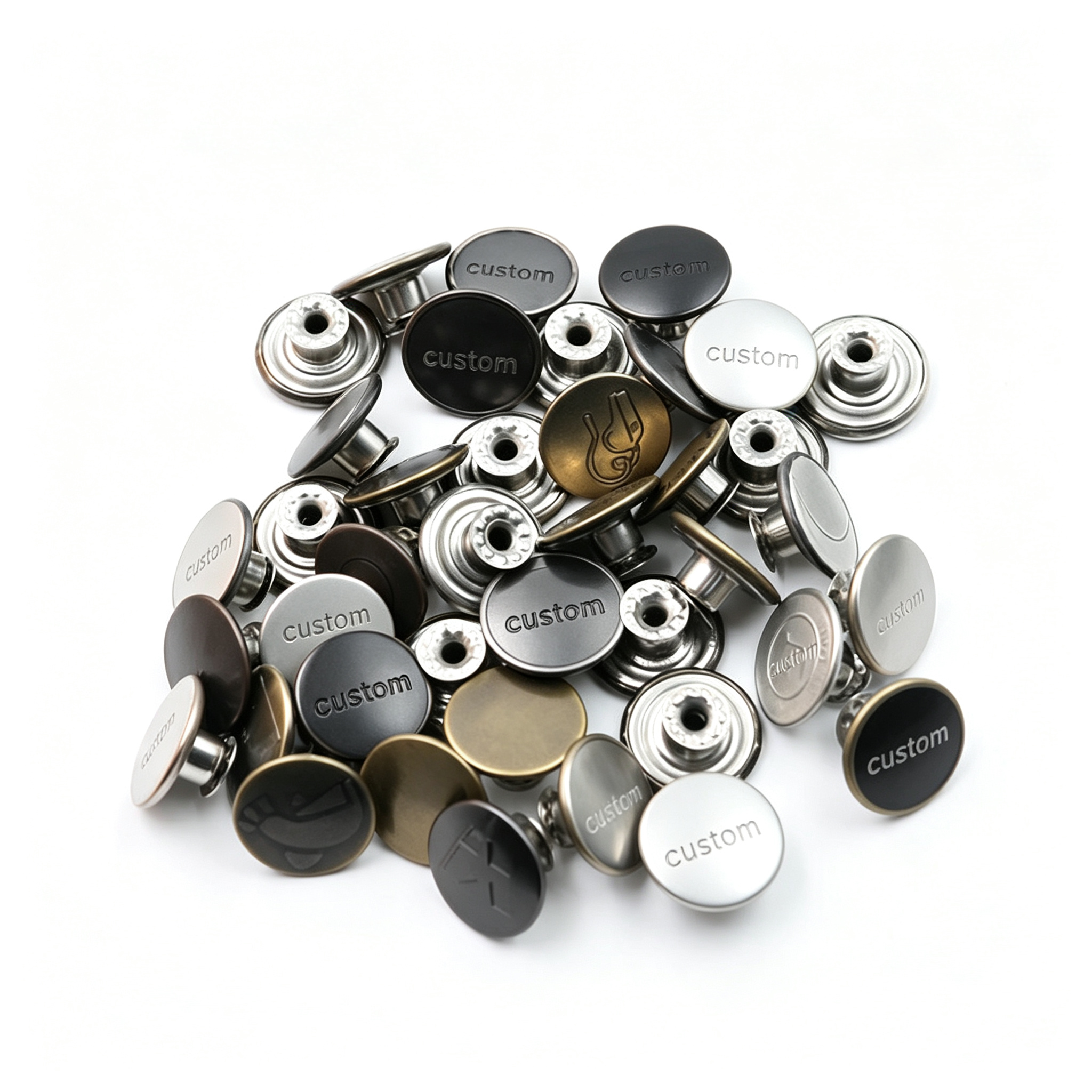
Brass provides a warm metallic appearance that can be finished in a polished, matte, antique, or aged style. Customize the button diameter, profile, engraving, surface finish, attachment structure, and packing arrangement to suit your garment design and production requirements.
Brass Construction and Button Styles
Brass is an alloy primarily based on copper and zinc. The exact composition, plating, coating, and finish should be confirmed in the approved product specification.
Depending on the garment construction, available button structures may include:
Sew-through brass buttons: Attached with thread through two or four holes.
Shank brass buttons: Feature a rear loop for a clean front appearance without visible stitching holes.
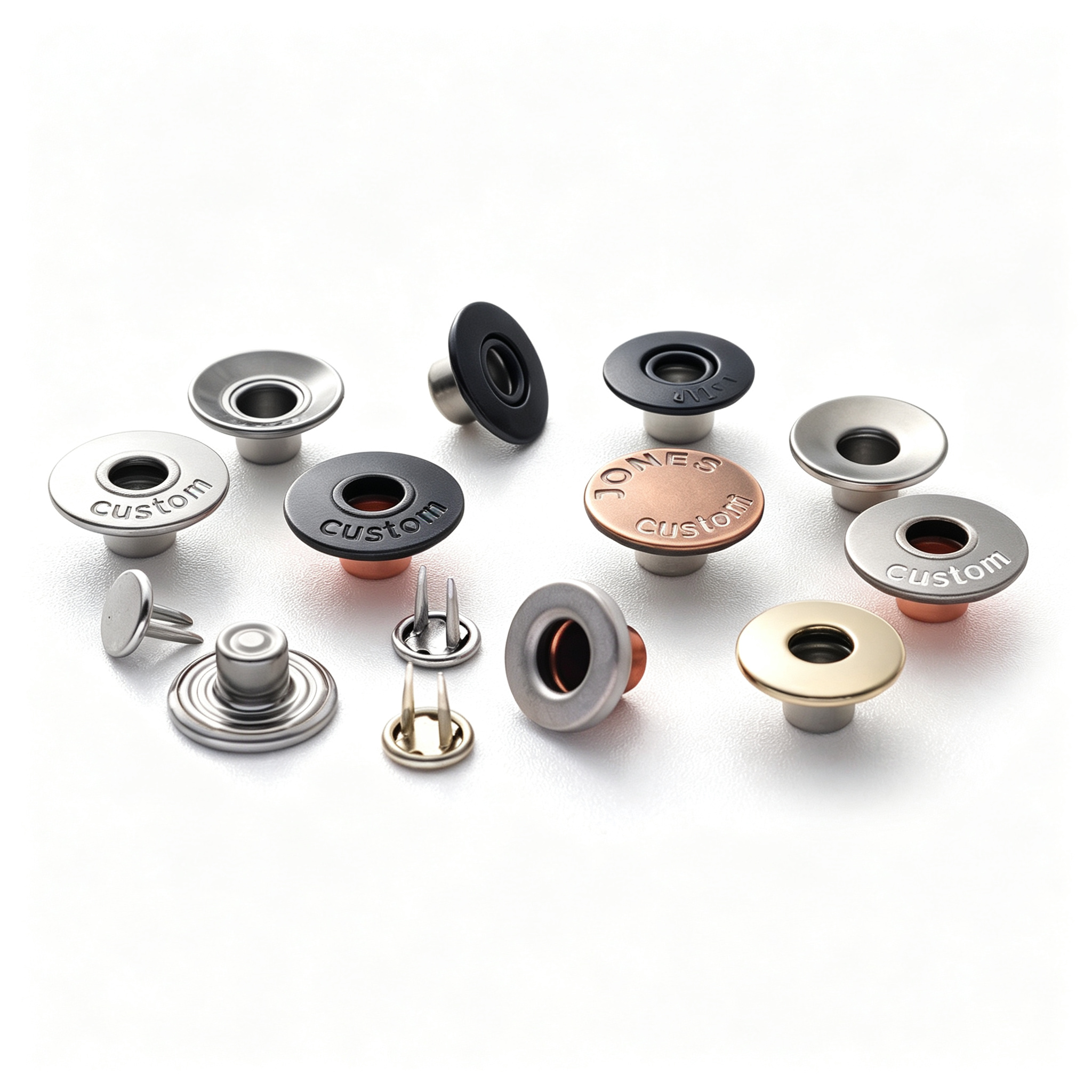
Jeans tack buttons: Consist of a decorative cap and compatible tack component for attachment to denim waistbands or jackets.
Snap-button systems: Available only where the product is designed as a complete compatible press-stud assembly.
The button type should be selected according to the garment thickness, opening method, attachment equipment, and expected use. A decorative button and a functional fastening button are not always interchangeable.
Custom Engraving for Brand Recognition
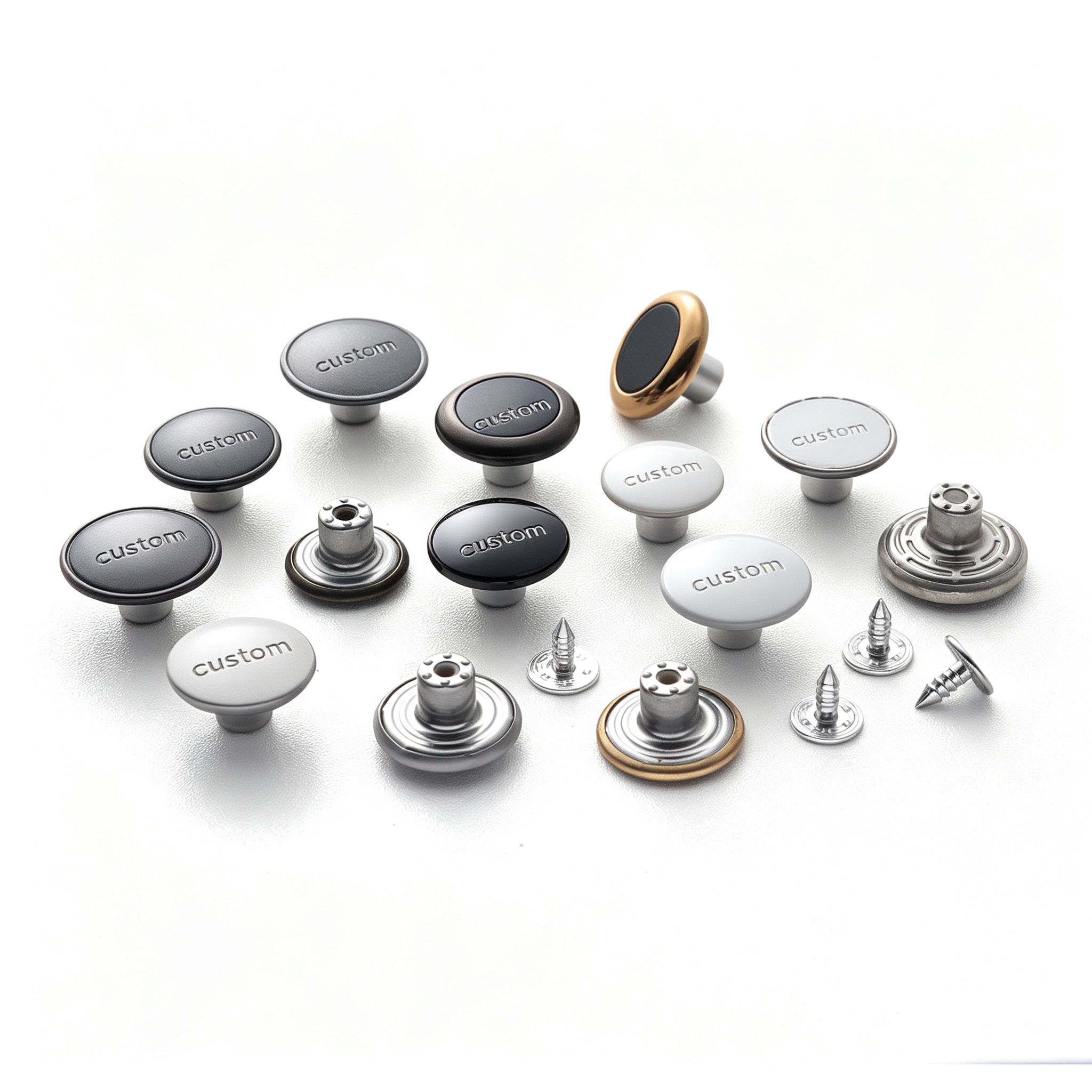
Engrave your brand logo, initials, collection name, lettering, symbols, or decorative artwork directly onto the button face. Depending on the selected size and production method, engraving may be recessed, raised, or combined with a textured background.
For clear and consistent results:
Use simple artwork with well-defined lines.
Keep lettering large enough for the selected button diameter.
Allow sufficient spacing between characters and borders.
Avoid placing fine details too close to the edge.
Review the final design at actual size before production.
A physical sample is recommended when the engraving is a key part of the brand presentation.
Custom Profiles, Sizes, and Finishes
Choose from suitable round, domed, flat, low-profile, or other available button shapes. Common customization details include:
Button diameter and thickness.
Edge profile and face shape.
Engraved logo depth and layout.
Polished, brushed, matte, antique, or aged appearance.
Brass-tone, copper-tone, dark, or other specified surface effects.
Compatible tack, shank, or sewing structure.
A brass-tone finish does not always mean that the entire button is solid brass. Base metal, plating, coating, and surface treatment should be stated accurately.
Suitable for Jackets, Jeans, and Heavy Apparel
Custom engraved brass buttons can be used on:
Denim jeans and denim jackets.
Work jackets and uniforms.
Military-style or utility garments.
Leather and canvas outerwear.
Casual coats and overshirts.
Bags and textile accessories.
For thick denim, leather, canvas, or layered materials, the component length and attachment method should be matched to the actual compressed material thickness.
Installation and Attachment Performance
Reliable attachment depends on the complete system, including the button structure, matching components, fabric layers, setting tools, and machine adjustment.
Before bulk production:
Test the button on the actual garment material.
Confirm that the component length is suitable.
Check that the button is aligned and securely attached.
Inspect the surrounding fabric for tearing or excessive compression.
Ensure that the button does not have sharp edges or exposed points.
Evaluate opening and closing performance where the button is functional.
For tack buttons and other mechanically attached styles, use compatible dies and equipment. Incorrect tooling or excessive setting pressure can deform the button or weaken the fabric.
Finish and Care Considerations
The appearance of brass and finished surfaces can change with washing, abrasion, moisture, sweat, chemicals, and garment finishing processes. Antique or aged effects may develop naturally over time, while plated or coated surfaces may wear differently from untreated brass.
Samples should be evaluated through the intended washing, bleaching, abrasion, or finishing process. Specific requirements for corrosion resistance, color retention, restricted substances, or children’s products should be identified before quotation.
A finish name such as “antique brass” describes the visual effect and does not by itself guarantee a particular corrosion or wear performance.
Sample Approval and Quality Review
Before bulk production, confirm:
Base material and surface treatment.
Button diameter, thickness, and profile.
Engraving artwork, position, and depth.
Attachment structure and matching components.
Surface color and finish reference.
Garment material and installation method.
Washing and finishing requirements.
Relevant checks can include engraving clarity, dimensional consistency, surface condition, attachment strength, edge safety, and appearance after the agreed care process.
Request a Custom Quotation
Send us your logo or engraving artwork, preferred button size, garment type, material thickness, finish reference, button structure, quantity, and delivery requirements. A physical reference button or garment sample can assist with component matching and tooling review.
Custom engraved brass buttons are packed according to their button type, size, finish, component configuration, and order quantity. Packaging is selected to help reduce scratching, rubbing, oxidation, and mixing between different specifications.
Packaging options can include:
Counted inner packs: Buttons grouped in agreed quantities for production and inventory control.
Separate component packing: Caps, tacks, shanks, or other matching parts packed and labeled separately where required.
Separate specification packing: Different sizes, finishes, engraving designs, and product references packed separately.
Surface protection: Suitable bags, dividers, or protective wrapping to reduce metal-to-metal rubbing.
Batch identification: Inner-pack labels showing item references, quantities, and agreed batch information.
Outer carton marking: Carton numbers, product references, quantities, and packing details.
The order confirmation should clearly state whether quantities refer to individual buttons, complete sets, or button-and-component combinations.
Final packing quantities, carton dimensions, net weight, and gross weight are confirmed after the product and packing specifications are approved.
Store brass buttons in a clean, dry environment away from moisture, corrosive chemicals, direct sunlight, and excessive humidity. Keep different finishes separated to help prevent surface contact and marking.